
Last Updated : September 30, 2025 by Chris Bibey
Whether you’re dealing with unpaid rent, lease violations, or a tenant who won’t move out, evicting someone in Nebraska means going through a formal legal process. This isn’t something you can shortcut. State law requires a specific timeline, and even small mistakes can force you to start over.
This guide explains what Nebraska landlords need to do—step by step—to remove a tenant legally and avoid missteps.
Start by identifying the reason. In Nebraska, the cause determines what type of notice you must give and how long the tenant has to respond.
Here are the most common reasons:
Each one requires a different approach.
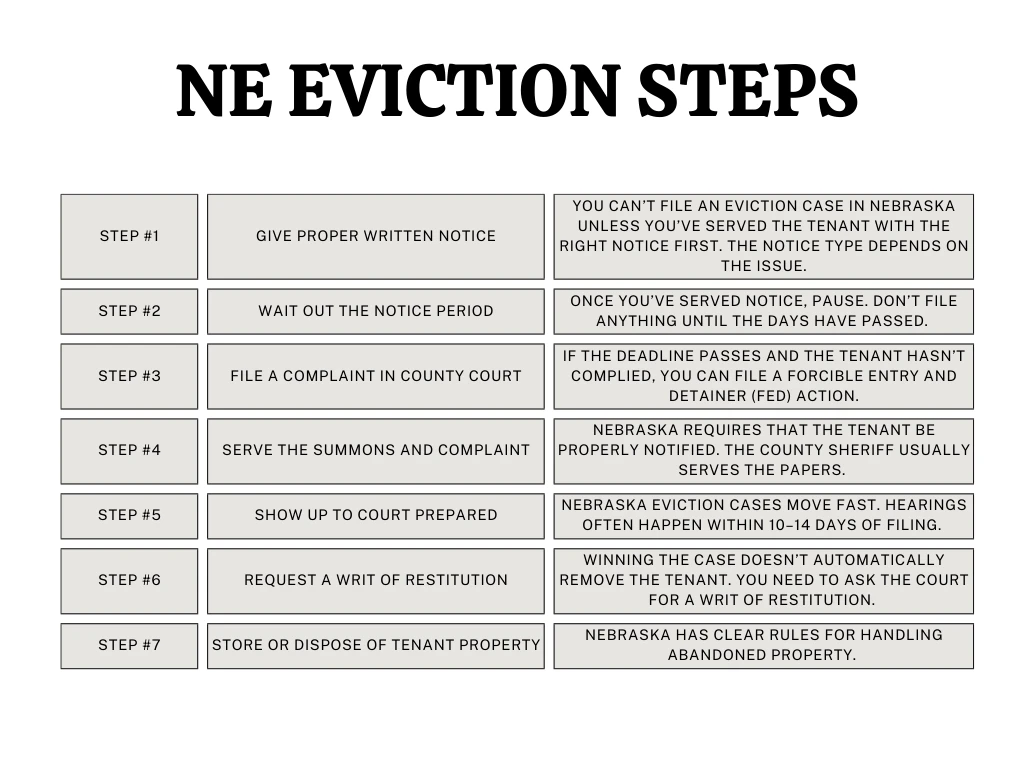
You can’t file an eviction case in Nebraska unless you’ve served the tenant with the right notice first. The notice type depends on the issue.
Common Notices Used in Nebraska
7-Day Notice to Pay or Quit
Use this if the tenant is behind on rent. They get 7 days to pay the full balance. If they don’t, you can start the eviction process.
14-Day Notice to Cure or Quit
This applies when the tenant has violated the lease. It gives them 14 days to fix the issue. If they don’t, they must move out by the 30th day after the notice was served.
5-Day Unconditional Quit Notice
If there’s illegal activity, violence, or intentional property damage, Nebraska law allows a 5-day notice with no option to fix the problem.
30-Day Notice to Terminate Month-to-Month Tenancy
If you’re ending a lease that automatically renews each month, a 30-day written notice is required. You don’t need to give a reason.
Delivery Methods That Count
Keep a dated copy of the notice and how you delivered it. Courts expect documentation.
Once you’ve served notice, pause. Don’t file anything until the days have passed. Nebraska counts calendar days, not business days. If the tenant pays, fixes the issue, or moves out before the deadline, the process ends there.
Don’t try to force them out early. Changing locks or shutting off utilities before going to court is considered an illegal eviction.

If the deadline passes and the tenant hasn’t complied, you can file a Forcible Entry and Detainer (FED) action. This is the official name for an eviction lawsuit in Nebraska.
Where to File: Go to the County Court in the county where the property is located.
Bring with you:
You’ll receive a summons with a court date. This must be delivered to the tenant before the hearing.
Nebraska requires that the tenant be properly notified. The county sheriff usually serves the papers. You can also hire a private process server if allowed by your county.
Approved Methods
The tenant must be served at least three days before the court hearing. If they aren’t, the hearing may be postponed.
Nebraska eviction cases move fast. Hearings often happen within 10–14 days of filing. The judge will ask questions and expect you to present your case clearly.
Bring these with you:
Tenants may try to argue that the notice was improper, rent was paid, or that you’re retaliating. Stick to the facts. Be calm and organized.
If the judge rules in your favor, you’ll receive a judgment for possession and can take the next step.
Winning the case doesn’t automatically remove the tenant. You need to ask the court for a Writ of Restitution. This authorizes the sheriff to physically remove the tenant if they haven’t left voluntarily.
Here’s what happens:
You’ll need to be there to change the locks or let the sheriff inside. Don’t attempt entry alone.
Nebraska has clear rules for handling abandoned property. If the tenant leaves belongings behind, here’s what you must do:
You can charge reasonable storage fees. If the tenant does not respond after 14 days, you may sell, donate, or dispose of the remaining items. Keep a written inventory and photos for your records.
Do not discard medications, legal documents, or valuables until the 14-day period has passed.
Court is not always the best first option. If your tenant is cooperative, it’s often easier to reach an agreement outside the courtroom.

A simple written agreement to repay overdue rent in installments can resolve the issue without filing anything. Spell out:
Both parties should sign and date the document.
You offer the tenant a small cash incentive to move out by a specific date. They return the keys, and you avoid court costs.
Use this when:
Some local organizations offer landlord-tenant mediation. You meet with a neutral third party and try to work out a solution that keeps you out of court. Call your local Legal Aid of Nebraska office to ask about available programs.
How fast is the eviction process?
If the tenant doesn’t respond or fight the case, the process may take 3 to 4 weeks from start to finish.
Can I evict someone without a lease?
Yes. Oral or month-to-month agreements are allowed. You’ll need to provide a 30-day written notice to terminate the tenancy.
Can I evict someone in the winter?
Yes. Nebraska law does not restrict evictions by season or weather.
Do I need an attorney?
Not always. Many Nebraska landlords represent themselves in County Court. If your case is complicated, or the tenant has a lawyer, it may help to get legal advice.
Can I throw out a tenant’s stuff after they leave?
No. You must follow the 14-day holding period. Violating this rule can expose you to liability.
What if the tenant files bankruptcy?
That stops the eviction temporarily. You’ll need to request relief from the bankruptcy court before proceeding.
Evicting a tenant in Nebraska means following a legal process that protects both parties. The rules are there to keep things fair, but they also require landlords to be patient and organized.
Take your time. Use the right notice. Serve it properly. Keep records at every step. If things don’t go smoothly, consider whether a mediated solution might get you to the finish line faster. And if you’ve dealt with repeated issues, it might be time to review your screening process, bring in outside help to manage the unit, or sell the property.
or call us at 855-659-3289
Searching and Processing Address