
Last Updated : September 22, 2025 by Cameron Smith
Thinking about putting your Connecticut home on the market without a real estate agent? You’re not alone. Many homeowners choose the For Sale by Owner (FSBO) route to maintain control over the process and avoid paying high commission fees.
While selling your house on your own can be rewarding, it also comes with its own set of hurdles to navigate.
In this step-by-step guide, we’ll walk you through how to sell your home without a realtor in Connecticut and share tips to help you keep the process as smooth and stress-free as possible.
Before jumping in, take a moment to carefully consider whether the benefits of selling your Connecticut home without a realtor outweigh the possible downsides. As with any major decision, doing a bit of upfront research can make a big difference and help you choose the approach that best matches your goals and situation.

When you sell a home on your own, you assume full responsibility for complying with the state’s disclosure and contract laws. A critical document you’ll need to complete is the Residential Property Condition Disclosure Report, disclosing any known defects, which is required by law. If you fail to provide this report, you will be required to provide the buyer with a $500 credit at closing.
You’ll also need to comply with federal lead-based paint disclosure requirements if your home was built prior to 1978. Skipping these disclosures or not being thorough enough can leave you at risk of potential legal issues, even after the sale has closed.
Because Connecticut is an attorney-closing state, it’s strongly recommended that you consult a real estate lawyer early in the process. An attorney can guide you through the paperwork, ensure you remain compliant, and help protect you from costly mistakes that could arise down the road.
Pros
Cons

If the challenges of FSBO have you rethinking your approach, there are a few alternatives that might suit you better. The most common options include:

Once you’ve decided to sell your Connecticut home without an agent, the next step is getting it market-ready. Often, this starts with a deep clean, clearing out clutter, and taking care of small but noticeable repairs.
Don’t overlook curb appeal! Freshly cut grass, trimmed hedges, and updated landscaping can go a long way toward creating a positive first impression. You might also consider staging your home to showcase its best features and help buyers picture themselves living there.

Connecticut home buyers often look for different features depending on the region. In Fairfield County, proximity to NYC commuter routes like Metro-North, I-95, and the Merritt Parkway is a major selling point. In areas such as Hartford or New Haven, affordability, access to universities, and proximity to top employers are often high on the priority list.
If your property features any of these advantages, make sure to showcase them in your listing description, marketing materials, and during showings so they stand out to the right audience.
Next, and often one of the trickiest parts of FSBO transactions, is setting the right listing price. This step takes careful research and a strong grasp of your local real estate market, which can be challenging without professional experience. Here are a few ways to zero in on the most accurate number:

Start by researching what similar homes in your area have recently sold for. “Similar” means properties that are close in size, age, and overall condition to yours. You should be able to locate this information on popular real estate websites like Zillow, Redfin, Trulia, Realtor.com, and Homes.com.
A few tips to guide your search:
Keep in mind that Connecticut markets vary widely. For example, a home in Westport or Greenwich will usually command a much higher price than a similar property in Waterbury or New Britain. Be sure to factor in local demand and cost of living as you evaluate the right listing price.

Next, take a clear and honest look at your home’s current condition. Have you made recent upgrades or major renovations that could increase its value? On the other hand, are there noticeable repairs, aging systems, or outdated features that might reduce the amount that buyers are willing to pay?
Being realistic about these details is crucial. Overpricing based on optimism rather than market reality can drive buyers away and leave your property lingering on the market longer than expected.

Next, you’ll need to take a close look at the current real estate market conditions in Connecticut, particularly within your neighborhood.
If demand is strong and inventory is limited, you’re in a seller’s market. That’s when buyers compete for fewer homes, which can often drive prices higher.
On the flip side, if you notice many listings that have been on the market for a while or frequent price reductions nearby, that indicates a buyer’s market. In this scenario, there’s more supply than demand, giving buyers the upper hand in negotiations.

Another challenging component of selling a house without a realtor in Connecticut is figuring out what paperwork you’ll need in order to move forward with the sale.
Here are key documents Connecticut FSBO sellers typically need:
An experienced real estate attorney should be able to walk you through this paperwork to ensure you don’t miss anything that could delay or impede your closing.

With your home’s market value established, the property prepped, and all the necessary paperwork in order, the next step is to get your listing in front of as many potential buyers as possible.
Here are a few tips to help you get started:
Keep in mind that your online listing is usually the first impression buyers get of your property, so make it stand out. Use high-quality photos and a clear, compelling description that emphasizes Connecticut-specific selling points, such as proximity to Metro-North commuter lines, I-95, or the Merritt Parkway; access to top-rated schools; or being near popular shoreline or cultural attractions.
Example:
“This updated Colonial in West Hartford is minutes from Blue Back Square, award-winning schools, and quick access to I-84 for an easy Hartford or New Haven commute.”

Once your home is officially on the market, and assuming it’s in good condition and competitively priced, you should start seeing interest from buyers. As an independent seller, you’ll be responsible for scheduling and hosting all showings and open houses on your own.
Start by making sure your home is spotless, welcoming, and free of clutter. A clean, well-presented property helps buyers imagine themselves living there, which can increase both interest and offers.

Since you’ll be handling showings and open houses on your own, it’s important to make safety a top priority:

Once buyers have toured your home and offers begin to roll in, it’s time to vet them carefully and start negotiations.
Begin by requesting a mortgage pre-approval letter from each interested buyer to confirm they’re financially qualified. If a buyer plans to pay cash, ask for proof of funds. Without either, it’s probably best to move on.
Pro Tip: Don’t judge an offer based solely on price. Pay attention to details like the proposed closing date, contingencies (such as inspections or financing), and any special conditions. The strongest offer is the one that best matches your priorities, not necessarily the one with the highest number.
Once you’ve identified the most promising offers, you’ll need to decide whether to accept, counter, or negotiate further. At this stage, having an accurate appraisal and a clear understanding of Connecticut’s current market conditions can give you a valuable edge.

Once you’ve accepted an offer and reached a mutual agreement, the next step is to move forward with the sales transaction. In Connecticut, it’s wise and customary to have a real estate attorney review the purchase agreement to make sure it complies with state law and doesn’t leave out important details that could create problems later.
You’ll also need to arrange for the buyer’s earnest money deposit (sometimes called a good faith deposit) to be held in escrow by the closing attorney. This deposit shows the buyer’s commitment to moving forward with the purchase.
From there, you’ll coordinate with the buyer to complete any required inspections or appraisals, particularly if the sale is being financed. Be ready to address any issues that arise, whether that involves making repairs, adjusting the sale price, or offering a closing credit.
In Connecticut, attorneys—not title companies—handle real estate closings. Your attorney will oversee the process, manage escrow, and ensure all legal requirements are met. Your attorney will also coordinate the final walk-through, handle the deed transfer, and disburse funds at closing.
To keep things moving smoothly, gather important documents in advance, such as the deed, closing statements, and any other required paperwork, and work with the buyer and your attorney to set a closing date that works for all parties.

On the scheduled closing day, you’ll meet with the buyer and your attorney to finalize the transaction. During this meeting, both parties will review and sign the closing documents. Once everything is completed, your attorney will disburse the sale proceeds to you, minus any agreed-upon closing costs, outstanding liens, or mortgage balances.
In Connecticut, several taxes and fees apply whenever property changes hands, and these are typically collected at closing:

Even experienced independent sellers can make costly mistakes without realizing it. Here are some common FSBO missteps Connecticut homeowners make and how to avoid them:
A little upfront diligence in these areas can save you from delays, disputes, and unnecessary costs later in the process.

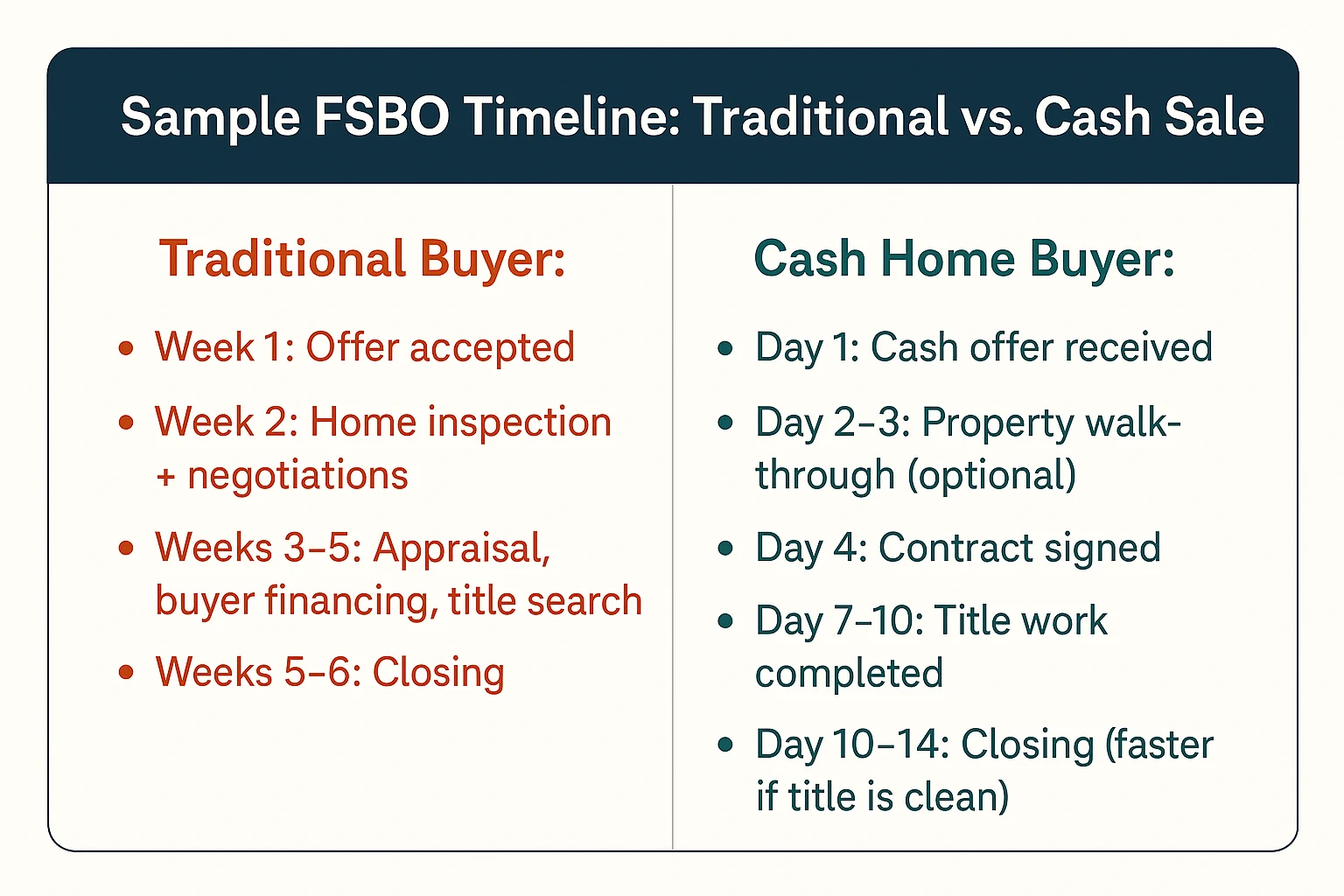
As you can see, selling a house without a realtor in Connecticut can be a detailed and time-intensive process. While the FSBO route certainly has its advantages, there are some situations in which selling As-Is to a reputable cash home buyer may be the faster, simpler, and more practical solution.
For instance, a cash sale might be the better choice if:
Here’s what you can typically expect from a cash home sale in Connecticut:
Selling a house without a realtor in Connecticut can be a smart move, as long as you’re prepared to handle pricing, marketing, and negotiations on your own. However, if the process feels overwhelming, selling your home As-Is to a reputable Connecticut cash buyer may be a faster, simpler, and less stressful alternative.
Ultimately, whether you decide to go FSBO, accept a cash offer, or pursue another path, the best choice will be the one that fits your goals, timeline, and peace of mind.

or call us at 855-659-3289
Searching and Processing Address