
Last Updated : November 6, 2025 by Chris Bibey
Evicting a tenant in Oregon involves multiple legal steps, each with strict timelines and documentation requirements. Whether you're dealing with unpaid rent, lease violations, or the end of a fixed-term lease, you must follow the process carefully.
This guide walks you through each step so you can avoid delays, protect your property, and stay compliant with Oregon law.
The steps below outline how to legally evict a tenant in Oregon.
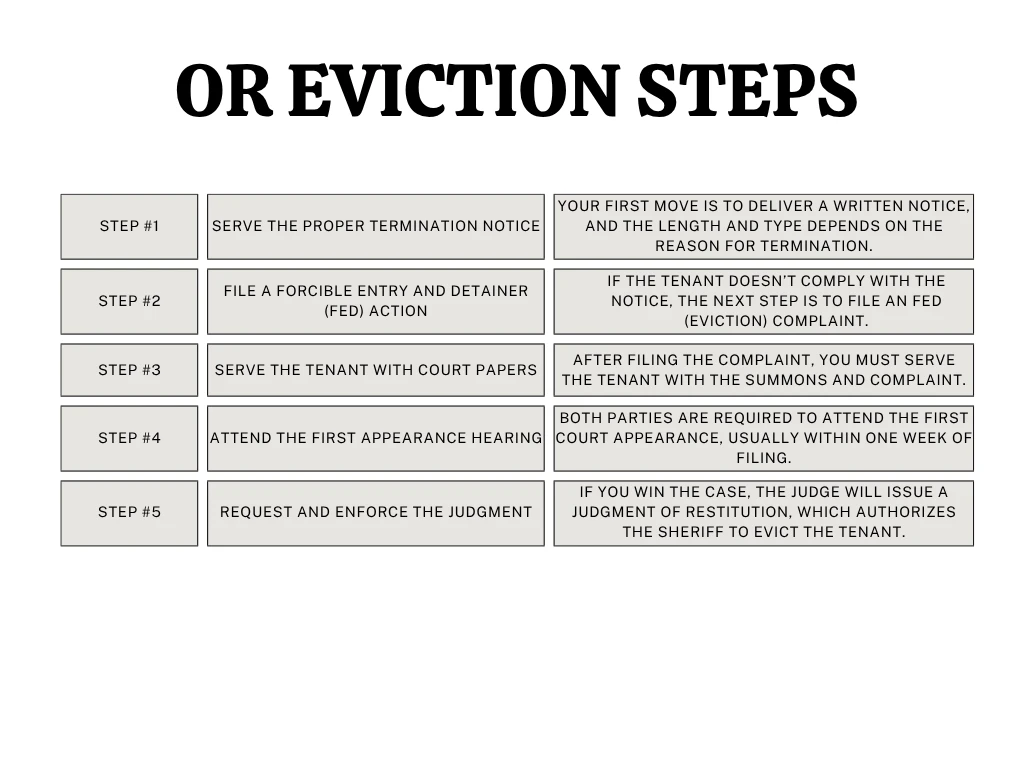
Your first move is to deliver a written notice, and the length and type depends on the reason for termination:
Make sure the notice is delivered in person or by first-class mail. If mailing, Oregon law requires you to add three extra days for delivery.
Always keep a copy of the notice and document how and when it was delivered. Incomplete or incorrectly served notices are one of the main reasons eviction cases get dismissed.
If the tenant doesn’t comply with the notice, the next step is to file an FED (eviction) complaint in the circuit court of the county where the rental property is located:
Be sure to include a copy of the notice you served, proof of service, the rental agreement, and a ledger of unpaid rent (if applicable). Organizing your documents now will save time later.
After filing the complaint, you must serve the tenant with the Summons and Complaint:
Once service is complete, file a Proof of Service with the court. Without this, your case cannot move forward.

Both parties are required to attend the first court appearance, usually within one week of filing:
Bring all documents, be professional, and clearly explain the situation. Oregon courts are tenant-friendly, so well-organized evidence and lawful procedures go a long way.
If you win the case, the judge will issue a judgment of restitution, which authorizes the sheriff to evict the tenant:
Do not change the locks or remove belongings yourself. Only the sheriff is allowed to enforce the judgment.
Court action is not your only option. If the tenant is cooperative or going through temporary hardship, other approaches might be faster and less stressful.
Setting up a formal payment plan can help a tenant catch up on rent and avoid eviction. A solid agreement should include:
Put everything in writing and follow up with receipts. This can reduce vacancy time and avoid court costs.

This strategy allows you to offer money in exchange for a quick and peaceful move-out:
It’s not about rewarding bad behavior—it’s about avoiding months of rent loss and legal fees.
Many counties in Oregon offer landlord-tenant mediation services, often through housing authorities or legal aid organizations. These sessions are voluntary, fast, and confidential.
Mediation is especially useful when communication has broken down. It can also demonstrate to a judge that you made efforts to resolve the matter without litigation.
Even with the above information, you may still have questions about the Oregon eviction process. Here are seven of the most common.
Can a landlord evict during winter in Oregon?
Yes. There are no seasonal restrictions on eviction, although utility shutoff protections may apply in cold months.
How long does an eviction take in Oregon?
If uncontested, the process may be completed in two to three weeks. Contested cases may take longer due to court scheduling or trial preparation.
Can a tenant stop an eviction by paying rent late?
Yes, if they pay the full amount within the notice period. After that, landlords are not required to accept payment unless they voluntarily agree to do so in writing.
Are landlords required to accept rental assistance?
As of 2023, landlords are generally not required to accept rental assistance in Oregon unless local rules say otherwise. Always check city and county ordinances.
Can you evict a tenant without a lease?
Yes, but you must follow proper notice rules. For tenants on a month-to-month agreement beyond one year, a 90-day notice is usually required unless there's cause.
What happens to the tenant’s stuff after eviction?
You must store personal property for 15 days and notify the tenant in writing. After that, you can dispose of it if they do not reclaim it.
Can you evict someone in Portland without cause?
No. Portland has stricter rules. After the first year of tenancy, landlords must have cause (nonpayment, violations, etc.) to terminate a lease.
Evicting a tenant in Oregon is a step-by-step legal process. Whether you're trying to collect unpaid rent or end a lease, following proper notice procedures and court rules is key.
If you’re tired of managing properties or dealing with ongoing tenant issues, this may be a good time to consider selling your rental. Sometimes the easiest solution is stepping away from the stress altogether.
Searching and Processing Address