
Last Updated : November 10, 2025 by Chris Bibey
Evicting a tenant in Arkansas means following a specific legal process from start to finish. If your tenant stops paying rent, violates the lease, or stays after their agreement ends, you must act in compliance with Arkansas law.
This guide walks through every step of the eviction process in Arkansas so you can move forward legally, avoid delays, and regain control of your property.
Here are the key steps you need to follow to legally evict a tenant in Arkansas.
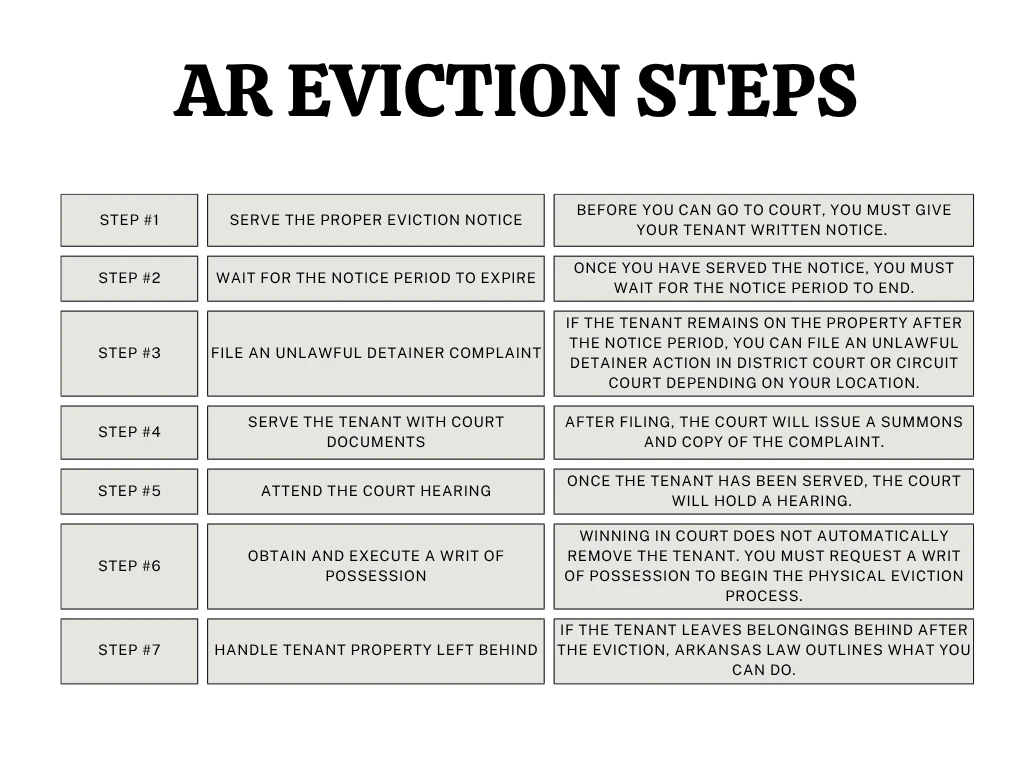
Before you can go to court, you must give your tenant written notice. The type of notice and how long they have to respond depends on the reason for the eviction.
Nonpayment of Rent (Civil Eviction):
Serve a 3-day notice to pay or quit. This gives the tenant three days to pay what they owe or move out. You can only use this option if you are pursuing a civil eviction. Arkansas law also allows criminal eviction for nonpayment, but most landlords use the civil route because it is safer legally.
Lease Violation:
Serve a 14-day notice to cure or quit. This tells the tenant what lease term they violated and gives them 14 days to fix the issue or leave the rental.
No Lease or End of Lease:
If your tenant is on a month-to-month lease or the lease has expired, serve a 30-day notice to vacate. This notice does not require a reason as long as proper notice is given.
Illegal Activity or Severe Damage:
If the tenant has committed a crime on the property or caused serious damage, you can skip the notice and go straight to court. Arkansas law does not require advance notice in these cases.
You can deliver the notice in person, post it on the door, or send it by certified mail. It is important to keep a copy of the notice and any proof of delivery.
Make sure the notice includes the correct number of days, clearly states the reason, and explains the legal consequences. If it is missing details or served incorrectly, the court may dismiss your case.
Once you have served the notice, you must wait for the notice period to end. The tenant has the right to pay, fix the issue, or move out before the deadline.
If the tenant complies, you do not need to take further action. If they ignore the notice or refuse to leave, you can move forward with filing an eviction in court.
Do not file before the notice period expires. If you do, the court may throw out your case and force you to start over.
If the tenant remains on the property after the notice period, you can file an Unlawful Detainer action in District Court or Circuit Court depending on your location.
Documents You Need:
Filing Fees:
Fees vary by county, but expect to pay between $65 and $100. If you are seeking unpaid rent, you may also request a monetary judgment.
Where to File:
File the complaint in the county where the rental property is located. After you file, the court will issue a summons and schedule a hearing.
Arkansas also allows a Notice of Intent to Issue Writ of Possession to be filed early in the process. If the tenant fails to respond to the summons within the required time (usually 5 days), the judge can approve the eviction without a full hearing.
Take your time gathering all paperwork. Missing or incorrect documents can cause delays or get your case thrown out.

After filing, the court will issue a summons and copy of the complaint. You must have these documents properly served to the tenant.
Service Rules in Arkansas:
After the tenant is served, you need to file proof of service with the court. This is typically a signed return of service or affidavit.
If you cannot locate the tenant, you may request permission from the court to serve by posting and mailing. However, personal service is preferred and more reliable.
Improper service is one of the top reasons Arkansas eviction cases get dismissed. Always use a professional and get documentation of delivery.
Once the tenant has been served, the court will hold a hearing. Both sides will have the chance to explain their case and present evidence.
What to Bring:
Tenant Defenses May Include:
If the tenant does not appear at the hearing, you may receive a default judgment. If they do appear, the judge will hear both sides and make a decision.
If the judge rules in your favor, you will receive a judgment for possession. You can also request a money judgment for unpaid rent or property damage if you included that in your filing.
Stay calm, stick to the facts, and let the judge control the process. If you are unsure about representing yourself, you may want to hire an attorney or property manager.
Winning in court does not automatically remove the tenant. You must request a Writ of Possession to begin the physical eviction process.
What the Writ Does:
It authorizes the sheriff to return possession of the property to you and remove the tenant if they still refuse to leave.
Timeline:
The writ is usually issued within a few days after judgment. Once received, the sheriff will serve the writ and give the tenant 24 hours to vacate.
Tenant Deadline:
If the tenant does not leave within that time, the sheriff will return to remove them and supervise the lockout.
You cannot change the locks, remove belongings, or shut off utilities on your own. Only the sheriff has the authority to carry out the eviction.
Trying to remove the tenant yourself can lead to lawsuits, fines, and delay your ability to rent the unit again.
If the tenant leaves belongings behind after the eviction, Arkansas law outlines what you can do.
Storage Rules:
The sheriff will typically oversee the removal of property during the eviction. They may store the property for a short time, often 7 business days. The tenant must pay to retrieve their items.
Abandoned Property:
If the tenant does not retrieve the items within the time allowed, you can dispose of them. You are not required to store personal property long-term unless the court specifically orders it.
Best Practices:
Do not throw away valuable items too quickly. Proper documentation protects you in case the tenant claims damages later.
Going to court is not always the most efficient way to resolve an issue. These alternatives can save time, money, and stress.
If your tenant is behind on rent but wants to stay, consider offering a written payment plan.
Include in the Agreement:
Make sure the agreement is signed and that you track every payment. You can still proceed with eviction if the tenant does not follow the terms.
Some landlords use stipulated agreements in court. This allows the eviction to continue automatically if the tenant misses a future payment.

Offer the tenant money to move out voluntarily. While it may feel like giving up, this method often saves time and avoids legal fees.
How to Do It:
Even a few hundred dollars can be enough to motivate someone to leave without a fight.
Some Arkansas counties offer mediation programs through the court or housing organizations. A neutral third party helps both sides come to a solution.
Mediation Can Help With:
Mediation works best when both sides are open to compromise but need help getting there.
Can I evict a tenant without a lease in Arkansas?
Yes. If the tenant is renting month-to-month or has no lease, serve a 30-day written notice before starting the court process.
How long does it take to evict someone in Arkansas?
Uncontested evictions may take 2 to 4 weeks. Contested cases, appeals, or service delays can add several more weeks.
Can I evict someone during the winter?
Yes. There are no seasonal restrictions on evictions in Arkansas.
What happens if the tenant appeals?
The eviction may be delayed. The tenant must file a notice of appeal and often must pay a bond or ongoing rent while the appeal is heard.
Can I evict someone for criminal activity?
Yes. In cases involving illegal conduct or severe damage, you can go straight to court without prior notice.
Can I pursue unpaid rent after the eviction?
Yes. If you included a money judgment in your court filing, you can collect back rent, damages, and court costs.
Will the eviction show up on the tenant’s record?
Yes. Court filings become public records, which landlords and credit bureaus can access during background checks.
Evicting a tenant in Arkansas takes careful planning and strict attention to legal procedures. Every step—from notice to writ execution—must follow state law to avoid costly mistakes.
If evictions are becoming a regular part of your rental business, consider improving your tenant screening process or working with a property manager.
And if managing the property feels like more trouble than it is worth, selling may be the best next step.
Searching and Processing Address