
Last Updated : October 6, 2025 by Chris Bibey
Evicting a tenant in Delaware requires careful attention to the law. You cannot simply change the locks or shut off utilities. Delaware has clear rules under the Delaware Landlord Tenant Code that you must follow, and skipping a step could result in delays or even dismissal of your case.
This guide walks you through each stage of the eviction process in Delaware. You will see the notices you must serve, the court procedures you will follow, and the rules for regaining possession of your property.
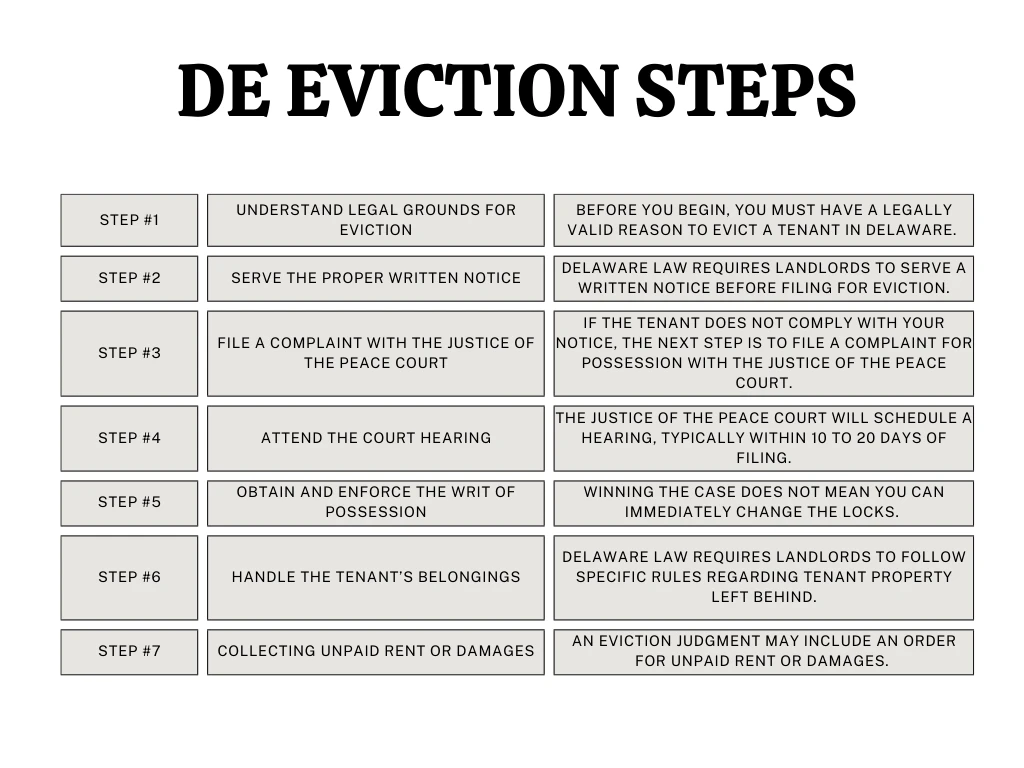
Before you begin, you must have a legally valid reason to evict a tenant in Delaware. Courts will not approve an eviction if the case is based on personal disputes or retaliation. The law outlines specific grounds:
If your reason does not fall into one of these categories, the court will likely side with the tenant. Always confirm your grounds are legal before serving notice.
Delaware law requires landlords to serve a written notice before filing for eviction. The type of notice and the time you must give depend on the reason for eviction.
Your notice must include the date, the reason for eviction, the time allowed to cure the issue (if applicable), and your intent to file in court if the problem is not fixed.

If the tenant does not comply with your notice, the next step is to file a complaint for possession with the Justice of the Peace Court. This court handles landlord-tenant disputes in Delaware.
Once you file, the court will issue a summons. The tenant must be served with the complaint and summons by a process server, sheriff, or another authorized method.
The Justice of the Peace Court will schedule a hearing, typically within 10 to 20 days of filing. Both you and the tenant will have the opportunity to present evidence and testimony.
You should bring:
At the hearing, the judge will listen to both sides. If the tenant fails to appear, the judge may issue a default judgment in your favor. If you win, the court will issue a writ of possession.
Winning the case does not mean you can immediately change the locks. You must obtain a writ of possession from the court. This document authorizes the sheriff or constable to remove the tenant.
Delaware does not allow “self-help” evictions. If you attempt to evict without a writ, you could face legal consequences and liability for damages.
Delaware law requires landlords to follow specific rules regarding tenant property left behind. After the sheriff executes the writ of possession, you must store the tenant’s belongings for seven days.
During that time, the tenant has the right to reclaim their property by paying storage and moving costs. If they fail to do so within seven days, you may dispose of the belongings. Always document how you handle abandoned property to avoid claims later.
An eviction judgment may include an order for unpaid rent or damages. If the tenant owes money, you can attempt to collect through wage garnishment or liens, but these processes are separate from regaining possession.
Practical ways to pursue payment include:
Keep in mind that collecting money is often more challenging than regaining possession. Many landlords prioritize getting the property back and then decide if collection efforts are worth pursuing.
Landlords often lose time and money by making mistakes during the eviction process. Some of the most common include:
Avoiding these errors will keep your case moving forward and reduce the risk of dismissal.

Eviction is sometimes the only option, but it can be costly and time-consuming. In some cases, alternatives may benefit both you and your tenant.
Options to consider:
These approaches may save time and reduce the stress of going through court.
After completing an eviction, take steps to prevent future issues. Strong leases and careful tenant screening are your best protection.
By being proactive, you can reduce the risk of facing another eviction.
Evicting a tenant in Delaware is a structured legal process that requires patience and precision. From serving the right notice to working through the Justice of the Peace Court, each step must be handled carefully. Cutting corners can lead to delays, dismissal, or even penalties against you.
By following Delaware’s rules, documenting everything, and preparing for court, you can regain possession of your property while protecting yourself legally. And if you don't want to ever face this situation again, it may be time to sell your property.
or call us at 855-659-3289
Searching and Processing Address