
Last Updated : November 4, 2025 by Chris Bibey
Managing a rental property in Massachusetts (or any other state) can be one of the most rewarding and stressful experiences of your life. While you hope it never happens, there could come a point when you need to begin eviction proceedings against a tenant.
If you find yourself in this situation, it’s important to understand how to evict a tenant in Massachusetts. Taking all the right steps, in the right order, will go a long way in efficiently moving through the process without breaking any laws.
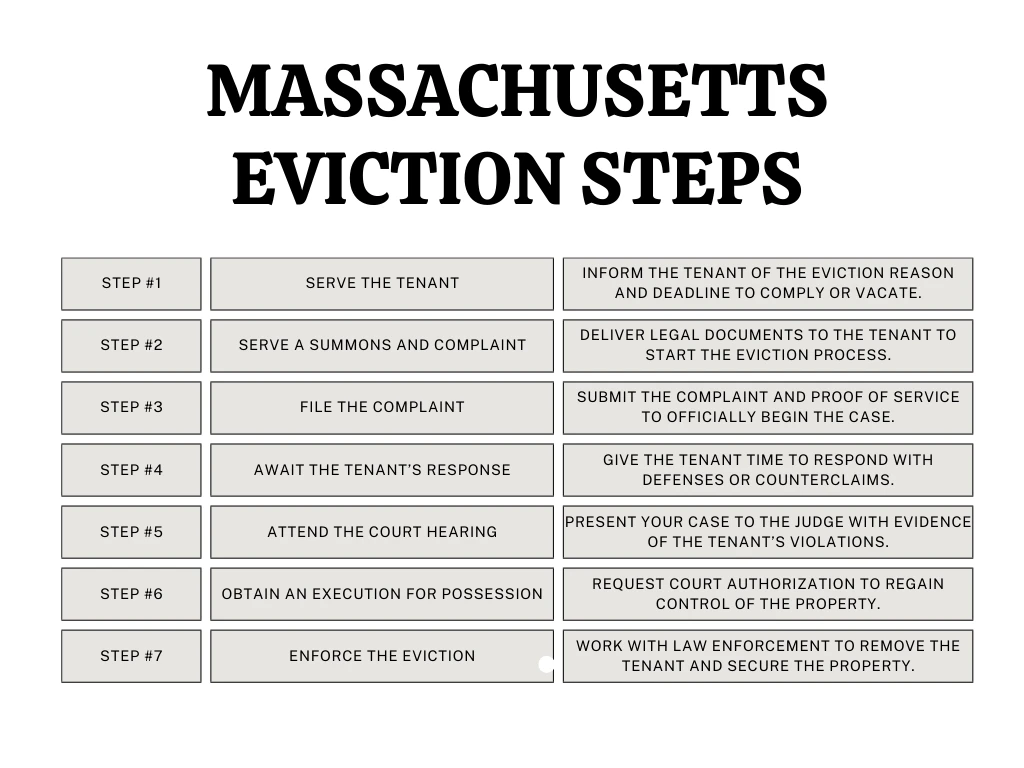
Like many states, such as Pennsylvania, there are fewer than 10 steps to evict a tenant in MA. Here’s the process you will follow.
The first step in evicting a tenant is to serve a notice to quit. This notice informs the tenant that their tenancy will be terminated and gives them a deadline to comply or vacate.
The type of notice depends on the reason for eviction:
Make sure the notice clearly outlines the reasons for eviction and the required actions for the tenant to avoid further steps. Deliver the notice in person or via certified mail, and always keep proof of service. If the tenant doesn’t comply by the deadline, you can move forward with filing a complaint.

If the tenant doesn’t resolve the issue outlined in the notice to quit, the next step is serving a Summons and Complaint. This officially begins the legal process and notifies the tenant of the eviction case.
Here’s how to proceed:
Once served, you must file the completed forms with the court. This step sets the eviction process in motion, and the court will establish the timeline for the case.
After serving the tenant, you’ll need to file the summons and complaint with the court. This step ensures your case is officially entered into the legal system.
Follow these steps:
The court will assign a hearing date, which typically occurs 10 to 16 days after the entry date. Ensure all your documentation is accurate to avoid delays or dismissal.
Once the complaint is filed, the tenant has the opportunity to respond. Their response, known as the “answer,” must be submitted to the court before the first Monday after the entry date.
Key details about this step:
The tenant’s answer will shape the arguments presented in court. Use this time to gather evidence and prepare your case.

Once the court schedules a hearing, you and the tenant will present your cases before a judge. This is a critical point in the eviction process, as the judge’s decision will determine the next steps.
Here’s how to prepare and what to expect:
The judge may issue a ruling on the same day or later. If the court rules in your favor, you can move forward with obtaining an execution for possession.
If the court rules in your favor, you can request an execution for possession, which allows you to legally regain control of the property. This document is essential for completing the eviction.
Key steps to follow:
This step ensures that the eviction is carried out legally and prevents you from taking any unauthorized actions to remove the tenant.
The final step is enforcing the eviction, which involves physically removing the tenant if they fail to leave voluntarily. Only authorized officials, such as a sheriff or constable, can carry out this action.
Here’s what to expect:
It’s important to handle this step professionally and within the boundaries of the law. Any attempt to evict a tenant without proper authorization can lead to legal consequences.
Eviction can be a stressful and time-consuming process for both landlords and tenants. Exploring alternatives can help resolve disputes while saving money, time, and effort. Here are several approaches you can consider.
Before initiating legal action, try having an honest conversation with the tenant. Discuss the issue at hand, whether it’s unpaid rent or a lease violation, and see if they are willing to cooperate.
Here are some potential solutions:
This approach fosters a better landlord-tenant relationship and might lead to a resolution without formal proceedings.

A “cash for keys” agreement allows you to pay the tenant to vacate the property voluntarily. This option is often faster and less expensive than going through a formal eviction process.
When considering this option:
This alternative gives tenants financial assistance to relocate and helps you regain control of your property sooner.
Mediation can be a valuable tool for resolving disputes without escalating to court. A neutral third party helps facilitate discussions and find a mutually acceptable solution.
Benefits of mediation include:
You can find mediation services through local housing agencies or legal aid organizations.
Here are some of the most common questions asked about evicting a tenant in Massachusetts.
How long does the eviction process take in Massachusetts?
The eviction process can take anywhere from 4 to 12 weeks, depending on the complexity of the case and court scheduling. Delays often occur if the tenant contests the eviction or if paperwork is incomplete.
Can a landlord evict a tenant without going to court?
No, landlords in Massachusetts must go through the court system to legally evict a tenant. Attempting a self-help eviction, such as changing locks or removing belongings, is illegal.
What reasons are valid for evicting a tenant in Massachusetts?
Valid reasons include non-payment of rent, lease violations, or the end of a lease term without renewal. No-fault evictions are also permitted with proper notice.
What happens if a tenant doesn’t leave after the eviction notice expires?
If the tenant refuses to leave after the notice period, the landlord must file a Summons and Complaint with the court. Only a court order can authorize law enforcement to remove the tenant.
Can a tenant appeal an eviction decision?
Yes, tenants can appeal the court's eviction ruling if they believe the decision was unfair. An appeal must be filed within the time frame specified by the court, typically 10 days.
Are landlords required to provide relocation assistance in Massachusetts?
Massachusetts law does not require landlords to provide relocation assistance unless stipulated in local ordinances or agreements. However, landlords may choose to offer “cash for keys” agreements to expedite the process.
What happens to a tenant’s belongings after an eviction?
Landlords must store the tenant’s belongings in a secure location and notify the tenant of their right to retrieve them. If unclaimed after a reasonable time, the belongings may be sold or disposed of according to state law.
Managing rental property comes with its fair share of challenges, and dealing with difficult tenants can be one of the toughest. Even when you follow best practices, eviction may become unavoidable.
If you find yourself in this situation, the steps outlined above will help you navigate the process effectively. By staying informed and following the proper procedures, you’ll be back on track and ready to move forward with your property.
Are you ready to move on from your property altogether? There are companies that buy houses in Massachusetts for cash, allowing you to move on quickly.
Searching and Processing Address