
Last Updated : November 6, 2025 by Chris Bibey
You don’t want to evict a tenant in Minnesota, but circumstances could call for it at some point.
Should you find yourself in this unenviable position, it’s important that you know exactly which steps to take. In this article, we show you how to take the right action at the right time.
Here are the many steps associated with evicting a tenant in the state of Minnesota.
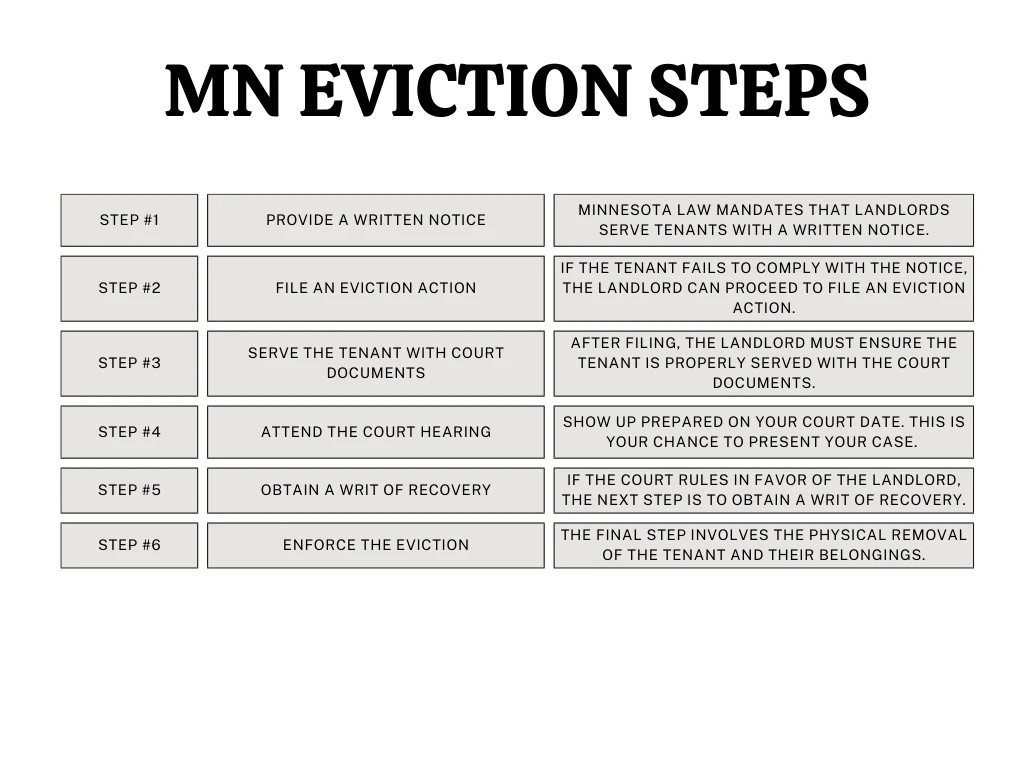
Before initiating an eviction, Minnesota law mandates that landlords serve tenants with a written notice, the specifics of which depend on the reason for eviction:
It's crucial to ensure that the notice is delivered properly, either personally or via first-class mail, and that it complies with any additional local ordinances, such as extended notice periods in certain cities.
If the tenant fails to comply with the notice, the landlord can proceed to file an eviction action, known as an "Unlawful Detainer," in the appropriate district or housing court:
This is your official step into the legal system—make sure your paperwork is airtight and your claims are well-documented.
After filing, the landlord must ensure the tenant is properly served with the court documents:
Proper service is about due process—skipping steps here can cost you time, money, and momentum in court.

Both landlord and tenant will appear before a judge on the scheduled court date:
Court is where the eviction is won or lost—come prepared with everything, expect pushback, and stay professional.
If the court rules in favor of the landlord, the next step is to obtain a Writ of Recovery:
The writ is your green light to regain possession—just remember, only the sheriff has the power to carry it out.
The final step involves the physical removal of the tenant and their belongings:
Once the sheriff takes over, stay hands-off—let the law do its job and follow required property procedures to the letter.
Eviction may be your only option, but you don’t want to head down this path until you consider all alternatives. Here are three of the most common.
Before jumping to eviction, consider offering your tenant a written payment plan. In Minnesota, many tenants fall behind due to temporary hardships—job loss, medical bills, or unexpected expenses. A structured plan allows the tenant to catch up on rent over time while you continue receiving income. Be sure the plan outlines due dates, payment amounts, and consequences for missed payments. Both parties should sign and keep a copy.
This approach can preserve the relationship, avoid court costs, and reduce vacancies. Just make sure you follow up in writing and treat it like a formal business agreement—not a handshake deal.

“Cash for keys” is a voluntary agreement where you offer the tenant money to move out by a certain date. It may sound counterintuitive—paying someone who owes you—but in many cases, this can save you thousands in legal fees, lost rent, and property damage. Minnesota landlords often use this when tenants are clearly behind but not destructive or malicious.
To do it right, document everything. Specify the amount, the move-out date, and the condition the unit must be left in. Get it in writing. And always conduct a walkthrough before handing over any money. It’s simple, fast, and often effective.
Minnesota courts and nonprofits offer landlord-tenant mediation services that can help resolve disputes without litigation. Mediation brings in a neutral third party to help you and your tenant find common ground. You might negotiate new lease terms, settle payment disputes, or agree on a move-out plan without involving the sheriff or a judge.
This option is especially helpful if the tenant wants to stay but you’re concerned about behavior or payment. In some counties, mediation is required before an eviction trial. It shows good faith on your part and may lead to a solution that works for everyone—without the stress of court.
Here are seven frequently asked questions about eviction in Minnesota.
Can a landlord evict a tenant in the winter in Minnesota?
Yes, landlords can legally evict tenants during the winter months. However, utility shutoff protections may apply in cold weather, but they do not stop legal eviction proceedings.
How long does the eviction process usually take in Minnesota?
If uncontested, an eviction can be completed in as little as 2–4 weeks from notice to removal. Delays can occur if the tenant contests the case or requests a trial.
Can a tenant stop an eviction by paying rent late?
If the eviction is for nonpayment, a tenant may avoid removal by paying the full amount due before the court rules. Partial payments do not stop the eviction unless the landlord agrees in writing.
Are landlords required to accept rental assistance in Minnesota?
No, landlords are not legally required to accept rental assistance, unless bound by a federal program or local ordinance. However, accepting it may be a practical way to recover unpaid rent without pursuing eviction.
Can a landlord evict a tenant for having unauthorized occupants?
Yes, if the lease limits occupancy and the tenant violates it, the landlord can pursue eviction. They must document the violation and provide written notice before filing.
Does filing an eviction affect a tenant’s record in Minnesota?
Yes, eviction filings become part of the public court record, even if the tenant wins the case. These records can negatively affect a tenant’s ability to rent in the future.
Can a landlord evict a tenant without a lease in Minnesota?
Yes, month-to-month tenants can be evicted with proper notice, typically 30 days. The process still requires filing in court and cannot bypass legal procedures.
Now that you know how to evict a tenant in Minnesota, you can feel more confident in yourself should you ever have to take this action.
If you’re at the point where you no longer want to manage real estate—perhaps because bad tenant are giving you the runaround—it may be time to sell your property (or properties).
Searching and Processing Address