
Last Updated : September 30, 2025 by Chris Bibey
Eviction in New Mexico is a legal process that requires clear steps and precise timing. Landlords who try to cut corners—like changing the locks without a court order—often find themselves on the wrong side of the law. If you need to remove a tenant, follow the procedures set by the New Mexico Uniform Owner-Resident Relations Act.
This guide outlines what you need to know and do to carry out a legal eviction in the state.
You must file for eviction if a tenant:
Each reason has a specific notice type. You can’t move forward in court without serving the correct notice first.
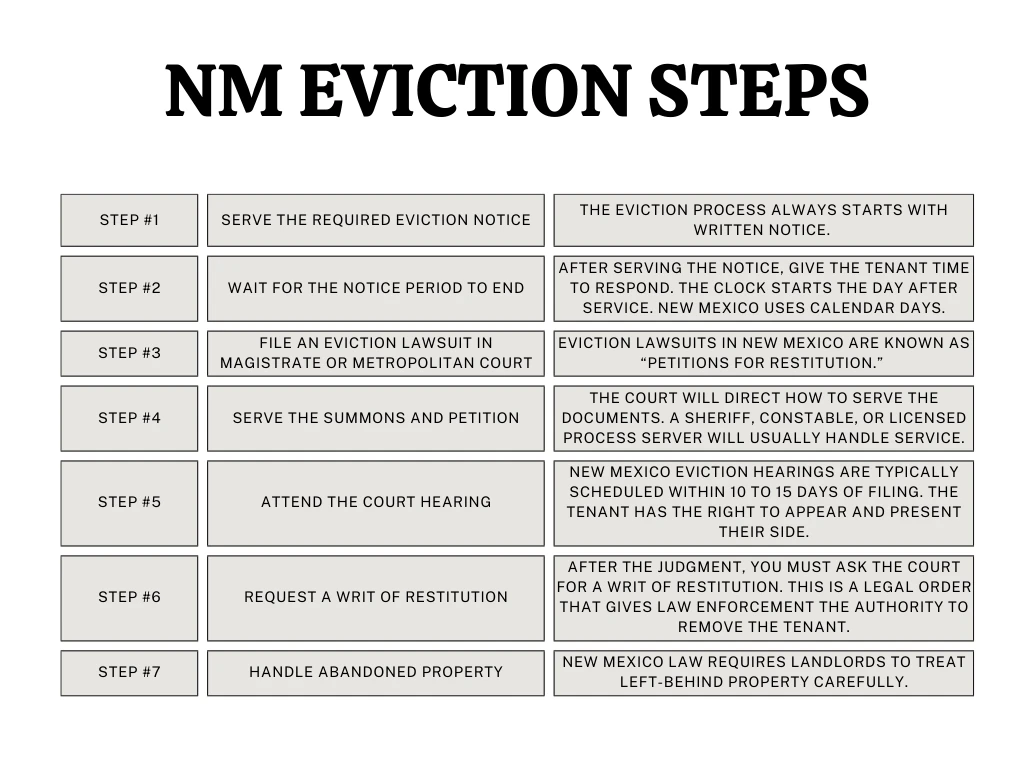
The eviction process always starts with written notice. This gives the tenant a final chance to fix the issue, move out, or face legal action. The type of notice depends on what went wrong.
Use the Right Notice:
3-Day Notice to Pay or Quit
Use this when rent is unpaid. The tenant must pay the full amount within 3 days or leave. Partial payments do not stop the process unless you agree in writing.
7-Day Notice to Cure or Quit
For lease violations like unauthorized pets or noise complaints. The tenant has 7 days to correct the issue or vacate.
7-Day Unconditional Quit Notice
This applies when the tenant causes substantial damage, threatens safety, or breaks the law on the property. There is no option to fix the problem.
30-Day Notice to Terminate Month-to-Month Tenancy
Used when ending a month-to-month agreement without cause. If the tenant has lived there less than a year, 30 days is enough. For over a year, New Mexico requires 60 days.
How to Deliver the Notice
Notices may be:
Keep copies of everything, including proof of delivery. You’ll need this for court.

After serving the notice, give the tenant time to respond. The clock starts the day after service. New Mexico uses calendar days, including weekends and holidays.
If the tenant fixes the issue or moves out, the process ends there. If not, you may proceed to court.
Eviction lawsuits in New Mexico are known as “Petitions for Restitution.” You must file this in the Magistrate Court or Metropolitan Court (for Bernalillo County) where the property is located.
What You’ll Need:
After filing, the court will schedule a hearing. The tenant must be served with the lawsuit paperwork, known as a summons and petition.
The court will direct how to serve the documents. A sheriff, constable, or licensed process server will usually handle service.
Service Must Be:
If service isn’t done correctly or on time, the hearing will be delayed. You must show proof that the tenant received the documents or had a fair opportunity to respond.
New Mexico eviction hearings are typically scheduled within 10 to 15 days of filing. The tenant has the right to appear and present their side.
Bring to the Hearing:
If the tenant does not show up and you’ve proven service, the judge may grant a default judgment. If both parties are present, the judge will hear both sides before making a decision.
If the ruling favors you, the court will issue a judgment for restitution. This allows you to request the next step: removal.
After the judgment, you must ask the court for a Writ of Restitution. This is a legal order that gives law enforcement the authority to remove the tenant.
Once the writ is issued:
You’ll need to be present with keys or a locksmith. Don’t attempt to move the tenant out yourself.
New Mexico law requires landlords to treat left-behind property carefully. If the tenant is evicted and leaves items behind, you must:
You may charge reasonable storage fees. After 30 days, if the tenant does not collect their belongings, you may dispose of them or sell them. You are required to keep records of how the items were handled.
Avoid discarding medicine, legal documents, or identification. These should be made available even if the tenant does not claim the rest.
In some cases, eviction can be avoided with good communication and negotiation. If the tenant wants to work things out and you’d prefer to avoid court, you have a few options.
Let the tenant stay under the condition that they pay back rent in installments. Put it in writing and include:
This agreement should be signed and dated by both parties.

You offer money to the tenant in exchange for moving out. This saves time and prevents property damage. Be specific about:
Inspect the property before handing over the cash. Always use a written agreement.
New Mexico courts sometimes provide free mediation for housing disputes. A trained mediator helps both sides reach a deal. This can be especially useful in contested cases or when emotions are high.
You can ask the court clerk if mediation is available when you file your case.
Do I need a written lease to evict someone?
No. Oral agreements are legal in New Mexico. You still must provide the correct notice and follow the court process.
How long does the process take?
If uncontested, most evictions take 3 to 5 weeks from the notice to the lockout. Contested cases take longer.
Can I evict a tenant in winter?
Yes. New Mexico does not ban evictions during cold months.
Can I change the locks myself?
No. Self-help eviction is illegal. Only a sheriff or law officer can remove a tenant after a court order.
What happens if the tenant pays after I file?
You may agree to stop the case if rent is paid in full. If you accept partial payment, be clear whether you’re continuing the eviction or not.
Can I keep the tenant’s belongings to cover unpaid rent?
No. You must follow the 30-day storage rule. Selling or throwing out property early can lead to legal claims.
Eviction in New Mexico must follow strict legal rules. Serving the right notice, counting days correctly, and presenting your case in court are all part of the process. If you try to rush it or skip steps, you may face delays or even penalties.
Keep detailed records, document everything, and make sure you understand your rights before taking action. Sometimes, a written agreement or short-term compromise gets better results than going straight to court.
When eviction is necessary, follow the law from start to finish—and protect your rental property the right way.
or call us at 855-659-3289
Searching and Processing Address