
Last Updated : November 4, 2025 by Chris Bibey
If you are evicting tenants in Washington D.C., as a landlord, your legal reasons must be well documented and valid. When you file an eviction case with the courts, you are required to provide proof of notices, obtain a possession judgement, and rely on the U.S. Marshals Service for the physical eviction. It is crucial that you carefully follow the legal process since D.C. has some of the most stringent tenant protections in the country.
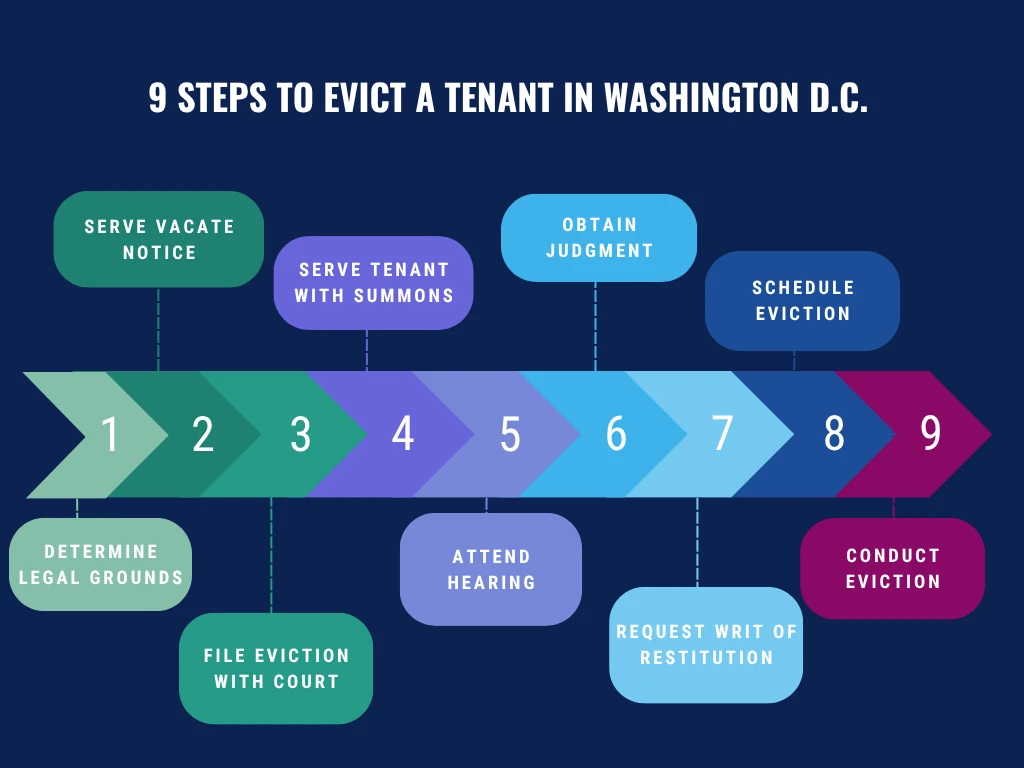
Here are the nine essential steps you must take to evict tenants in Washington D.C.:
Washington D.C.’s court system has created many hurdles for landlords trying to handle problem tenants. Recent research shows that in 2025 D.C. handled more than 1,000 filings for evictions per month.
As a landlord, there are specific steps you must take if you need to evict a tenant in Washington D.C. Neglecting to follow these steps could cost you time and money, while also increasing the risk of running afoul of the legal system.
We were recently contacted by a landlord in Maryland whose tenant was no longer paying rent. Even though the landlord was eventually freed from the difficult tenants, he was surprised by the complicated legal process. Situations similar to this are reminders that tenants can be heavily protected by laws, so following the process by the letter is extremely important.
Here are the nine foundational steps you must take to evict a tenant in Washington D.C.:
Before beginning the eviction process, you must ensure your reasons align with Washington D.C.’s stringent laws. The city recognizes 10 specific grounds for eviction, including:
Each reason must be substantiated with proper documentation, such as a copy of the lease or evidence of illegal behavior. Additionally:
Correct documentation is extremely important and in our experience, problems with documentation are the most common reasons that D.C. evictions are delayed. Keeping records organized from the start can make a big difference in the event that your case enters the court system. Records such as photos, written tenant communications, payment history, and any written notices can provide a solid foundation for your case.
Starting on firm legal footing protects you and ensures a smoother eviction process.
Once you’ve confirmed valid legal grounds, you need to serve the tenant with a Notice to Vacate. This document formally notifies the tenant of your intent to terminate the lease.
The notice must include:
The notice periods vary:
To comply with D.C. laws:
This step establishes the formal start of the eviction process.
If the tenant doesn’t vacate or resolve the issue after receiving the Notice to Vacate, you can proceed by filing a Complaint for Possession with the D.C. Superior Court.
Steps to follow:
Key documents to prepare:
Proper filing ensures the legal process is officially underway.
After filing, the court will issue a Summons and Complaint, which must be served to the tenant. This step ensures the tenant is formally notified of the eviction lawsuit.
Requirements for service:
Proof of service is critical:
Failure to properly serve the Summons can result in delays or dismissal of your case.

Both you and the tenant must attend the court hearing, where a judge will review the case.
At the hearing:
Key considerations:
If the judge rules for eviction, you’ll receive a Judgment for Possession, granting you the legal right to reclaim the property.
You will also need to prepare for possible continuances, delays or additional filings, especially if the tenants file notice disputes or raise concerns of property habitability. Simple Washington D.C. eviction cases can easily extend into complicated legal processes depending on the strength of tenant defenses and the busy schedules of the courts.
Winning the court hearing is only part of the process. You need a Judgment for Possession, which legally authorizes you to move forward with reclaiming your property.
What to know:
This judgment is a critical milestone, officially giving you the right to proceed with the next steps.
Once the statutory stay expires, file for a Writ of Restitution. This document authorizes the U.S. Marshals Service to oversee the eviction.
Steps to follow:
The writ ensures that the eviction is conducted lawfully, protecting you from accusations of illegal practices.
In Washington D.C., only the U.S. Marshals Service can carry out evictions.
Coordination steps:
The marshals will notify the tenant, typically giving them 24 hours to vacate before the eviction takes place.
This step ensures the process remains within legal boundaries.

On the scheduled date, the U.S. Marshals will oversee the eviction. They will remove the tenant and their belongings from the property.
Key responsibilities for landlords:
Important tips:
This final step concludes the eviction process, allowing you to regain control of your property.

Here are some of the most common questions associated with the Washington D.C. eviction process.
Washington D.C. allows evictions for specific reasons, such as nonpayment of rent, lease violations, illegal activities, or personal use of the property by the landlord. Each reason must be documented and follow legal procedures outlined in D.C. laws.
The eviction process in Washington D.C. can take 30 to 90 days, depending on court schedules and tenant responses. Delays may occur if the tenant contests the eviction or files an appeal.
Yes, evictions can occur during winter, as there are no seasonal restrictions in Washington D.C. However, landlords must still comply with all legal procedures and timelines.
If the tenant refuses to vacate, the landlord must obtain a Writ of Restitution and coordinate with the U.S. Marshals Service. Only the marshals have the authority to remove a tenant and their belongings from the property.
Yes, tenants can delay an eviction by filing an appeal within the statutory stay period. The case will remain unresolved until the appeal is reviewed and decided by the court.
Yes, serving a Notice to Vacate is a mandatory first step in the eviction process. The notice must comply with D.C. regulations, including specific timelines based on the grounds for eviction.
Yes, landlords who attempt illegal evictions, such as changing locks or shutting off utilities, can face legal consequences. Tenants may sue for damages, including court costs and attorney fees.
Once the eviction has been finalized by the U.S. Marshals Service, landlords can remove the tenants belongings as long as they have followed local regulations.
For landlords, payments records, tenant notices, lease agreement copies, photos of property damage, proof of service documents, and any other signed or serviced paperwork.
Paying overdue rent may stop the eviction process if the eviction was due to overdue rents. However, if there were other reasons for eviction, such as property damage, then the eviction process will continue.
Since D.C. eviction laws are designed to protect the tenant, many landlords starting the eviction process do hire attorneys. While it is not required, it can be a good legal foundation to stand on.
Evicting a tenant in Washington D.C. is a legally complex and often time-consuming process. The city's tenant-friendly laws are designed to protect renters, but they can pose significant challenges for landlords navigating the eviction process.
Having worked with many landlords in the DMV area, we’ve seen firsthand how long the D.C. eviction process takes.
We’ve also seen many landlords shocked at how documentation-dependent cases are once they reach court. Incomplete paperwork, missing notices, and records can all heavily impact the outcome of the case.
Washington D.C. has some of the strongest tenant protections in the country. Landlords must adhere to strict guidelines, including providing valid legal grounds for eviction, serving accurate notices, and following detailed court procedures. Failing to comply with any of these steps can result in the dismissal of the eviction case, costing landlords additional time and money.
Key challenges include:
Tenants in Washington D.C. have the right to appeal eviction judgments, which can significantly delay the process. Court schedules can also contribute to delays, especially in high-demand housing markets where cases may be backlogged.
Common causes of delays include:
Unlike many states, Washington D.C. requires evictions to be carried out exclusively by the U.S. Marshals Service. Coordinating with the marshals can add logistical complexity and further extend timelines, as they manage multiple cases and have strict protocols for scheduling and executing evictions.
Tips for minimizing delays:
Evictions can strain landlord-tenant relationships, sometimes leading to retaliatory actions from tenants. These can include intentional property damage, refusal to leave, or filing complaints to delay the process. Landlords must remain professional and document all communications to protect their rights and property.
Staying prepared and following all legal requirements meticulously is the best way to overcome these challenges. While the process may be daunting, working with an attorney and maintaining thorough documentation can help ensure a successful resolution.
When managing rental property in Washington D.C., you know there may come a time when you need to evict a tenant. It comes with the territory.
If you find yourself needing to evict a tenant, following the Washington D.C. legal process can be a stressful process. But you will greatly benefit if you have kept careful records and educated yourself on your state laws. Speaking with a real estate attorney before you file can also help strengthen your claim, especially if your case will be contested by your tenant. If you’re thinking of selling your rental home to a cash home buyer, House Buyers of America has extensive experience in the Washington D.C. area and can present offers within 10 minutes.
or call us at 855-659-3289
Searching and Processing Address