August 23, 2025

Selling your home is supposed to be a fresh start, a chance to close one chapter and begin the next. But once you hand over the keys, are you really done? Or could you still be held responsible for problems with the house?
The truth is, liability doesn’t always end on closing day. Depending on where you live, what’s in your contract, and the type of issue that comes up, you could still be on the hook for certain repairs or legal claims after the sale.
In this guide, we’ll explain exactly how long liability lasts after selling a house, what types of problems might come back to haunt you, and how to protect yourself, whether you’re selling the traditional way or looking for a faster, safer alternative.
Understanding Seller Liability After a Home Sale
When you sell a home, you have a legal obligation to disclose certain known problems. These specific rules are set by state law, but they often include issues like:
- Structural problems (foundation cracks, roof leaks, etc.)
- Plumbing or electrical defects
- Pest infestations
- Water damage or mold
- Flooding or drainage problems
- History of lead paint, asbestos, or other hazardous materials
If you fail to disclose a known issue or if you misrepresent the condition of the property, the buyer could have legal grounds to sue you after closing.
The big takeaway: Your liability period doesn’t depend on whether you caused the problem; it depends on whether you knew about it and failed to disclose it.
How Long Does Liability Last After Selling a House?
Selling your home doesn’t necessarily end all of your responsibilities. In certain situations, you can still be held legally responsible for problems with the property well after closing, especially if there’s a dispute over the contract or if required disclosures were missed.
How long you might be liable depends on your state’s statute of limitations. This is the legal window of time a buyer has to file a claim, and it can vary widely. Some states allow just a couple of years, while others give buyers a decade or more to take action. In real estate, most claims are civil matters and can involve breach of contract, property damage, fraud, or personal injury.
Here are a few examples of statute of limitations timelines for written contracts and property damage in different states:
- Arizona: Written contracts – 6 years; Property damage – 2 years
- Illinois: Written contracts – 10 years; Property damage – 5 years
- Colorado: Written contracts – 3 years (longer for some debts); Property damage – 2 years (3 years for motor-vehicle damage)
- Florida: Written contracts – 5 years; Property damage – 4 years
- Nevada: Written contracts – 6 years; Property damage – 3 years
- Virginia: Written contracts – 5 years; Property damage – 5 years
These timelines are general and can change depending on the specific claim or when the problem is discovered.
For example, some fraud cases start the clock when the issue comes to light, not at closing. Because laws differ from state to state, and exceptions do exist, it’s best to consult a real estate attorney who can review your situation and help you understand any lingering obligations.
Repair Calculator
Should You Fix or Sell As-Is?
Estimate repair costs and compare your options: fix and list, sell As-Is, or get a cash offer.


Unlock the Full Calculator
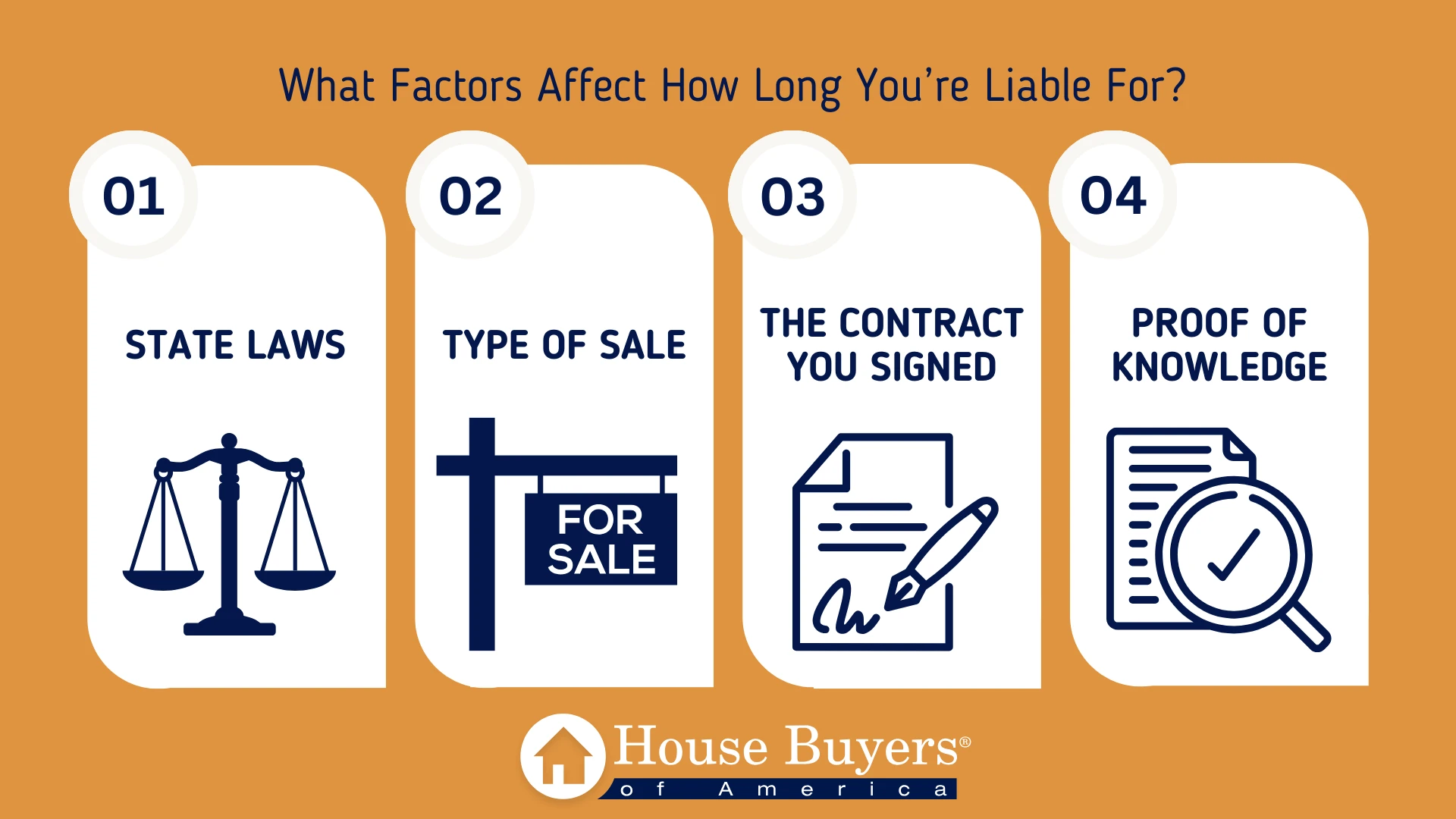
What Factors Affect How Long You’re Liable For?
The exact liability period depends on a mix of legal, contractual, and practical factors.
State Laws
Each state has its own laws governing real estate disclosures and how long sellers can be held liable. In some places, a “discovery rule” applies, meaning the countdown doesn’t begin until the buyer uncovers the issue, potentially lengthening your liability period.
Type of Sale
The type of sale will affect your liability:
- Traditional sale: Most liability applies here because you’re providing disclosures and a full inspection process.
- As-Is sale: Limits your responsibility for repairs but doesn’t completely remove liability if you knowingly hide a defect.
- Cash buyer sale: Often the fastest way to close and avoid lengthy post-sale disputes.
The Contract You Signed
Your purchase agreement can directly affect how long you’re liable after selling. It may include home warranties, repair commitments, or deadlines for fixing certain issues.
Some contracts extend liability periods, while others limit the types of claims a buyer can make. Because these provisions can override general state rules, it’s smart to review your contract carefully, ideally with an attorney, so you know exactly where you stand.
Proof of Knowledge
If a buyer can’t prove you knew about an issue, their case is much harder to win. Documentation is key.

Common Problems That Lead To Post-Sale Claims
Some home issues are more likely to trigger legal action after a sale than others. Here’s what often causes trouble:
- Water damage hidden behind walls or under flooring
- Mold in basements, attics, or crawl spaces
- Foundation issues that were painted over or patched temporarily
- Roof leaks not disclosed on the seller’s property disclosure form
- Pest infestations like termites or carpenter ants
- Flooding history not revealed to the buyer
Even if you think an issue is minor, if it costs the buyer thousands to fix, they may try to hold you responsible.
How To Protect Yourself From Liability After Selling
The best way to avoid costly disputes is to be thorough, transparent, and proactive before closing.
Be Honest in Your Disclosures
List every issue you know about, even if it’s already been repaired. A small admission now can prevent a big lawsuit later.
Document Everything
Keep receipts, inspection reports, and repair records. If a buyer claims you hid something, your paperwork can prove otherwise.
Get a Pre-Listing Inspection
This can help you uncover and fix problems before buyers see them.
Consider Selling As-Is
If you can’t afford repairs, an As-Is sale, especially to a reputable cash buyer, can speed up the process and limit your liability risk.
Hire A Real Estate Attorney
Hiring a real estate attorney before listing your property, especially if your home has a history of repairs or you’re unsure what must be disclosed. They can review your disclosure forms, purchase agreement, and inspection reports to ensure you’re protected from the start.

How As-Is and Cash Sales Change Liability
Many sellers choose to sell their home As-Is to avoid pouring money into repairs before closing. In an As-Is sale, you’re telling the buyer you won’t be making repairs, but you’re still legally required to disclose any known problems.
When you sell to a cash buyer like House Buyers of America, you skip:
- Showings and open houses
- Weeks or months of uncertainty
- Expensive repairs or upgrades before selling
And because cash buyers purchase homes in their current condition, there’s less risk of the kind of post-sale disputes that happen in traditional sales.
When To Seek Legal Advice
If a buyer threatens to sue you after closing, or you receive a formal legal notice, speak to a real estate attorney right away. They can:
- Review your disclosures and contract
- Advise you on your rights and defenses
- Negotiate or settle disputes before they escalate
The faster you get legal guidance, the better your chances of resolving the issue without expensive litigation.
Frequently Asked Questions About Liability After Selling a House
What Happens if the Buyer Finds a Problem After Closing?
If it’s something you knew about and didn’t disclose, they may have legal grounds to sue. If you were unaware of the problem, you may not be liable, but state laws vary.
Can Selling As-Is Protect Me From Liability?
Selling your home As-Is can limit your liability for repairs, but you still must disclose known defects. As-is doesn’t protect you from claims of fraud or misrepresentation.
What’s the Best Way To Avoid Liability?
Be honest in your disclosures, keep repair records, and consider a pre-listing inspection. Selling to a cash buyer can also reduce risk.
What if the Buyer Claims I Hid a Problem, but I Truly Didn’t Know About It?
If you were genuinely unaware of the issue and it wasn’t something a reasonable homeowner would have noticed, you may have a strong defense. In many states, the buyer must prove that you had actual knowledge of the defect. Documentation showing regular maintenance and inspections can help support your case.
Do I Need To Disclose Repairs I Already Made?
Yes, in most cases it’s smart to disclose past repairs, even if the problem is fixed. This transparency builds trust and prevents the buyer from thinking you tried to hide the home’s history.
What Happens if I Sell to a Family Member or Friend?
Selling to someone you know doesn’t change your legal obligations. In fact, it’s even more important to document disclosures and contracts to avoid personal disputes down the road.
Can Liability Transfer to the Next Owner After the Buyer Sells the House?
Usually, your liability is tied to the buyer you sold to. However, if a later owner can prove you knew about and failed to disclose a defect, they may still be able to bring a claim within your state’s statute of limitations.

Recent Posts


Frequently Asked Questions (FAQs) About Selling Your Home Fast
During a transfer, a new deed is drafted and signed by the seller, transferring ownership of the house to the new buyer. This document is then recorded in the land records with the above-mentioned deed of trust.
We work with your bankruptcy attorney to present a FAIR offer and give you additional money at closing. We present the offer directly to your attorney and work to have the offer accepted by the bankruptcy court. Once the offer is accepted, we ensure that the bankruptcy is released and we buy the property as soon as possible.
Yes, we can work with any seller who needs to move a property quickly for any reason and in any price range. We have purchased million-dollar houses before.
Yes, we buy apartments, multi-family houses/buildings and land.
No! You have no obligation at all if you submit an information form, show your property to House Buyers or receive an offer to buy your house. You are under no obligation at all. All we ask for is the opportunity to make an offer for your house, you’re in the driver’s seat as to whether you accept the offer or not. You are in complete control. You are only obligated to our service if you have entered into a purchase agreement with us, as with any other real estate transaction.
We need very basic information from you about your house. The number of bedrooms, bathrooms and overall condition of the property is needed. We will also ask you how long you have owned your home and if there are any mortgages or liens against the property.
We offer the maximum amount possible, our offers are very competitive. If our offers weren’t competitive, we wouldn’t have purchased thousands of houses! There is no magic percentage we use, every house is unique. Our Real Estate Consultants take into consideration the age, condition, size, features and location of the home much like an appraiser would. We factor in the costs to repair the house, what other homes in the area are selling for and how long it is taking to sell those homes. These and several other factors are researched to determine a fair offer.
As soon as we receive your Online Form, we will review your information and get back to you ASAP (usually within 30-60 minutes depending on when you submit the information).
We work FAST to help ensure that your house doesn’t go to foreclosure. We present you with a FAIR offer to pay off your mortgage before the foreclosure. We help save your credit, avoid foreclosure and allow you to sell your house FAST and FAIR. Due to recent legislation, if you reside in the state of Maryland and are within a certain period of time before your foreclosure sale date, we will introduce you to a Foreclosure Consultant. The legislation mandates that if you are within this certain window that a foreclosure consultant must explain to you all of your options involved in selling your home.
No problem! We can still buy your house as is, even if it has demolition orders scheduled.
House Buyers of America
We buy your home on your terms.
- No repairs or showings
- Close on your time frame
- No commissions or fees
- No obligation cash offer
Over 25 Years in Business · Trusted Since 2001
Get Your Fair Cash
Offer
Today!
or call us at 855-659-3289
Searching and Processing Address