
Last Updated : October 1, 2025 by Chris Bibey
Evicting a tenant in Maine is not as simple as telling them to leave. The process is governed by Maine’s landlord-tenant laws, and landlords must follow each step carefully. If you make a mistake, your case can be delayed or dismissed, and the tenant may remain in the property longer than expected.
This guide explains the entire eviction process in Maine. From the notices you need to serve to what happens after the court hearing, you will see how each stage works and what you must prepare for.
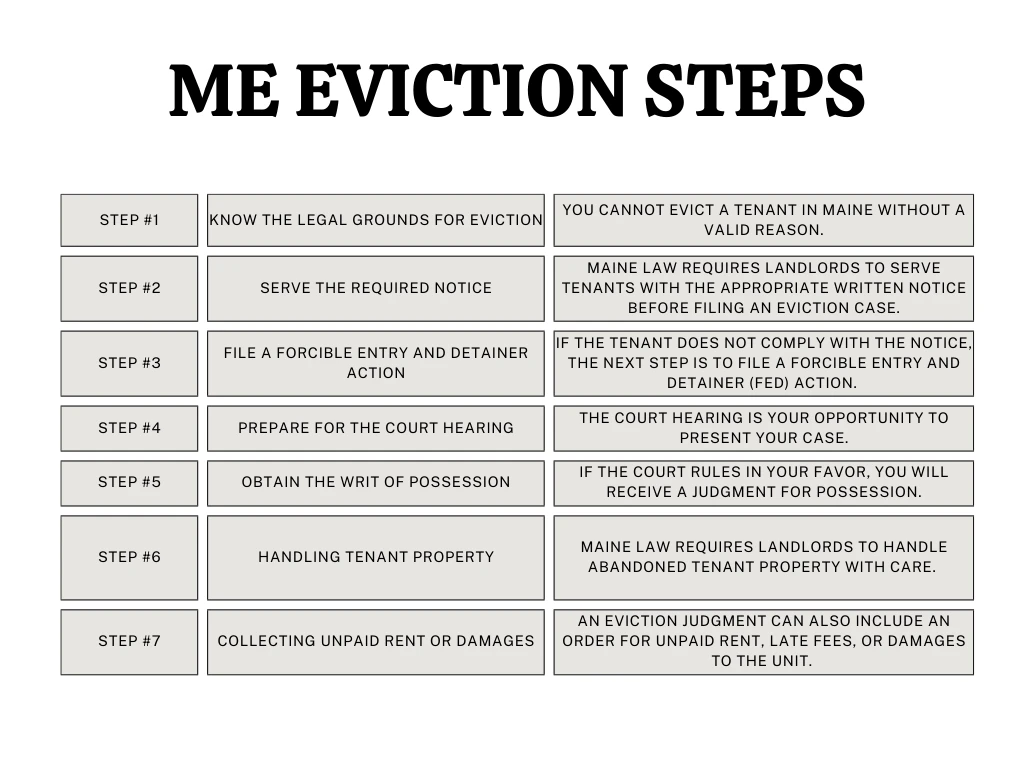
You cannot evict a tenant in Maine without a valid reason. The law recognizes specific grounds that allow landlords to file for eviction. These include:
Before moving forward, confirm that your situation falls under one of these categories. If not, the court may dismiss your complaint.
Maine law requires landlords to serve tenants with the appropriate written notice before filing an eviction case. The type of notice depends on the situation:
Your notice must be clear and specific. It should list the reason for eviction, the time frame for compliance, and the consequences of failing to comply. Keep a copy for your records, as you will need it in court.
If the tenant does not comply with the notice, the next step is to file a Forcible Entry and Detainer (FED) action. This is Maine’s legal term for an eviction lawsuit.
After filing, the court will set a hearing date. The tenant must be served with the complaint and the hearing notice. Service is typically handled by a sheriff or constable.

The court hearing is your opportunity to present your case. Both you and the tenant will have a chance to testify and submit evidence.
To strengthen your case, bring:
If the tenant does not show up, the judge may grant a default judgment in your favor. If both parties attend, the judge will hear evidence and make a decision.
If the court rules in your favor, you will receive a judgment for possession. However, the tenant will not be removed immediately. You must request a writ of possession, which authorizes law enforcement to remove the tenant.
You cannot carry out a “self-help” eviction in Maine. Changing the locks or removing the tenant without a writ is illegal.
Maine law requires landlords to handle abandoned tenant property with care. Once a tenant is removed under a writ of possession, you may find belongings left behind.
Keep records of how you store, handle, and dispose of tenant property. This helps protect you if the tenant later claims items were lost or damaged.
An eviction judgment can also include an order for unpaid rent, late fees, or damages to the unit. While regaining possession is often the priority, landlords may also pursue payment.
Options include:
You should weigh the cost and effort of collecting against the likelihood of success.
Many eviction cases are delayed or dismissed because landlords make avoidable mistakes. Some of the most frequent errors in Maine include:
Avoiding these mistakes keeps your case moving forward. Careful recordkeeping and following legal timelines will strengthen your position.

Although eviction is sometimes necessary, it is often costly and time-consuming. Exploring alternatives can save you money and stress.
Consider these options:
In some cases, these alternatives can resolve the problem without the need for court.
Once you regain possession of your property, it is worth taking steps to prevent similar issues from happening again. Proactive measures include:
These steps reduce the likelihood of having to go through eviction again.
Maine’s eviction process has some unique features compared to other states. Understanding these differences will help you avoid surprises.
These distinctions matter because landlords must follow the exact procedures set out by Maine law.
Every case is different, but here is a general timeline of how long the process may take:
In total, a Maine eviction may take between six to eight weeks, depending on the case.
These are some of the most common questions associated with evicting a tenant in Maine.
Can I evict a tenant in winter in Maine?
Yes. Maine law does not prohibit winter evictions, though some municipalities may have local rules.
Can I evict without a written lease?
Yes. Verbal agreements are still covered under Maine law. For month-to-month tenancies, you must serve a 30-day notice.
Can I change the locks if my tenant does not pay rent?
No. This is considered an illegal eviction and can result in penalties.
Do I need a lawyer to file for eviction in Maine?
Not always, but legal guidance can help ensure you follow the proper steps.
Evicting a tenant in Maine is a formal legal process that requires patience and precision. From serving the right notice to filing a Forcible Entry and Detainer action, each step must be handled correctly. Attempting to skip a step or remove the tenant on your own will only cause delays and potential legal trouble.
Ready to move on from your rental property? Consider selling your investment for cash.
or call us at 855-659-3289
Searching and Processing Address