
Last Updated : November 4, 2025 by Chris Bibey
As a landlord in Montana, you should treat eviction as a last resort. It’s always best to resolve disputes directly with your tenant. It saves time, money, and stress. But if a tenant refuses to pay rent or violates the lease, you may have no choice but to begin the formal eviction process.
Below, we outline the exact steps you must take to legally evict a tenant in Montana.
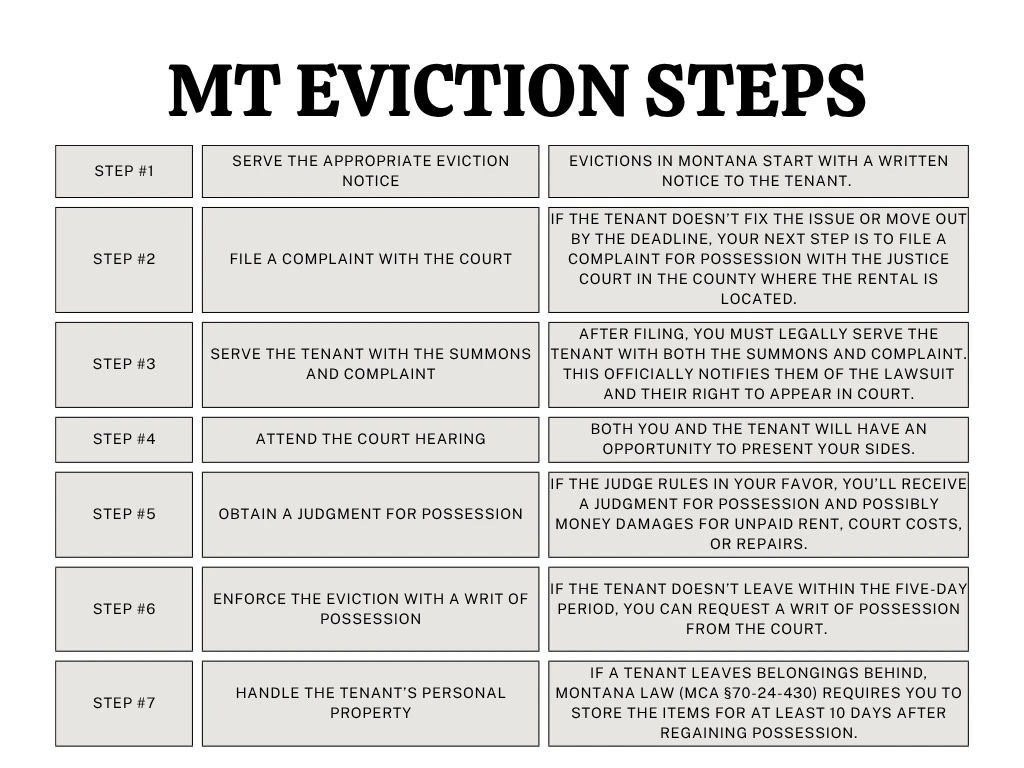
These are the seven steps you’ll take if you need to evict a tenant in Montana.
Evictions in Montana start with a written notice to the tenant. The type and timing of the notice depend on the reason for eviction. You must clearly state the violation, how the tenant can correct it (if applicable), and when they must move out.
Common Montana eviction notices include:
Deliver the notice in person or by certified mail with a return receipt. Posting it at the rental alone is not sufficient under Montana law.

If the tenant doesn’t fix the issue or move out by the deadline, your next step is to file a Complaint for Possession with the Justice Court in the county where the rental is located.
You’ll need:
Once filed, the court will issue a Summons and set a hearing date, typically within 5–14 days.
After filing, you must legally serve the tenant with both the Summons and Complaint. This officially notifies them of the lawsuit and their right to appear in court.
Key rules in Montana:
If service is improper or late, your case can be delayed or dismissed.
Both you and the tenant will have an opportunity to present your sides. Bring documentation that supports your claim, such as the lease, payment records, communication logs, photos of damages, and the eviction notice.
Be prepared to:
If the tenant fails to appear, you may win a default judgment giving you possession of the property.
If the judge rules in your favor, you’ll receive a Judgment for Possession and possibly money damages for unpaid rent, court costs, or repairs.
Important details:
Do not take action until the court’s order is officially issued and served.
If the tenant doesn’t leave within the five-day period, you can request a Writ of Possession from the court. This writ authorizes a sheriff or constable to remove the tenant and restore possession of the property to you.
Here’s how this step works:
Self-help evictions such as shutting off utilities or removing doors are illegal in Montana and can result in penalties or damages owed to the tenant.
If a tenant leaves belongings behind, Montana law (MCA §70-24-430) requires you to store the items for at least 10 days after regaining possession.
Follow these steps:
Always document what was left and how you handled it. This protects you from future disputes.
Eviction should be a last resort. In many cases, a proactive conversation or agreement can resolve the issue faster and with less cost.

You can offer the tenant a lump sum to vacate voluntarily. While it may feel counterintuitive, this method often saves you weeks of time and hundreds in legal fees. Put the agreement in writing, include a deadline, and confirm property condition expectations.
If your tenant’s hardship is temporary, consider renegotiating rent or adjusting payment dates. Create a short-term addendum and have both parties sign. This can preserve occupancy and maintain your income stream.
Montana courts and housing organizations often provide free or low-cost mediation services. A neutral third party can help you and your tenant reach a compromise before it escalates to court.
For month-to-month or short-term rentals, simply allow the lease to expire and give the required 30-day written notice. This avoids a formal eviction and gives the tenant time to relocate.
If nonpayment is the issue, outline a written payment plan that helps the tenant catch up. Define specific amounts and deadlines. This option only works when both sides act in good faith.
If you’re new to the process, here are answers to the most common questions landlords have about evicting a tenant in Montana.
Can I evict a tenant in Montana without a written lease?
Yes. Even with a verbal agreement, Montana law still requires you to serve proper written notice and follow court procedures.
How long does the eviction process take in Montana?
Most evictions take 3–6 weeks, depending on court schedules and whether the tenant contests the case.
Can I accept partial rent and still evict?
If you accept partial rent after serving a 3-day notice, you must issue a new notice, otherwise it resets the timeline.
Do I need a lawyer for eviction?
No, landlords may represent themselves in Justice Court, but legal counsel is recommended for contested cases or large damages claims.
Can I evict during winter?
Yes. There are no seasonal restrictions on evictions in Montana, but local courts may delay hearings around holidays.
What happens if the tenant damages my property?
You can deduct repair costs from the security deposit or sue for additional damages in small claims or district court.
With these steps, you now understand how to evict a tenant in Montana legally and efficiently.
If the eviction process feels overwhelming or you’re ready to move on from managing rentals, consider selling your Montana investment property. It could be the best way to protect your finances and simplify your life.
or call us at 855-659-3289
Searching and Processing Address