
Last Updated : November 5, 2025 by Chris Bibey
Evicting a tenant in California requires strict adherence to state laws, which provide tenants with strong protections.
Whether your tenant has stopped paying rent or violated the lease, following the correct legal steps is essential to avoid costly delays or legal challenges.
This guide walks you through each step to handle an eviction legally and efficiently in California.
Evictions in California follow a structured legal process. Here are the key steps landlords must take:
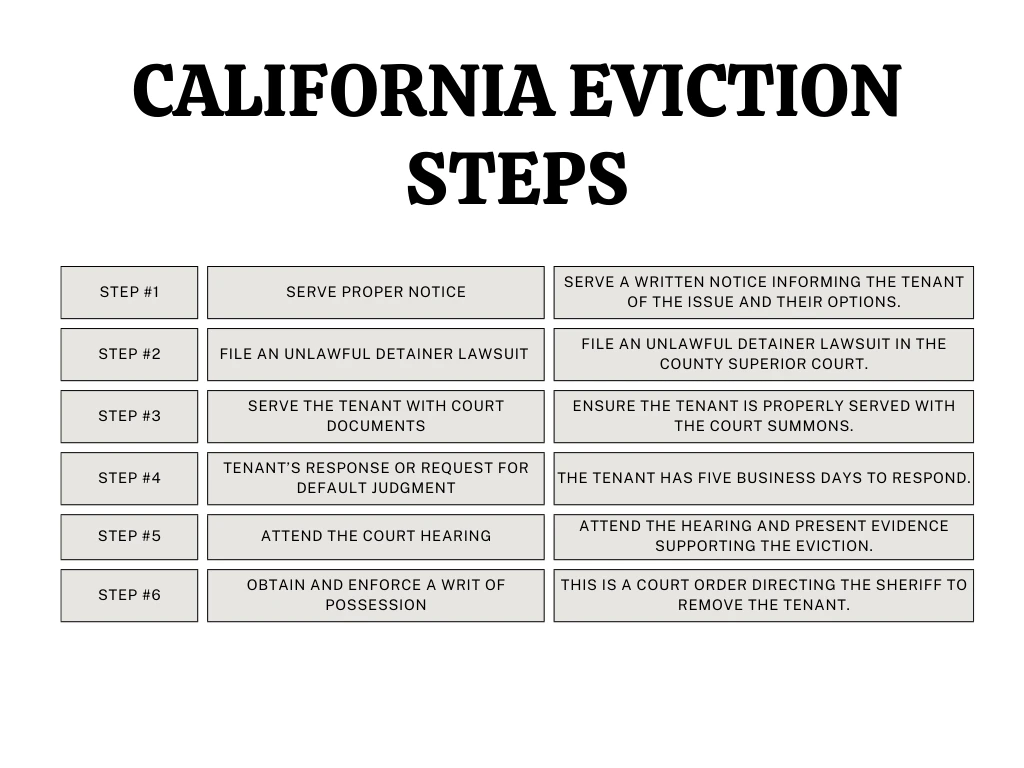
Before filing for eviction, you must give your tenant written notice, which varies depending on the reason for eviction.
Types of Eviction Notices in California:
The notice must be personally served, posted on the property and mailed, or delivered via certified mail with a return receipt. If the tenant does not comply, you may proceed to court.
If the tenant does not respond or refuses to vacate, you must file an Unlawful Detainer lawsuit in the county superior court where the rental property is located.
Required Documents:
After filing, you must pay a court filing fee. The court will issue a Summons and Complaint, which must be served to the tenant. This legal document formally notifies the tenant of the eviction lawsuit and their right to respond.
California courts require landlords to be thorough with documentation, as missing or improperly filed paperwork can result in case dismissal. If the tenant contests the eviction, you will need to provide a strong case backed by detailed evidence.

Once the lawsuit is filed, the Summons and Complaint must be served to the tenant by a registered process server, sheriff, or any non-party over 18 years old.
Methods of Service:
The server must file a Proof of Service form with the court to confirm delivery. Improper service can delay the eviction process, as tenants can challenge the validity of the service method in court. If the tenant is avoiding service, you may need to request alternative methods through the court.
After being served, the tenant has five business days to respond (excluding weekends and court holidays). They may:
If the tenant contests the eviction, a hearing will be scheduled, usually within 20 days. During this phase, it is crucial to prepare for potential legal defenses from the tenant.
Common tenant defenses include claims of retaliation, discrimination, or improper service of notices. If any of these claims hold up in court, your eviction case may be dismissed or delayed.
If the case goes to trial, both parties present evidence. The judge may:
If the tenant wins, you may need to restart the process. If you win, you can move to the final step. In some cases, the judge may grant the tenant additional time to vacate before an eviction order is enforced, especially if the tenant can prove hardship.
If the court rules in your favor, you must obtain a Writ of Possession, a court order directing the sheriff to remove the tenant.
Enforcement Process:
Once the property is vacated, you regain legal possession and may change the locks. California law prohibits landlords from taking matters into their own hands, such as forcefully removing tenants or shutting off utilities. If the tenant refuses to leave after the five-day notice period, only law enforcement can carry out the eviction.
There are several alternatives to eviction that you should strongly consider. These include but are not necessarily limited to the following.
Offering the tenant a financial incentive via cash for keys to leave voluntarily can be a cost-effective and time-saving solution. This method involves negotiating an agreement where the tenant agrees to vacate in exchange for a payment. A written agreement should outline the move-out date, condition of the property, and amount offered.

Some tenants may have temporary financial difficulties but are willing to pay rent if given time. A structured payment plan can help landlords recover lost income without pursuing legal action. Terms should be clearly documented, including deadlines and partial payment amounts.
If both parties agree, terminating the lease early can be an alternative to eviction. This approach may involve mutual consent where the tenant agrees to leave by a specific date in exchange for waiving outstanding rent or other incentives.
Evicting a tenant in California can be complex, and landlords often have common concerns. Below are seven frequently asked questions:
Can I evict a tenant without a lease?
Yes, but you must provide a 30-day or 60-day notice, depending on how long they have lived in the unit.
Can I shut off utilities to force a tenant out?
No, this is illegal and can result in legal penalties against the landlord.
How long does the eviction process take?
It typically takes one to three months, but contested cases may take longer.
What happens if a tenant leaves belongings behind?
You must store the items and provide written notice, allowing at least 15 days for retrieval.
Can a tenant stop the eviction by paying rent after the notice expires?
In some cases, yes, but it depends on the type of eviction notice served.
Can I refuse rent payments once an eviction process starts?
Accepting payments may reset the eviction process, so it is best to decline unless explicitly agreed upon.
Do I need an attorney for eviction in California?
While not required, legal representation can help navigate contested cases efficiently.
You never set out to evict a tenant, but things can change and you may find yourself facing this situation.
Rather than guess what you should and shouldn’t be doing, follow these steps closely.
And don’t forget, you can always sell your investment property in California if you’re ready to move on.
Searching and Processing Address