February 3, 2026

Imagine being handed a check for $10,000 simply for deciding to live somewhere new. It sounds too good to be true, but for thousands of people, it’s real life. As virtual employment opportunities reshape the way Americans work, cities and states are rolling out incentives to attract new residents.
These programs can open the door to a lower cost of living, better quality of life, and the chance to start fresh in a brand new community. But they also raise important questions. How do you qualify? What’s the catch? And if you’re a homeowner, what’s the smartest way to relocate without getting stuck in a complicated transition?
This guide is designed to walk you through where you can get paid to move, how these relocation programs really work, and how to plan a smooth, financially smart transition from one home to the next.
What is a Relocation Program?
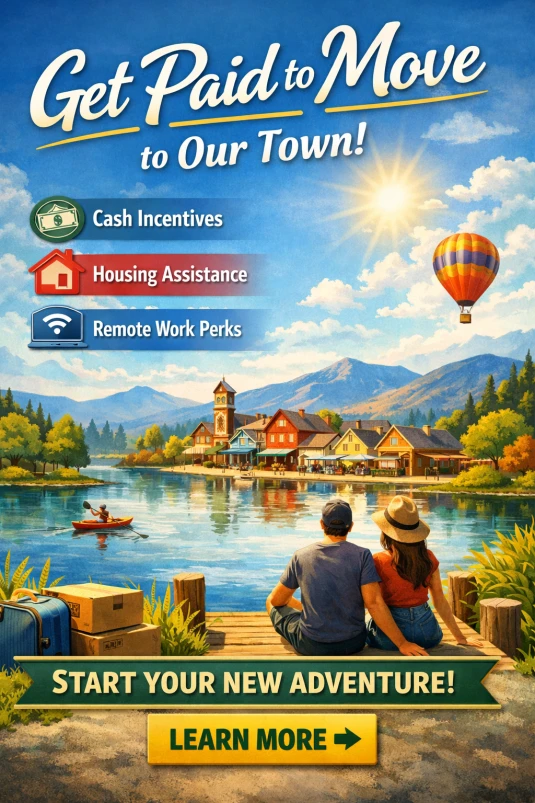
A relocation program is an incentive offered by a city, state, or region designed to entice new people to move there. Rather than simply hoping new residents will come along, communities offer real benefits to make the decision easier and more appealing.
Most programs include some combination of:
- Direct cash payments or grants
- Financial assistance with moving expenses
- Housing or down-payment support
- Free or discounted coworking space
- Tax credits or student loan repayment
- Networking and community welcome programs
These incentives are usually tied to a few basic requirements, such as remaining in the area for a specified amount of time or maintaining eligible employment. Some programs focus on people with location-flexible careers, while others are designed to attract those with certain desirable skillsets, such as teachers, healthcare workers, or entrepreneurs.
Programs vary by location, but the goal is always the same: lower the financial and logistical barriers that make moving feel risky. For people who were already thinking about making a change, these incentives can provide the motivation they need to take action.
Why Cities Are Paying People to Move
Across the United States, municipalities big and small are increasingly turning to relocation incentives as part of their economic development plans. One of the biggest drivers of this is the ongoing shift toward remote work. The Bureau of Labor Statistics estimates that roughly 37.8 million Americans, or 22.1% of the workforce, work remotely.
This flexibility has made it possible to live almost anywhere without being tied to a single office or city. It’s also opened the door for communities to actively compete for new residents.
These newcomers mean more customers for local businesses, greater stability for housing markets, and more people to keep schools and communities thriving. Meanwhile, individuals and families are able to choose a place to live that better suits their values, their budgets, and the kind of life they actually want to live.
At their core, relocation incentives create a win-win situation. Towns enjoy growth and economic momentum, while people gain affordability, flexibility, and a chance to design a life on their own terms.
Relocation Cost Calculator
Will Your Relocation Timeline Work?
Enter your details below to see if a cash offer or traditional sale fits your move-out deadline.


Unlock the Full Calculator
How to Find Places That Will Pay You to Relocate

Finding places that will pay you to relocate isn’t always as straightforward as a quick Google search. While most programs are public, they’re often scattered across various agencies and described in a number of different ways.
Knowing where to look and how to compare options can make the process far less overwhelming. Here are a few tips to get you started.
Start With the Right Search Strategy
One of the biggest challenges to finding relocation incentives is that these programs don’t always use the same name. When you’re researching, try using terms like:
- “relocation incentive programs”
- “virtual or location-flexible worker grants”
- “talent attraction initiatives”
- “community revitalization incentives”
Another thing to note is that most relocation programs are managed at the local level, so some of the best places to look include:
- State and city economic development websites
- Local Chamber of Commerce pages
- Regional workforce boards
- University and innovation hubs
- Local housing authorities or community foundations
You can also use online tools like MakeMyMove, which aggregate programs in one place and allow you to browse opportunities by region, incentive type, or lifestyle preferences.
One important caveat: while these tools can be helpful for getting a broad view of what’s out there, it’s always wise to check the official city or state website to confirm eligibility rules, deadlines, and other fine print.
Understand the Types of Incentives

When people hear “get paid to move,” they often imagine receiving a check with a big number on it. In reality, most relocation programs offer a combination of cash and other incentives designed to help make various parts of the move easier.
Common types of incentives include:
- Direct cash grants paid after you relocate or meet program requirements
- Housing stipends or down-payment assistance to help with buying or renting
- Free coworking or office space for people who work remotely
- Tax credits or fee waivers that lower your cost of living over time
- Student loan repayment for in-demand professions
- Moving cost reimbursements to cover trucks, storage, or travel expenses
Each type of incentive focuses on a different problem. A cash payment might help with immediate expenses, while housing support can help with longer-term monthly budgeting. That’s why the “best” program isn’t always the one with the biggest check. Instead, it’s the one that fits your needs, timeline, and what your plans are once you arrive.
Questions to Ask Before You Apply
Before you get caught up in the excitement of getting paid to relocate, it’s worth slowing down and taking a look at the bigger picture. A relocation program can help with the move, but it can’t guarantee you’ll love living there.
Start by asking yourself a few practical questions:
- How does the true cost of living compare to where you live now? Look beyond rent or home prices to things like groceries, insurance, utilities, and property taxes.
- What’s the job market like for a spouse or partner? Just because you have flexibility, doesn’t mean things will be as easy for your significant other.
- Is the internet sufficient? In some areas, especially more rural communities, connectivity issues could end up being a real problem.
- Is there enough housing in your price range? A great incentive won’t do you much good if you can’t find a place to live.
- Do the schools and healthcare options meet your needs? This is especially important if you have children.
- Can you picture yourself fitting into the community and pace of life? Be realistic about who you are and what you’re comfortable with.
Red Flags to Watch For

Not every relocation incentive is as simple or straightforward as it may look on the surface. Before you sign anything, pay close attention to the fine print and keep your eye out for a few common warning signs:
- Long residency clawbacks: Some programs require you to stay for a specified number of years or risk having to repay some or all of the incentive.
- Employer or income restrictions: You may be required to keep a specific job, work in a certain field, or maintain a minimum income to remain eligible.
- Tax implications: Incentive payments are often taxable, which can diminish the actual value of the offer.
- Limited housing inventory: A generous grant won’t help much if there are few homes available in your budget.
- Tight deadlines: Application windows and move-in dates may not align with your personal timeline.
None of these are necessarily dealbreakers, but they’re important to understand before you commit. A little due diligence in advance can save you from a stressful and expensive surprise down the road.
Is Getting Paid to Move Right for You?
Relocation incentives are not a perfect fit for everyone. In general, these programs tend to work best for:
- People with location-flexible careers who can work from anywhere
- Entrepreneurs and freelancers who aren’t tied to a specific local market
- Retirees looking to stretch their savings in a lower-cost community
- Families priced out of expensive areas who want more space and affordability
- Recent graduates or early-career professionals open to putting down roots somewhere new
Additionally, a paid relocation shouldn’t be treated like free money. Moving to a new place is still a major life decision, and the incentive is only one piece of the puzzle.
In weighing your decision, you’ll want to consider the following:
- Cultural fit: Will you feel comfortable in a smaller town or different region?
- Job stability: If your work situation changes, will you still be able to stay?
- Cost of living: Are groceries, utilities, and insurance actually cheaper?
- Weather and lifestyle: Will you truly enjoy the climate and pace of life?
- Schools and community: If you have a family, will the area meet their needs?
For some people, these programs open the door to a better quality of life. For others, the trade-offs may outweigh the benefits. The key is looking beyond the incentive itself and picturing what day-to-day life would actually be like.

Planning Your Move: How to Sell, Move, and Start Fresh
The logistics of relocating can feel overwhelming, especially for homeowners. A little upfront planning can help you stay organized and avoid costly last-minute decisions.
A Timeline for Homeowners
- 60–90 days out: Research relocation programs, explore housing markets in your target area, and get a clear picture of your current home’s value.
- 30–60 days out: Decide how you want to handle your current home (sell or rent) and start gathering estimates for moving costs.
- 2–4 weeks out: Schedule movers, transfer utilities, request school records, and confirm any program deadlines or paperwork.
Deciding What to Do with Your Current Home
For many people, the biggest hurdle isn’t the move itself. Rather, it’s figuring out how to handle the home they already own. You generally have a few paths:
- List traditionally, either with a realtor or For-Sale-by-Owner (FSBO). Note that this process may take longer and involve repairs, showings, and inspections.
- Selling As-Is to a cash buyer if speed and certainty are more important than squeezing out every dollar.
- Rent the property if you want to hold onto it as an investment property.
For some, a traditional sale, or keeping the home as a rental, may be the better financial move. For others, a fast cash sale might make more sense, particularly if you need a guaranteed closing date, don’t want to deal with repairs, or must relocate quickly to meet a program deadline.
Renting vs. Buying in Your New Location
Even with an incentive in hand, many people choose to rent first to test the area before committing to a purchase. Short-term leases, furnished rentals, or employer-provided housing can serve as a helpful bridge while you settle in.
Taking a little time to map out these logistics can turn a complicated transition into a confident fresh start.
Step-by-Step Checklist to Get Paid to Move
This simple checklist can keep you organized from start to finish.
- Identify eligible programs. Start with official city or state websites and trusted directories to build a short list of options.
- Confirm job requirements. Make sure your employment situation meets any income, industry, or location-based rules.
- Create a moving budget. Factor in travel, deposits, temporary housing, and potential gaps in income.
- Decide how to handle your current home. Choose between listing, selling As-Is, or renting based on your timeline.
- Gather key documents. You may need proof of income, residency history, or employer verification.
- Apply for incentives early. Many programs have limited spots or rolling deadlines.
- Plan the move. Book movers, schedule utilities, and coordinate school or childcare transitions.
- Track all deadlines. Missing a single requirement can jeopardize the incentive.
- Settle in and meet program obligations. Keep records and follow any residency or reporting rules.

A Fresh Start That Pays You Back
Relocation incentives can be a powerful opportunity to lower your cost of living, improve your quality of life, and start fresh in a new community. The key is to balance the excitement and anticipation with thoughtful planning, comparing programs, understanding the fine print, and choosing a strategy that truly fits your goals.

Recent Posts


Frequently Asked Questions (FAQs) About Selling Your Home Fast
During a transfer, a new deed is drafted and signed by the seller, transferring ownership of the house to the new buyer. This document is then recorded in the land records with the above-mentioned deed of trust.
We work with your bankruptcy attorney to present a FAIR offer and give you additional money at closing. We present the offer directly to your attorney and work to have the offer accepted by the bankruptcy court. Once the offer is accepted, we ensure that the bankruptcy is released and we buy the property as soon as possible.
Yes, we can work with any seller who needs to move a property quickly for any reason and in any price range. We have purchased million-dollar houses before.
Yes, we buy apartments, multi-family houses/buildings and land.
No! You have no obligation at all if you submit an information form, show your property to House Buyers or receive an offer to buy your house. You are under no obligation at all. All we ask for is the opportunity to make an offer for your house, you’re in the driver’s seat as to whether you accept the offer or not. You are in complete control. You are only obligated to our service if you have entered into a purchase agreement with us, as with any other real estate transaction.
We need very basic information from you about your house. The number of bedrooms, bathrooms and overall condition of the property is needed. We will also ask you how long you have owned your home and if there are any mortgages or liens against the property.
We offer the maximum amount possible, our offers are very competitive. If our offers weren’t competitive, we wouldn’t have purchased thousands of houses! There is no magic percentage we use, every house is unique. Our Real Estate Consultants take into consideration the age, condition, size, features and location of the home much like an appraiser would. We factor in the costs to repair the house, what other homes in the area are selling for and how long it is taking to sell those homes. These and several other factors are researched to determine a fair offer.
As soon as we receive your Online Form, we will review your information and get back to you ASAP (usually within 30-60 minutes depending on when you submit the information).
We work FAST to help ensure that your house doesn’t go to foreclosure. We present you with a FAIR offer to pay off your mortgage before the foreclosure. We help save your credit, avoid foreclosure and allow you to sell your house FAST and FAIR. Due to recent legislation, if you reside in the state of Maryland and are within a certain period of time before your foreclosure sale date, we will introduce you to a Foreclosure Consultant. The legislation mandates that if you are within this certain window that a foreclosure consultant must explain to you all of your options involved in selling your home.
No problem! We can still buy your house as is, even if it has demolition orders scheduled.
House Buyers of America
We buy your home on your terms.
- No repairs or showings
- Close on your time frame
- No commissions or fees
- No obligation cash offer
Over 25 Years in Business · Trusted Since 2001
Get Your Fair Cash
Offer
Today!
or call us at 855-659-3289
Searching and Processing Address