August 27, 2024

A house can be sold with a lien on it, but the lien must usually be paid off or resolved at closing. Property liens—such as tax liens, mechanic’s liens, or judgment liens—give creditors a legal claim to sale proceeds. Whether you can sell depends on the lien type, amount owed, and how the sale is structured. This guide explains your options and how to sell without derailing the closing.
What Is A Lien?
A lien is a legal hold on your property by a creditor or entity to ensure payment of a debt. If you owe money to someone—whether it’s a mortgage lender, the IRS, or a contractor—they can place a lien on your home. This lien gives them the right to a portion of the proceeds if you sell the property.
However, it’s important to note that not all liens are made equally. There are two categories that liens fall under.
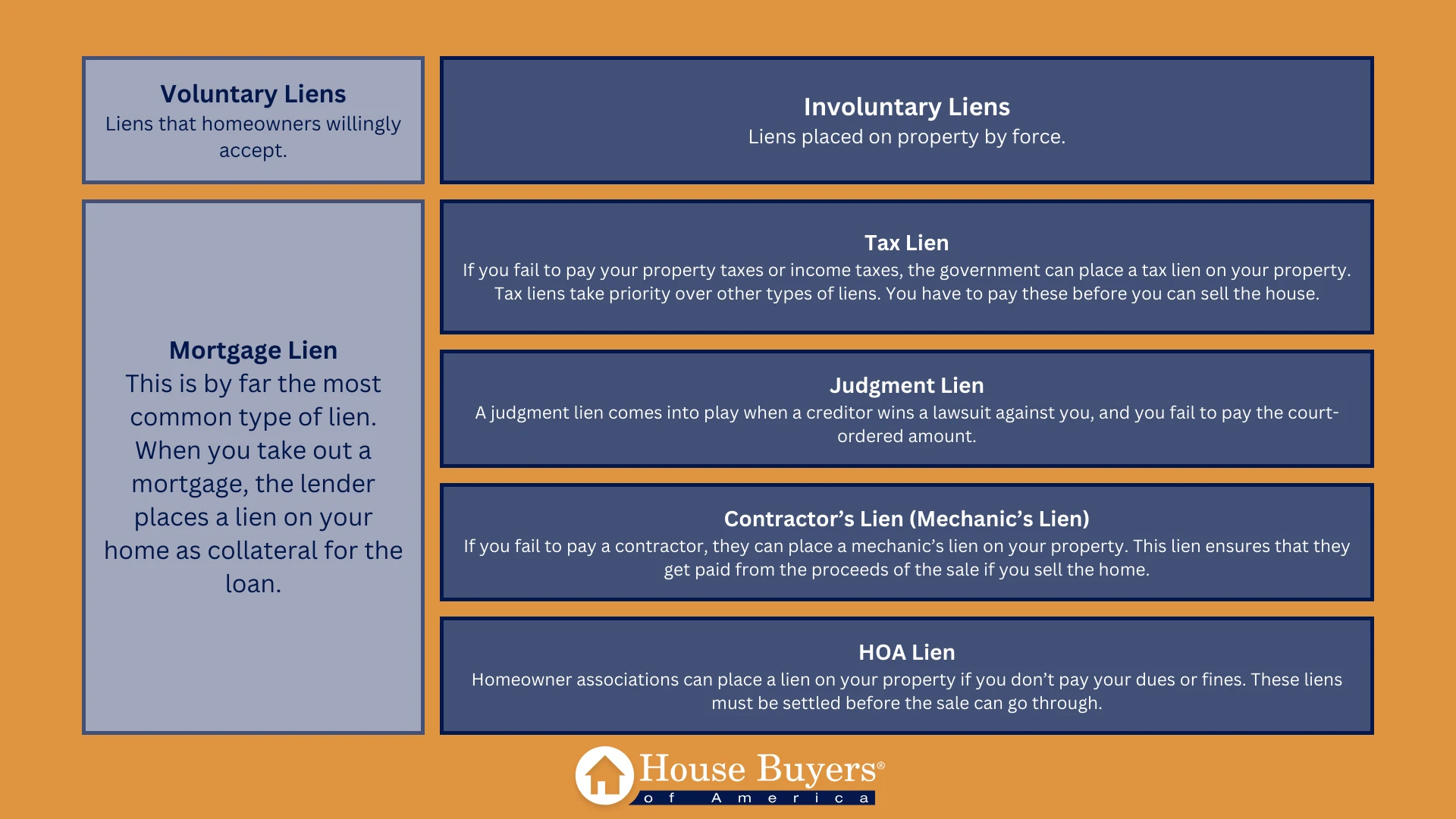
Voluntary Liens
These are liens that homeowners willingly accept, such as mortgages or home equity loans. When you take out a mortgage, the lender places a lien on your property as collateral. If you’re unable to or fail to pay the loan, the lender has the right to claim the property to recover the debt.
Typically, voluntary liens won’t negatively affect your ability to sell your home.
Involuntary Liens
Involuntary liens, as implied by the name, are placed on your property without your consent. These happen in cases where you owe unpaid taxes, fail to pay a contractor for work done on your home, or lose a lawsuit and owe damages.
Involuntary liens can make selling your home more difficult but not impossible.
Types of Liens on a Property
When asking yourself if a house can be sold when it has a lien, you should know there are a variety of liens you should be aware of when trying to sell a house. Here are some common types of liens you may come across.
Mortgage Lien
A mortgage lien is by far the most common type of lien. When you take out a mortgage, the lender places a lien on your home as collateral for the loan. This is a voluntary lien and is typically resolved by paying off the mortgage during the sale of the home.
Tax Lien
If you fail to pay your property or income taxes, the government can place a tax lien on your property. Tax liens are serious because they take priority over other types of liens, including mortgage liens. You have to pay these before you can sell the house.
Judgment Lien
A judgment lien comes into play when a creditor wins a lawsuit against you and you fail to pay the court-ordered amount. This is an involuntary lien that can complicate the sale of your home.
Contractor’s Lien (Mechanic’s Lien)
If you hire a contractor to do work on your home and fail to pay them, they can place a mechanic’s lien on your property. This lien ensures that they get paid from the proceeds of the sale if you sell the home.
HOA Lien
Homeowner associations can place a lien on your property if you don’t pay your dues or fines. These liens must be settled before the sale can go through.
Can A House Be Sold With A Lien On It?
Yes! It’s entirely possible to sell your house even with a lien on it. However, just because you can doesn’t mean the process will be easy.
Selling a House with a Mortgage Lien
If you’re selling a home with a mortgage lien, the lien is typically paid off during the closing process. The proceeds from the sale are used to pay off the remaining mortgage balance, and any excess funds go to you, the seller. This is a common scenario and usually doesn’t cause any issues.
Selling a House with an Involuntary Lien
Selling a home with an involuntary lien is a bit more challenging. There’s no way around it. These liens must be paid off before the sale can be completed unless you’re selling to a cash buyer. If you don’t have enough equity in your home to cover the lien, you’ll need to negotiate with the creditor or come up with the funds another way.
Let’s say you have a $10,000 mechanics lien on your property while trying to sell, but the sale of your home won’t cover paying the contractor. You can either cover the difference yourself, or work directly with the contractor to try and lower the amount.
If you do try to negotiate with the contractor, start by offering a fair value. It’s reasonable to ask for 10 – 15% off. They’ll be more inclined to accept $1,000 – $1,500 less if it means they get the money faster.
Agent vs Cash Calculator


Agent vs Cash: Home Sale Calculator
Compare your estimated net proceeds in 60 seconds.
Unlock the Full Calculator
Legal Considerations and Buyer Concerns
Liens can scare off potential buyers, especially if they plan to finance with a mortgage of their own. Most lenders won’t finance a home with a lien because it puts their investment at risk. This means you may need to find a cash buyer or resolve the lien before the sale can go through.

How To Sell A House With A Lien
If your home has a lien and you’re looking to sell, consider these strategies.
Pay Off the Lien Before the Sale
The simplest way to handle a lien is to pay it off before listing your home for sale. This clears the title and makes the sale process much smoother.
Negotiate the Debt
If you can’t pay off the lien in full, you may be able to negotiate with the creditor for a reduced payoff amount. This can be a viable option if you don’t have enough equity in your home to cover the lien.
Include the Lien in the Sale Proceeds
In some cases, you can include the lien in the sale proceeds. This means the lien will be paid off during the closing process using the funds from the sale. Your escrow agent will handle this, but it’s important to ensure there are enough funds to cover the lien.
Pursue Legal Assistance
If the lien is complex or if you’re unsure of how to proceed, it’s a good idea to consult with a real estate attorney. They can help you understand what your options are, help you negotiate with creditors, and ensure that the sale goes smoothly.
Work With a Cash Buyer
Selling a house with a lien can be daunting, but it doesn’t have to be. Another option you have is to sell the house for cash along with the lien to a buyer willing to pay cash. This way, there are no complications from a lender unwilling to finance a home purchase with a lien on it. “We buy houses” companies or individual fix & flippers are usually great cash buyers to start working with.
What to Do Before Selling a House with a Lien
Before listing your home for sale, take these steps to ensure a smooth transaction.
Obtain a Title Report
A title report will show all the liens on your property. You can get this from a title company or your local government recording department. Knowing what liens are on your property will help you address them before the sale.
Evaluate the Home’s Value
Understanding your home’s value is crucial when dealing with liens. If your home is worth more than the liens against it, you’ll have an easier time selling. If not, you may need to negotiate with creditors or come up with additional funds.
Gather Payoff Statements
Request payoff statements from all creditors who have liens against your property. This will give you an exact amount of what you owe and help you plan how to resolve the liens.
Common Misconceptions About Selling a House with a Lien
There are several myths surrounding the sale of a home with a lien. Let’s debunk some of the most common ones.
Myth: Liens Must Be Paid Before Listing the House
While it’s ideal to clear any liens before listing your home, it’s not always necessary. Liens can be paid off during the closing process using the proceeds from the sale.
Myth: Liens Are Always a Deal-Breaker
While liens can complicate the sale, they don’t always prevent it. With the right approach, you can still sell your home even if it has a lien. Many buyers understand that liens are a common issue in real estate transactions. With the right approach, you can still successfully sell your home.
Myth: Liens Are Always the Seller’s Responsibility
It’s commonly believed that the seller is always responsible for clearing any liens on the property before it can be sold. While it’s true that sellers are typically expected to resolve liens, there are situations where the buyer may agree to take on this responsibility as part of the sale agreement.
For example, a buyer could be very interested in the property and see it as a valuable investment. In this case, they might be willing to assume the lien as part of the deal. This is especially true if the property is priced below market value to account for the lien.

FAQs About Selling a House with a Lien
1. Can a Lien on My Home Stop the Sale?
Liens almost always need to be paid off before the property can be sold. Mortgage companies will not lend to a buyer if the home has an outstanding lien. Selling to a cash buyer removes the need to pay off the lien.
2. Can You Sell a House with a Lien Yourself?
It’s possible to sell a house with a lien on your own, but it’s often easier to work with a real estate professional who can help navigate the complexities. This is because selling a property with a lien involves more than just listing the house and finding a buyer. You need to address the lien, which is a legal claim against your property, and ensure that it is properly resolved before the sale can go through.
While handling this process independently is feasible, we recommend working with a professional to help you.
3. Do Liens Expire?
In some cases, liens do expire. The laws vary by state and depend on the type of lien. Be sure to consult with a real estate attorney to determine if a lien on your home has expired.
For example, a mortgage lien won’t expire until the loan is paid off. A judgment lien, in some states and some situations, can expire after 5 years.
4. Is it Bad to Have a Lien on Your House?
Voluntary liens are common, and most of the time, there is nothing you should worry about. Involuntary liens, however, can be problematic when selling your home, but they can be resolved.
5. Will A Lien Affect My Credit?
Voluntary liens generally won’t negatively affect your credit if you’re in good standing with those loans. Involuntary liens, however, can have a negative impact on your credit score. These involuntary liens can even impact your ability to obtain financing in the future.
How Can I Prevent a Lien on My Home?
The best way to prevent a lien is to pay your debts on time. If you owe taxes, contractor fees, or other debts, settle them promptly to avoid a lien being placed on your property.
However, if you already have a lien on your home and you’re looking to clear it without all the headaches, consider selling to cash buyers like House Buyers of America.

Recent Posts


Frequently Asked Questions (FAQs) About Selling Your Home Fast
During a transfer, a new deed is drafted and signed by the seller, transferring ownership of the house to the new buyer. This document is then recorded in the land records with the above-mentioned deed of trust.
We work with your bankruptcy attorney to present a FAIR offer and give you additional money at closing. We present the offer directly to your attorney and work to have the offer accepted by the bankruptcy court. Once the offer is accepted, we ensure that the bankruptcy is released and we buy the property as soon as possible.
Yes, we can work with any seller who needs to move a property quickly for any reason and in any price range. We have purchased million-dollar houses before.
Yes, we buy apartments, multi-family houses/buildings and land.
No! You have no obligation at all if you submit an information form, show your property to House Buyers or receive an offer to buy your house. You are under no obligation at all. All we ask for is the opportunity to make an offer for your house, you’re in the driver’s seat as to whether you accept the offer or not. You are in complete control. You are only obligated to our service if you have entered into a purchase agreement with us, as with any other real estate transaction.
We need very basic information from you about your house. The number of bedrooms, bathrooms and overall condition of the property is needed. We will also ask you how long you have owned your home and if there are any mortgages or liens against the property.
We offer the maximum amount possible, our offers are very competitive. If our offers weren’t competitive, we wouldn’t have purchased thousands of houses! There is no magic percentage we use, every house is unique. Our Real Estate Consultants take into consideration the age, condition, size, features and location of the home much like an appraiser would. We factor in the costs to repair the house, what other homes in the area are selling for and how long it is taking to sell those homes. These and several other factors are researched to determine a fair offer.
As soon as we receive your Online Form, we will review your information and get back to you ASAP (usually within 30-60 minutes depending on when you submit the information).
We work FAST to help ensure that your house doesn’t go to foreclosure. We present you with a FAIR offer to pay off your mortgage before the foreclosure. We help save your credit, avoid foreclosure and allow you to sell your house FAST and FAIR. Due to recent legislation, if you reside in the state of Maryland and are within a certain period of time before your foreclosure sale date, we will introduce you to a Foreclosure Consultant. The legislation mandates that if you are within this certain window that a foreclosure consultant must explain to you all of your options involved in selling your home.
No problem! We can still buy your house as is, even if it has demolition orders scheduled.
House Buyers of America
We buy your home on your terms.
- No repairs or showings
- Close on your time frame
- No commissions or fees
- No obligation cash offer
Over 25 Years in Business · Trusted Since 2001
Get Your Fair Cash
Offer
Today!
or call us at 855-659-3289
Searching and Processing Address