September 9, 2024

Owning a property can be one of life’s most rewarding experiences. When that property is jointly owned by yourself and a sibling, however, things can start to get complicated.
This most commonly occurs when a loved one dies and leaves their property to more than one heir—typically a parent leaving their home to their children.
The following should help you better understand how joint property ownership works, what your options are, and how you can hopefully make it through the process with your relationship intact.
Types of Property Co-Ownership
When two siblings own a property and one dies, the first step is to determine exactly how the home is owned.
Property co-ownership is typically broken down into two categories.
Joint Tenancy with Right of Survivorship
With this type of ownership, when one co-owner dies, their share of the property automatically goes to the other owner. This arrangement may seem fair and logical on the surface, but in reality, it may not actually be in line with what every owner wants.
For instance, let’s say you co-own a home with a sibling, but you have children of your own. Should you pass away first, your surviving sibling would inherit your share of the property. This means it cannot be included in your estate or passed down to your own beneficiaries.
Tenancy-in-Common
Tenancy-in-common is a type of co-ownership structure that allows each sibling to control what happens to their share of the property when they die.
With a tenancy-in-common arrangement, owners may also have equal or unequal shares of the property. For instance, both siblings may split ownership 50/50, or one sibling may own 40% while the other owns the remaining 60%.
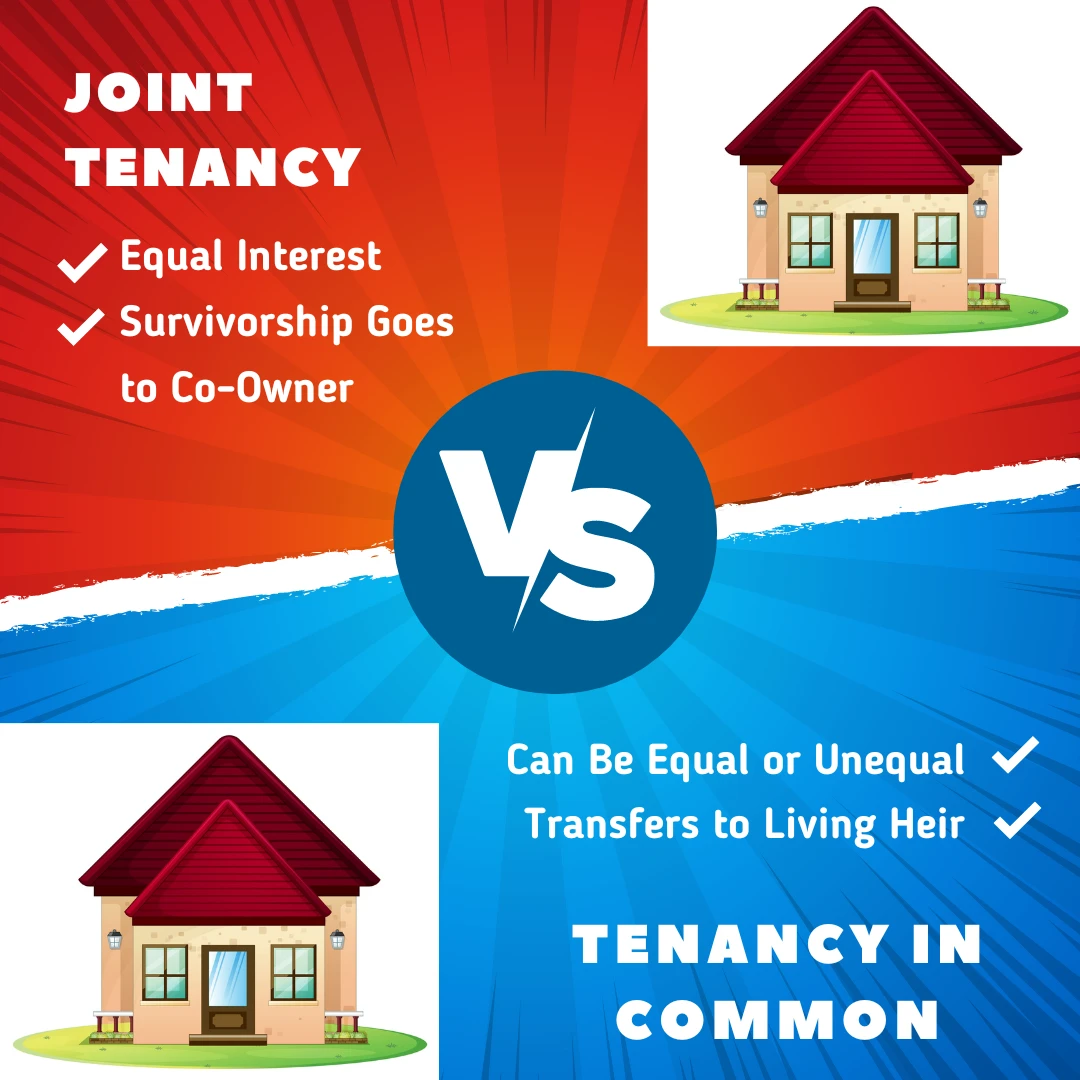
Remember that while the property may have been left to you under one of these two structures, the arrangement can be changed to better meet your needs or future plans as co-owners. Of course, this would need to be done while both co-owners are still living and handled by an experienced attorney.
Options for Shared Inherited Property

There are several options available to siblings who co-own an inherited home. The most common are:
- Keep the home and share it. This can cause issues when deciding who will live at the property and how to divvy up things like maintenance duties and mortgage payments.
- Retain the property and rent it out. In this case, the siblings can simply split the proceeds of the rental income accordingly (either 50/50 for joint tenancy or by whatever percentage is dictated by their tenancy-in-common agreement).
- Buy out your sibling. With this option, the home would need to be appraised to establish fair market value and then refinanced to pay out the re-signing sibling’s share of the proceeds.
- Sell the property. Selling the property and splitting the proceeds is typically the easiest and most favorable option for all involved.
If an agreement about what to do with the inherited property cannot be reached, a type of lawsuit known as a partition action may be filed. This will put the court in charge of determining the outcome. For obvious reasons, this is not an ideal scenario.
Selling a Co-Owned Property

Of all the options available to siblings who jointly inherit a home, selling tends to be the most favorable choice for a number of reasons.
- Preserve the Relationship – Considering that 44% of estate disputes involve siblings, and 30% of those disputes end up in severed relationships, if you keep the property, there will undoubtedly be things you and your sibling may not agree on. By selling, you avoid this conflict and potential legal battles that may come as a result.
- Access to Cash – Selling an inherited home means walking away with cash. However, inherited homes often need repairs and might not quality for a loan for a traditional sale. Your best option may be to sell “As Is” to a cash buyer,
- Avoid Market Volatility – If there’s one thing that’s constant about the real estate market, it’s that it’s always changing. Holding onto the property you and your sibling inherited could result in an overall loss due to an unexpected downturn.
- Cost Savings – Selling the property means no ongoing investment in things like upkeep, repairs, utility bills, and other expenses associated with owning a home.
- Tax Breaks – An inherited property’s tax basis is determined by the date of the deceased owner’s death, rather than its date of purchase. This means even if the property has significantly increased in value over the years, any taxes owed upon its sale will only be assessed on the increase in value since you and your sibling took ownership. This is another reason to consider a quick cash sale.

Recent Posts


Frequently Asked Questions (FAQs) About Selling Your Home Fast
During a transfer, a new deed is drafted and signed by the seller, transferring ownership of the house to the new buyer. This document is then recorded in the land records with the above-mentioned deed of trust.
We work with your bankruptcy attorney to present a FAIR offer and give you additional money at closing. We present the offer directly to your attorney and work to have the offer accepted by the bankruptcy court. Once the offer is accepted, we ensure that the bankruptcy is released and we buy the property as soon as possible.
Yes, we can work with any seller who needs to move a property quickly for any reason and in any price range. We have purchased million-dollar houses before.
Yes, we buy apartments, multi-family houses/buildings and land.
No! You have no obligation at all if you submit an information form, show your property to House Buyers or receive an offer to buy your house. You are under no obligation at all. All we ask for is the opportunity to make an offer for your house, you’re in the driver’s seat as to whether you accept the offer or not. You are in complete control. You are only obligated to our service if you have entered into a purchase agreement with us, as with any other real estate transaction.
We need very basic information from you about your house. The number of bedrooms, bathrooms and overall condition of the property is needed. We will also ask you how long you have owned your home and if there are any mortgages or liens against the property.
We offer the maximum amount possible, our offers are very competitive. If our offers weren’t competitive, we wouldn’t have purchased thousands of houses! There is no magic percentage we use, every house is unique. Our Real Estate Consultants take into consideration the age, condition, size, features and location of the home much like an appraiser would. We factor in the costs to repair the house, what other homes in the area are selling for and how long it is taking to sell those homes. These and several other factors are researched to determine a fair offer.
As soon as we receive your Online Form, we will review your information and get back to you ASAP (usually within 30-60 minutes depending on when you submit the information).
We work FAST to help ensure that your house doesn’t go to foreclosure. We present you with a FAIR offer to pay off your mortgage before the foreclosure. We help save your credit, avoid foreclosure and allow you to sell your house FAST and FAIR. Due to recent legislation, if you reside in the state of Maryland and are within a certain period of time before your foreclosure sale date, we will introduce you to a Foreclosure Consultant. The legislation mandates that if you are within this certain window that a foreclosure consultant must explain to you all of your options involved in selling your home.
No problem! We can still buy your house as is, even if it has demolition orders scheduled.
House Buyers of America
We buy your home on your terms.
- No repairs or showings
- Close on your time frame
- No commissions or fees
- No obligation cash offer
Over 25 Years in Business · Trusted Since 2001
Get Your Fair Cash
Offer
Today!
or call us at 855-659-3289
Searching and Processing Address