
Last Updated : September 30, 2025 by Chris Bibey
If you're a landlord in Idaho and your tenant stops paying rent, breaks their lease, or simply refuses to leave after notice, eviction may be necessary. But Idaho law doesn’t let you remove someone without following the proper court process. Skipping steps or taking matters into your own hands can delay everything—or worse, land you in legal trouble.
This guide walks through how eviction works in Idaho and what you’ll need to do at each step.
Idaho law allows landlords to begin the eviction process in several situations:
Each of these situations requires a specific notice and waiting period. The reason for eviction determines what notice you serve and how long the tenant has to respond.
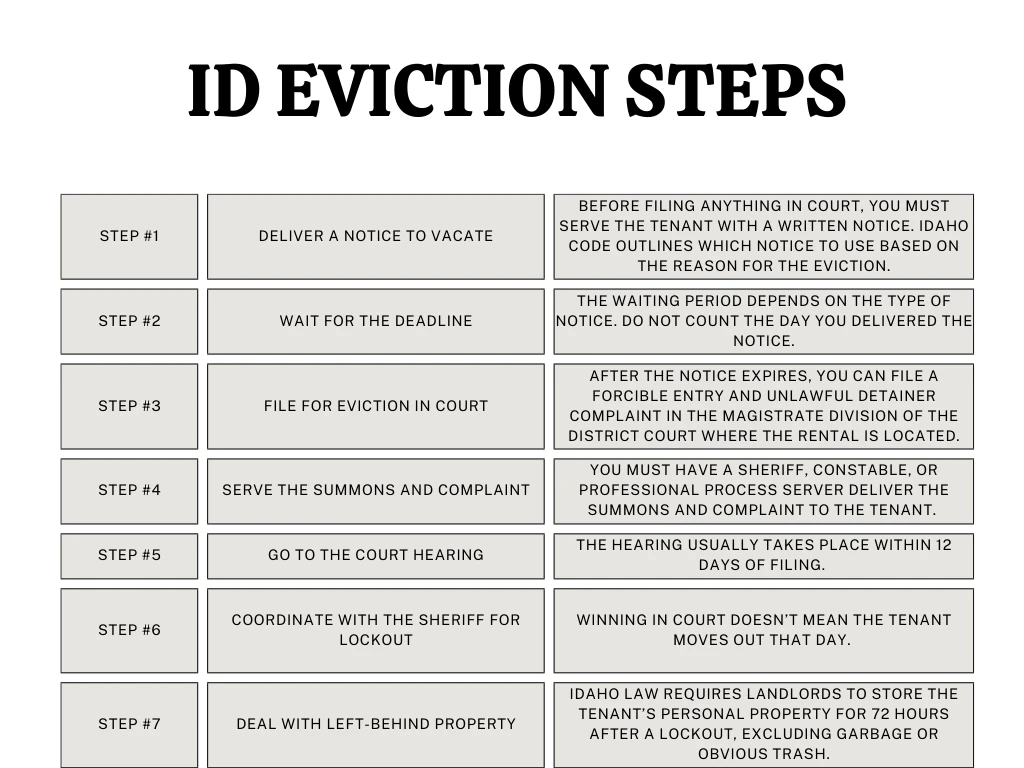
Before filing anything in court, you must serve the tenant with a written notice. Idaho Code outlines which notice to use based on the reason for the eviction.
Common Notice Types:
Deliver the notice in person or by leaving it with someone over 18 at the unit. If no one is there, post it on the door and mail a copy. Keep records of how and when the notice was delivered. You’ll need them later in court.
The waiting period depends on the type of notice. Do not count the day you delivered the notice. If the deadline falls on a weekend or holiday, the tenant has until the next business day.
If the tenant pays what’s owed or corrects the violation, you’re done. But if the deadline passes with no action, you can take the case to court.
Some landlords try to speed things up by skipping the notice step or changing locks early. Idaho law doesn’t allow this. If you move forward before the notice period ends, the judge will likely dismiss your case.

After the notice expires, you can file a Forcible Entry and Unlawful Detainer complaint in the magistrate division of the district court where the rental is located.
Bring:
After you file, the court will schedule a hearing. The clerk will issue a summons, which must be served to the tenant.
You must have a sheriff, constable, or professional process server deliver the summons and complaint to the tenant. This must happen at least five days before the hearing.
Methods allowed:
You’ll need a completed return of service to prove delivery. Without that, the judge may postpone or throw out the case.
The hearing usually takes place within 12 days of filing. It moves fast, and both sides should come prepared.
As the landlord, bring:
The tenant may argue that the unit is unlivable, the notice was improper, or they paid already. Let the judge ask the questions. Answer directly and keep your documents organized.
If you win, the court will issue a judgment for possession and allow you to request a writ of restitution to remove the tenant.
If the tenant doesn’t show up, you can still win by default—as long as the service was completed correctly.
Winning in court doesn’t mean the tenant moves out that day. You must return to the courthouse and request a writ of restitution. This gives the sheriff authority to remove the tenant.
What happens:
Do not change the locks before this step. That is considered illegal eviction in Idaho and can result in penalties.
Idaho law requires landlords to store the tenant’s personal property for 72 hours after a lockout, excluding garbage or obvious trash.
You must:
After 72 hours, if the tenant has not collected their things, you can dispose of them. Some landlords donate the items or haul them to the dump. Just be sure to document everything beforehand in case of disputes.
Eviction is sometimes necessary, but it’s not always the smartest or fastest path. If your tenant is willing to cooperate, other options can save time and money.

If the issue is unpaid rent and the tenant wants to stay, you can offer a short-term payment plan.
Include:
Get both signatures and keep a copy on file.
You offer a small lump sum to the tenant in exchange for moving out quickly and leaving the unit clean. Some landlords pay $300 to $1,000 depending on how much time and damage they expect to avoid.
Use a basic written agreement and do a walkthrough before handing over the money.
Some counties in Idaho support landlord-tenant mediation. This is a neutral process where both parties try to reach an agreement outside of court. Mediation can be faster and less confrontational than filing for eviction.
Can I evict a tenant without a lease?
Yes. If someone lives there without a written lease, they’re typically considered a month-to-month tenant. A 30-day notice is required before you can file for eviction.
Do I need a reason to end a month-to-month tenancy?
No. You can terminate without cause as long as you provide proper notice.
What if the tenant damages the unit?
For major damage or illegal behavior, you can issue a 3-day unconditional quit notice and proceed to court if they don’t leave.
Can I turn off the power or change the locks myself?
No. Self-help eviction is illegal. Only the sheriff can carry out a lockout after the court issues a writ of restitution.
What if the tenant files bankruptcy?
If the tenant files for bankruptcy before the lockout, the eviction must pause unless the bankruptcy court allows it to continue.
How long does the whole process take?
If uncontested, the process can take about 3 weeks. Contested cases may take longer, especially if there are delays in service or scheduling.
Eviction in Idaho is a straightforward legal process, but it must be handled the right way. Serving the correct notice, filing properly, and respecting court deadlines can help you avoid delays and regain possession of your property faster.
Before filing, consider the cost of court, missed rent, and unit turnover. In some cases, working out an agreement outside of court will serve you better. But when that’s not possible, following Idaho’s eviction rules step by step is the only way forward.
Should you find yourself looking to leave your landlord days in the past, it's time to learn more about selling your rental property in Idaho.
or call us at 855-659-3289
Searching and Processing Address