
Last Updated : November 6, 2025 by Chris Bibey
Let’s get right to it: you don’t dream of the day that you’ll evict a tenant from your investment property. However, it’s a part of being a landlord. There’s a good chance you’ll have to do this at some point.
In this article, we outline the process you must take to evict a tenant in Washington. With this guidance, you’ll know exactly what to do should you find yourself in this less-than-desirable situation.
Here are the seven steps to evicting a tenant in Washington state.
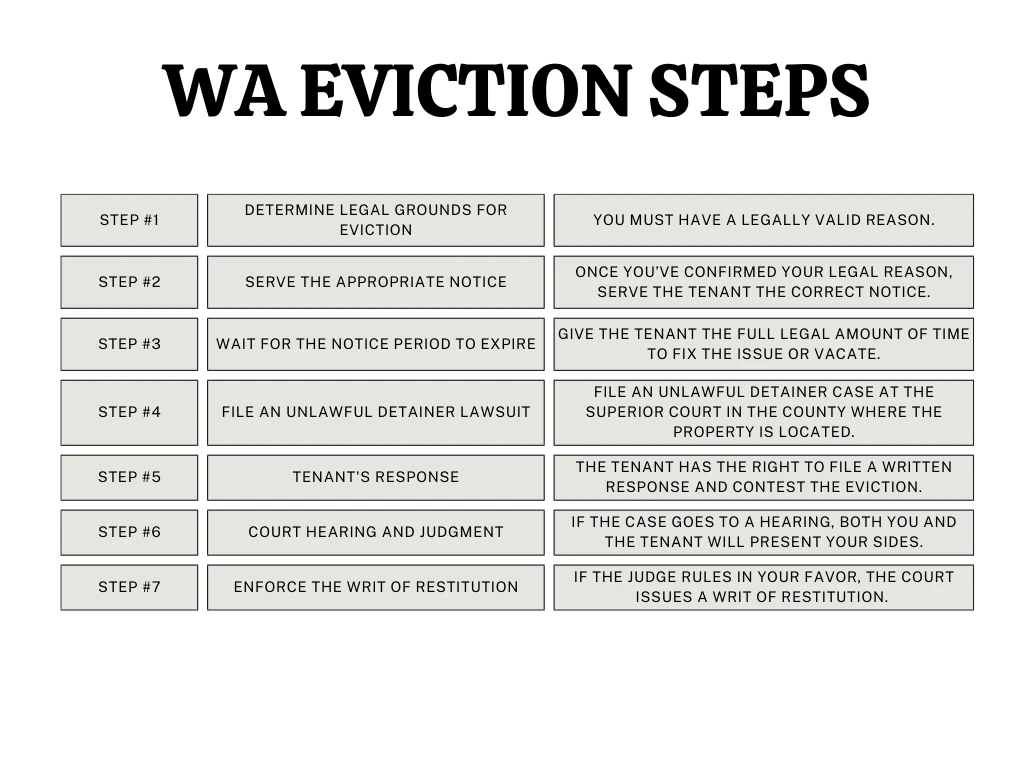
To begin the eviction process in Washington, you must have a legally valid reason. Washington courts will not support an eviction unless you can clearly show that the tenant broke the lease or failed to uphold their responsibilities.
Common reasons include non-payment of rent, lease violations, illegal activity, or ending a month-to-month tenancy with proper notice. Each of these scenarios requires different documentation and a specific type of notice.
The more organized and thorough you are with your records, the stronger your case will be when it's time to file in court.
Common legal reasons to evict a tenant in Washington:
Always review your lease agreement and local ordinances before issuing any notice.
Once you’ve confirmed your legal reason, serve the tenant the correct notice. The notice must state the reason, specify how many days the tenant has to comply, and be delivered properly.
You can’t proceed to court without giving this notice first. Washington law is specific about how notice must be delivered, and improper service can delay your case or get it thrown out. Always keep a copy and proof of service.
Types of eviction notices in Washington:
Acceptable methods of service:
Correct notice and proper service are required before filing in court.
After serving the notice, give the tenant the full legal amount of time to fix the issue or vacate. You cannot file in court until this waiting period ends. If the tenant pays their rent or corrects the problem during this window, you cannot proceed with the eviction.
Some tenants may choose to move out on their own. If they don’t act, you're allowed to file a lawsuit for unlawful detainer. Be patient—rushing the process can lead to dismissal.
Notice periods you must wait:
During this time:
Letting the notice period run its course keeps your case legally valid.

If the tenant does not comply within the notice period, file an unlawful detainer case at the Superior Court in the county where the property is located. This is the formal legal process for removing a tenant. You’ll need to complete a Summons and Complaint, attach your proof of notice, and pay a filing fee.
You must also serve the tenant with court documents. This must be done by someone over 18 who is not part of the case.
Steps to file the eviction lawsuit:
Who can serve court papers:
After the tenant is served, they’ll have a short period to respond to the case.
Once served with the lawsuit, the tenant has the right to file a written response and contest the eviction. If they respond, the court will schedule a hearing. If they don’t, you can request a default judgment.
Either way, prepare all evidence showing that you followed every legal step. Tenants might raise defenses, so be ready to refute them with documents, payment records, and communication logs.
Stay professional during the process. Washington judges expect clear facts, not personal disputes.
Possible tenant actions:
What you should prepare:
Stay organized and focus on facts to strengthen your position in court.
If the case goes to a hearing, both you and the tenant will present your sides. You’ll need to prove that you followed the law step-by-step: serving notice, allowing time, filing properly, and keeping documentation.
Bring printed copies of everything. If you win the case, the judge will issue a Writ of Restitution. This gives the sheriff authority to remove the tenant. If you lose, you may need to correct any missteps and start over.
At the hearing, you should present:
Possible outcomes:
Be polite, direct, and focused on the facts—not emotions.
If the judge rules in your favor, the court issues a Writ of Restitution. The sheriff serves it to the tenant and gives them a short time—typically 3 to 5 days—to leave the property.
If they don’t move out, the sheriff will return and physically remove them. Do not attempt to remove them yourself. Only the sheriff can legally do so in Washington. Once the property is returned to you, you can assess for damage and consider filing for money owed.
Sheriff’s process after the writ is issued:
What landlords cannot do:
Let the authorities handle it—this protects you legally and financially.

Eviction isn’t the only way to remove a tenant from your property. Here are some alternatives that you should first consider.
Trying alternatives first can preserve your time, property condition, and peace of mind—especially if a cooperative resolution is still possible.
Here are seven common questions associated with evicting a tenant in Washington.
Can I evict a tenant in Washington during the winter months?
Yes, Washington law allows evictions year-round, including winter. However, local city or county ordinances may have seasonal restrictions, so check for additional rules in your area.
What happens if a tenant abandons the rental property during the eviction process?
You still need to follow Washington’s rules for handling abandoned property. This includes providing written notice and storing any belongings for a certain period before disposal.
Can I charge the tenant for legal fees after a successful eviction?
Only if your lease specifically states that the tenant is responsible for legal costs. Without that clause, the court typically won’t award attorney’s fees.
Do I need an attorney to file an eviction in Washington?
You are not required to have an attorney, but many landlords choose to use one to avoid mistakes. Legal errors can delay your case or lead to dismissal.
How long does the eviction process usually take from start to finish?
Most Washington evictions take 3–6 weeks, depending on the reason and whether the tenant contests it. Delays are common if paperwork is incomplete or the tenant requests a hearing.
Can I evict a tenant for repeatedly paying rent late?
Yes, but you must first give proper written notice that late payments violate the lease. Repeated violations can be grounds for a 10-Day Comply or Vacate Notice.
What if the tenant causes damage during the eviction process?
You can deduct the cost of repairs from their security deposit and pursue additional damages in small claims court if necessary. Be sure to document everything with photos and receipts.
You’re in the business of landlording. You’re not in the business of evicting tenants. Even so, it often comes with the territory.
The steps above will guide you through the process of evicting a tenant, without violating the law.
Tip: if you’re ready to put landlording behind you, consider selling your Washington rental property.
Searching and Processing Address