September 4, 2024

You can transfer property with a lien on it, but the lien doesn’t just go away. Liens stay attached to the property until the debt is paid, which can complicate sales, gifts, or inheritance. Understanding how liens affect ownership transfers helps you avoid delays and make the right next move, especially when timing, financing, or legal requirements are involved.
What Is a Property Lien?
A property lien is a legal claim placed on a home by a lender, government agency, or creditor to secure payment of a debt. The lien gives the creditor the right to be paid from the property’s value, typically when the property is sold or transferred.
Liens attach to the property itself, not the homeowner. If ownership changes and the lien has not been released, the lien remains in place and continues to affect the property.
Some liens are voluntary, such as mortgages and home equity loans. Others are involuntary, including tax liens, judgment liens, and mechanic’s liens filed by contractors. All liens can affect how and when a property transfers.
What Types of Liens Can Affect Property Transfers?

Several types of liens can affect whether a property can be transferred and whether buyer financing is possible. The impact depends on the lien type and whether it has been paid or released.
- Mortgage Lien – A mortgage lien is created when a homeowner borrows money to purchase a property. This lien is almost always paid off at closing using sale proceeds before ownership transfers.
- Home Equity Line of Credit (HELOC) – A HELOC places a lien on the property as collateral for borrowed funds. Like a mortgage, a HELOC generally must be paid and released before a transfer can be completed.
- Tax Lien – A tax lien is filed by a government authority for unpaid property or income taxes. Tax liens typically take priority over other liens, which means they often must be resolved before a transfer can move forward.
- Judgment Lien – A judgment lien results from a court ruling against a property owner for unpaid debt. This lien attaches to the property and can block a transfer until it is paid, negotiated, or legally resolved.
- Contractor’s Lien (Mechanic’s Lien) – A contractor’s lien may be filed when work on a property goes unpaid. These liens can prevent a clear title until the debt is resolved or the lien is released or expires under state law.
Can You Transfer Property Without Paying Off the Lien?
Yes, in limited situations, a property can be transferred without paying off the lien first, but the lien stays attached to the property. The debt does not disappear and must still be addressed by the new owner or resolved later.
In most traditional sales, liens must be paid before closing because lenders and title companies will not approve a transfer with an unresolved lien. Without a lien release, title insurance usually cannot be issued, which can stop a transaction entirely.
What Are the Risks of Transferring Property With a Lien?
Transferring property with a lien can delay a sale, prevent buyer financing, or leave the new owner responsible for unpaid debt. These risks are why most liens are resolved before ownership changes.
Risks for the Buyer
A buyer who takes ownership of a property with a lien may become responsible for the debt tied to it. Creditors can continue collection efforts or take legal action against the property. An unresolved lien can also prevent future sales or refinancing.
Seller Responsibilities
Sellers are generally required to disclose known liens on a property. Failing to disclose a lien can lead to canceled transactions, legal disputes, or financial penalties. In most cases, sellers must ensure the lien is resolved before closing or addressed as part of the transfer agreement.
Agent vs Cash Calculator


Agent vs Cash: Home Sale Calculator
Compare your estimated net proceeds in 60 seconds.
Unlock the Full Calculator
What Are Your Options for Handling a Property Lien?

If your property has a lien, you generally have a few clear options. The right approach depends on your finances, timing, and whether a traditional sale is planned.
- Clear the Lien Before Transfer – Paying off the lien before transferring the property is the most straightforward option. Once paid, the creditor records a lien release, allowing the property to transfer with a clean title.
- Negotiate a Reduced Payoff – Some creditors may accept less than the full amount owed in exchange for releasing the lien. This is more common with judgment liens or older debts and can help resolve a lien when full payment is not realistic.
- How Is a Property Lien Officially Released? – Paying the debt alone does not remove a lien. The creditor must file a formal lien release with the local recording office. Until that release is recorded, the lien can continue to affect the property’s title.
When Can Property Transfer Even If a Lien Exists?
In certain situations, ownership of a property can change even if a lien has not been paid off. In these cases, the lien remains attached and must still be resolved later.
What Happens When You Inherit a House With a Lien?
Inherited properties do not lose existing liens. The heir becomes responsible for addressing the lien before selling, refinancing, or transferring the property again.
Can a Buyer Willingly Accept a Property Lien?
A buyer may agree to take ownership of a property with a lien, but this is uncommon. Most buyers who do so are paying cash, since lenders generally will not finance properties with unresolved liens.
How Cash Buyers Handle Properties With Liens
Cash buyers can purchase properties with liens because they are not dependent on lender approval. In many transactions, the lien is paid off using the sale proceeds at closing.
What Steps Should You Take Before Transferring Property With a Lien?
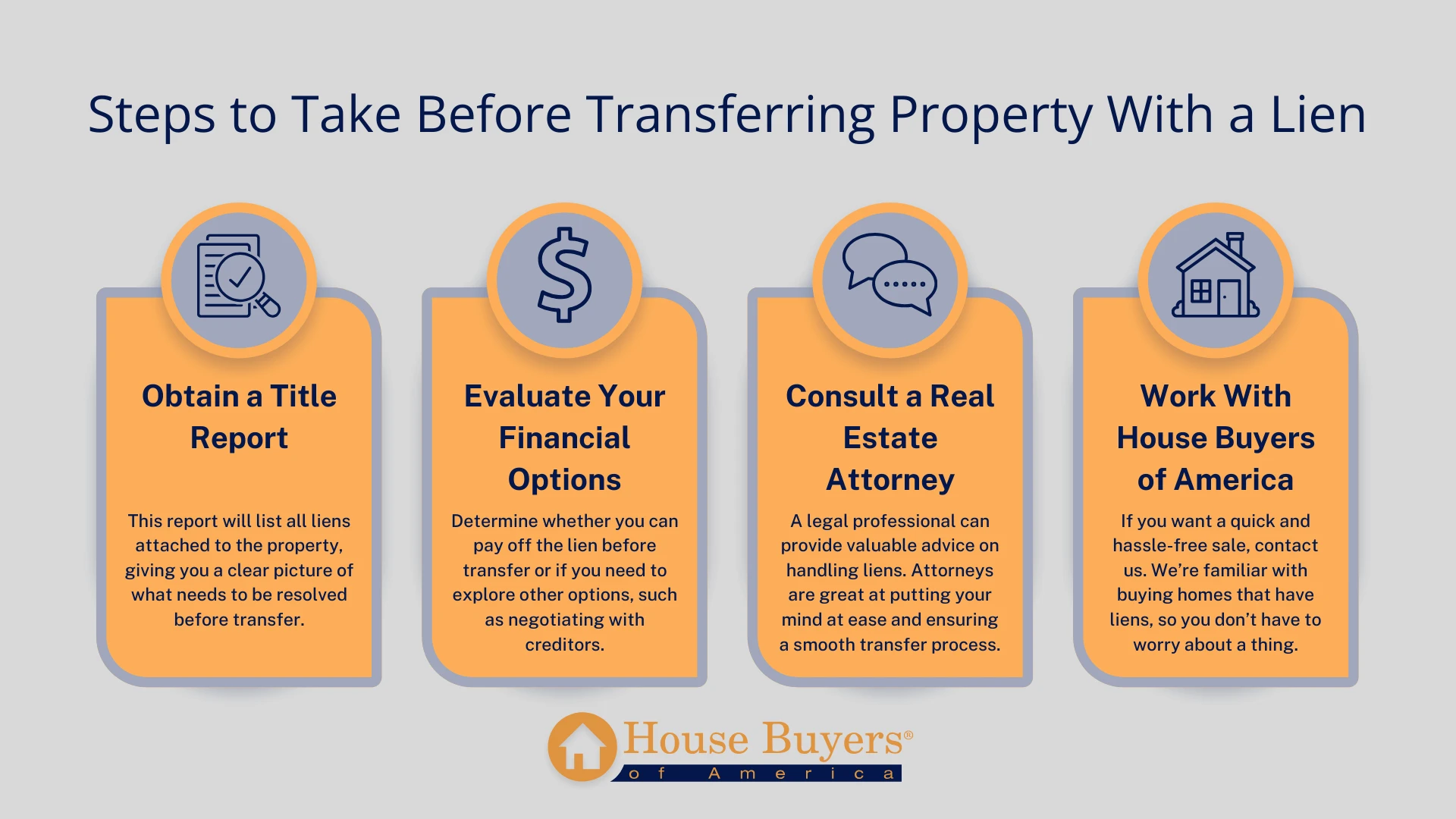
Before transferring a property with a lien, take these steps to avoid delays or failed transactions.
1. Obtain a Title Report
A title report identifies all liens and claims attached to the property. This confirms what debts exist and which must be resolved.
2. Review Your Financial Options
Determine whether you can pay off the lien, negotiate a payoff, or need an alternative solution.
3. Consult a Real Estate Attorney or Title Professional
A professional can explain how the lien affects your specific situation and ensure required documents are handled correctly.
4. Consider Selling to a Cash Buyer
If resolving the lien isn’t feasible, a cash sale may allow the lien to be addressed as part of the transaction.
How Can You Avoid Transferring Property With a Lien?
The best way to avoid transferring property with a lien is to address debts before they become legal claims. Staying current on mortgage payments, taxes, and contractor invoices can prevent most liens.
If a lien already exists, resolving it early provides more options. When payment or negotiation isn’t possible, a cash sale may help resolve the debt during the transfer.
Do Property Lien Rules Vary by State?
Yes, property lien rules vary by state, including how liens are filed, how long they remain valid, and which liens take priority. Some states have specific notice requirements or expiration timelines that affect transfers.
Because of these differences, reviewing state-specific rules or speaking with a local professional is important before transferring property with a lien.
What to Do Next If Your Property Has a Lien
If your property has a lien, the next steps depend on the type of lien and how you plan to transfer the property. Use this checklist to organize your decision-making before moving forward.
- Confirm the lien details: Review a title report or lien notice to identify the lien type, balance, and priority.
- Assess your payoff options: Determine whether the lien can be paid in full, negotiated, or must be addressed through the sale.
- Understand transfer limitations: Consider whether buyer financing, inheritance rules, or timing constraints affect how the property can be transferred.
- Plan the resolution method: Decide whether clearing the lien, settling it, or selling with the lien in place makes the most sense.
- Line up professional support: Identify whether a title company, attorney, or other professional is needed to complete the transfer correctly.
Frequently Asked Questions About Transferring Property With a Lien
Here are the most common questions people ask about transferring liens:
1. Can you sell a house with a lien on it?
Yes, you can sell a house with a lien on it, but the lien usually must be paid or resolved before closing, especially if the buyer is using financing.
2. Does a lien transfer to the new owner?
Yes, a lien transfers with the property if it is not paid and released, making the new owner responsible for resolving it.
3. Can you transfer property to a family member if there is a lien?
Yes, you can transfer property to a family member with a lien, but the lien remains attached and must be resolved before the property can be sold or refinanced.
4. Can you refinance a property with a lien?
In most cases, you cannot refinance a property with a lien because lenders typically require liens to be cleared before approving a loan.
5. What happens if a lien is not disclosed during a property transfer?
If a lien is not disclosed during a property transfer, the seller may face legal disputes, canceled transactions, or financial penalties.
6. How long does a lien stay on a property?
How long a lien stays on a property depends on the lien type and state law, but many liens remain until they are paid or legally released.
7. Can a lien be removed without paying it?
Yes, a lien can sometimes be removed without paying it if the lien is invalid, expired, settled for less than owed, or successfully challenged.
8. Do cash buyers purchase homes with liens?
Yes, cash buyers often purchase homes with liens and resolve the lien as part of the transaction.
How to Move Forward When Transferring Property With a Lien
Transferring property with a lien requires planning and a clear understanding of how the lien affects ownership. While liens can complicate a transfer, they do not automatically prevent one. The key is knowing the lien type, how it impacts title, and which resolution path fits your situation and timeline.
In some cases, paying off or negotiating the lien before transfer makes sense. In others, the most practical option is to address the lien through the sale itself. The right approach depends on the property, the lien, and whether buyer financing or timing constraints are involved.
If resolving the lien on your own isn’t realistic, House Buyers of America can help. We buy homes As-Is, including properties with liens, and can often handle lien payoffs as part of the sale. That allows you to move forward without repairs, showings, or financing-related delays.

Recent Posts


Frequently Asked Questions (FAQs) About Selling Your Home Fast
During a transfer, a new deed is drafted and signed by the seller, transferring ownership of the house to the new buyer. This document is then recorded in the land records with the above-mentioned deed of trust.
We work with your bankruptcy attorney to present a FAIR offer and give you additional money at closing. We present the offer directly to your attorney and work to have the offer accepted by the bankruptcy court. Once the offer is accepted, we ensure that the bankruptcy is released and we buy the property as soon as possible.
Yes, we can work with any seller who needs to move a property quickly for any reason and in any price range. We have purchased million-dollar houses before.
Yes, we buy apartments, multi-family houses/buildings and land.
No! You have no obligation at all if you submit an information form, show your property to House Buyers or receive an offer to buy your house. You are under no obligation at all. All we ask for is the opportunity to make an offer for your house, you’re in the driver’s seat as to whether you accept the offer or not. You are in complete control. You are only obligated to our service if you have entered into a purchase agreement with us, as with any other real estate transaction.
We need very basic information from you about your house. The number of bedrooms, bathrooms and overall condition of the property is needed. We will also ask you how long you have owned your home and if there are any mortgages or liens against the property.
We offer the maximum amount possible, our offers are very competitive. If our offers weren’t competitive, we wouldn’t have purchased thousands of houses! There is no magic percentage we use, every house is unique. Our Real Estate Consultants take into consideration the age, condition, size, features and location of the home much like an appraiser would. We factor in the costs to repair the house, what other homes in the area are selling for and how long it is taking to sell those homes. These and several other factors are researched to determine a fair offer.
As soon as we receive your Online Form, we will review your information and get back to you ASAP (usually within 30-60 minutes depending on when you submit the information).
We work FAST to help ensure that your house doesn’t go to foreclosure. We present you with a FAIR offer to pay off your mortgage before the foreclosure. We help save your credit, avoid foreclosure and allow you to sell your house FAST and FAIR. Due to recent legislation, if you reside in the state of Maryland and are within a certain period of time before your foreclosure sale date, we will introduce you to a Foreclosure Consultant. The legislation mandates that if you are within this certain window that a foreclosure consultant must explain to you all of your options involved in selling your home.
No problem! We can still buy your house as is, even if it has demolition orders scheduled.
House Buyers of America
We buy your home on your terms.
- No repairs or showings
- Close on your time frame
- No commissions or fees
- No obligation cash offer
Over 25 Years in Business · Trusted Since 2001
Get Your Fair Cash
Offer
Today!
or call us at 855-659-3289
Searching and Processing Address