January 2, 2026

Discovering code violations on your property can feel overwhelming. Maybe a home inspection revealed electrical problems you didn’t know you had. Maybe a contractor completed work years ago without pulling the proper permits. Or maybe your home needs major repairs you simply can’t afford.
The good news? You can still sell a house with code violations, and you don’t always have to fix them first.
Many homeowners successfully sell properties with electrical issues, structural concerns, unpermitted work, old plumbing, outdated panels, roof problems, or other conditions that don’t meet current building codes. The key is understanding your options, your legal obligations, and how code violations affect buyers, inspections, and financing.
This guide breaks down everything you need to know about selling a home with code violations without making repairs, so you can make the best decision for your situation.
What Exactly Is a Code Violation?
A code violation means part of your home does not meet the building, safety, electrical, plumbing, fire, or health codes enforced by your local municipality. These codes are based on national standards, such as the International Residential Code and National Electrical Code, but every city and county may add its own requirements.
A home does not have to be falling apart to have violations. In fact, most violations are accidental, minor, or the result of outdated standards.
Common Code Violations Found During Home Inspections
Home inspectors frequently uncover violations such as:
- Smoke alarms installed in the wrong location
- Missing GFCI outlets near water
- Improper bathroom ventilation
- Overloaded or outdated electrical panels
- Missing deck flashing
- Unpermitted additions or remodels
- Incorrectly installed water heaters
- Improperly spaced balusters or handrails
- Windows not meeting egress requirements
- Polybutylene plumbing
- Rooms added without permits
- Finished basements without proper ceiling height or exits
These issues may not have been violations when the home was built; codes update every few years, but inspectors still flag them because they impact safety, insurance eligibility, or financing.
Do You Have to Fix Code Violations Before Selling?
You don’t usually have to fix them, but you absolutely have to disclose they’re there.
Whether or not you have to fix them depends on:
- Your local laws
- Your buyer’s lender requirements
- The type and severity of the violation
- Whether fines or liens are already attached to the property
Some municipalities require specific safety issues to be corrected before the transfer of ownership. Others leave it entirely up to the buyer and seller.
Selling In As-Is Condition
The Complete As-Is Home Selling Checklist
Track your progress and export when ready.


How Code Violations Affect Your Ability to Sell
Buyers and lenders react differently to homes with violations, which can impact marketability, time on market, and sale price.
1. Many Buyers Are Concerned About Repair Costs
Even if a violation seems minor, buyers often fear:
- Hidden problems behind the walls
- The cost of hiring licensed contractors
- Delays due to permits or inspections
- Unexpected discoveries during renovation
This may reduce your buyer pool, especially first-time buyers.
2. Some Loans Will Not Approve Homes With Violations
FHA and VA loans are strict about property condition. Issues that commonly block financing include:
- Unpermitted additions
- Outdated electrical panels
- Old or unsafe plumbing
- Missing handrails or smoke detectors
- Roofs in poor condition
If a buyer’s loan won’t allow the condition, the buyer must walk unless you repair it, which many sellers cannot or prefer not to do.
3. Insurance May Cost More, or Be Denied
Insurers sometimes decline coverage for homes with:
- Unsafe wiring
- Roof deterioration
- Plumbing issues
- Unpermitted remodels
Because insurance is required for a mortgage, this creates more hurdles for traditional buyers.
4. Code Violations Can Delay or Derail Closings
If an inspector discovers a violation late in the process, the buyer may:
- Re-negotiate
- Request repairs
- Ask for credits
- Walk away
Do You Need to Disclose Code Violations?
Yes.
In nearly every state, sellers must disclose known defects, including building code violations and unpermitted work.
Even if your state does not require a written disclosure, transparency protects you from lawsuits and keeps deals from falling apart later.
Buyers will discover issues anyway during:
- The home inspection
- The appraisal
- A permit search
- A title search
Being upfront builds trust and helps you avoid legal risk.
How to Sell a House With Code Violations (Without Making Repairs)
You have several paths depending on your financial situation, timeline, and the severity of violations.
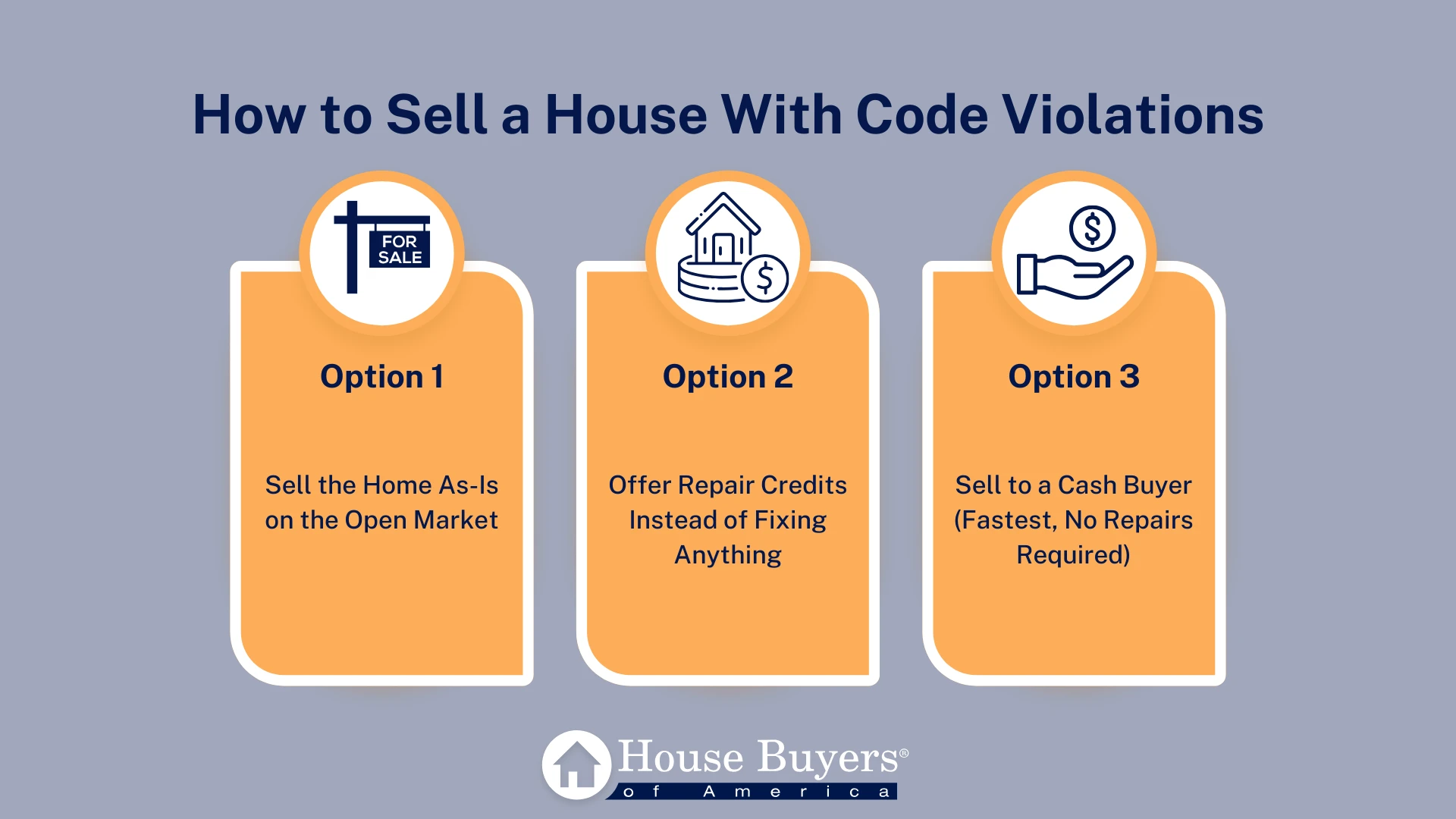
Option 1: Sell the Home As-Is on the Open Market
This option means listing the home exactly as it is and making it clear to buyers that you do not plan to make any repairs before closing. Selling As-Is tends to work best when the violations are relatively minor, the local market is strong, the home is priced realistically, and you’re working with buyers who are comfortable taking on renovation projects. Even with the right factors in place, it’s common to face a smaller pool of interested buyers, requests for credits, potential financing obstacles, and a longer time on the market.
Another route is to offer financial incentives instead of repairing anything yourself. Some sellers choose to lower the asking price, offer credits at closing, or provide an allowance for the buyer to hire their own contractors after the sale.
This can make the home more appealing to buyers who want the flexibility to handle repairs on their own timeline. However, these incentives are still limited by lender rules. Many conventional lenders only allow seller credits to be applied toward closing costs, not actual repair work, which can restrict what you’re able to offer.
Option 2: Offer Repair Credits Instead of Fixing Anything
Instead of repairing the home, you can:
- Lower the price
- Offer closing credits
- Offer an allowance for the buyer to hire contractors
This can help the buyer afford needed upgrades, but is still subject to lender restrictions.
Many conventional lenders do not allow repair credits unless they apply to closing costs only, not actual repairs.
Option 3: Sell to a Cash Buyer (Fastest, No Repairs Required)
Cash buyers, such as House Buyers of America, purchase homes in any condition, including:
- Major electrical issues
- Unpermitted additions
- Failed inspections
- Unsafe structures
- Plumbing or roof problems
- Homes with fines or open violations
Because cash buyers do not rely on financing, inspections, or appraisals, they can:
- Close in as little as seven days
- Pay all-cash
- Handle violations themselves
- Take on homes that cannot be mortgaged
For homeowners who cannot afford repairs or who need to sell quickly (due to inheritance, relocation, financial hardship, or vacant property), this is often the simplest and least stressful option.
How to Prepare to Sell a House With Code Violations
Even if you’re not planning to fix anything, preparation helps the process go smoothly.
Step 1: Get a Pre-Inspection or Permit Search
This helps you understand:
- The full list of violations
- Any open or expired permits
- Potential safety issues
- Repairs buyers are likely to request
A pre-inspection is optional but gives you an information advantage.
Step 2: Gather Any Existing Permits or Receipts
Buyers appreciate proof that work was done by professionals, even if something wasn’t permitted correctly.
Step 3: Get Quotes for Major Repairs (You Don’t Have to Do Them)
Providing estimates helps buyers feel more confident.
Step 4: Price the Home Appropriately
If you list too high for the condition, traditional buyers will skip it. Your agent can help you:
- Set a realistic price
- Highlight the home’s potential
- Market to investor-friendly buyers
Step 5: Decide Whether You Want to Entertain Cash Offers
Cash offers typically come from:
- Investors
- Flippers
- Local landlords
- Companies that buy houses As-Is
These buyers are used to code issues and can close on your timeline.
How Code Violations Affect Title, Liens, and Fines
Some violations come with:
- Daily accruing fines
- Liens placed by the municipality
- Stop-work orders
- Open permits that must be resolved
If fines or liens exist, they must typically be:
- Paid at closing, or
- Handled by the buyer, if the buyer agrees
- Cash buyers are usually the only buyers willing to take on fines or liens directly.
Pros and Cons of Selling a Home With Code Violations As-Is
Here are some of the biggest benefits to selling your home with code violations As-Is:
- No repair costs
- No dealing with contractors or permits
- Faster sale
- No inspection negotiations
- Fewer risks of deal failure
The major drawbacks to selling As-Is are:
- Lower sale price
- Smaller buyer pool
- More difficulty with traditional financing
- Must disclose issues
Still, many homeowners prefer selling As-Is because it eliminates stress and uncertainty.
When Selling As-Is Is the Best (or Only) Option
You may choose, or be forced, to sell As-Is if:
- Repairs exceed your budget
- The home can’t pass inspection
- You inherited a property needing major work
- You’re facing financial hardship
- You’re selling a vacant or distressed home
- Buyers keep backing out
- Permit issues are too complex
Homes with significant code violations often sell fastest through a cash buyer specializing in As-Is properties.
Frequently Asked Questions About Selling a House With Code Violations
Can I Legally Sell a House That Has Code Violations?
Yes. In most cases, you can legally sell a house with code violations as long as you disclose all known issues to buyers. Some municipalities may require specific safety hazards to be fixed before transfer, but most violations can remain in place if the buyer agrees to purchase the home As-Is.
Do I Have To Fix Code Violations Before Listing My Home?
No. You are not automatically required to make repairs before listing. However, some violations may prevent buyers from getting financing. Plus, serious safety hazards or open permits may require correction
If you do not want to make repairs, pricing the home accordingly, or selling to a cash buyer, may be necessary.
Will Buyers Still Be Interested in a Home With Code Violations?
Yes, but your buyer pool will be smaller. Most traditional buyers prefer move-in-ready homes and may walk away after inspection. However, investors, flippers, landlords, and cash buyers are typically comfortable purchasing homes with issues, especially if the price reflects the condition.
Will Code Violations Show up During a Home Inspection?
Most likely. Inspectors are trained to identify:
- Safety hazards
- Defects in major systems
- Evidence of unpermitted work
- Outdated or improper electrical and plumbing components
Even issues that were not code violations when the home was built may be flagged as defects today.
How Do Code Violations Affect Financing and Appraisals?
Lenders often require the home to meet minimum safety standards. Code violations can:
- Prevent a loan from being approved
- Cause the appraiser to require repairs before closing
- Delay the sale until issues are corrected
This is why many sellers choose to market the property to cash buyers, who are not restricted by loan requirements.
Do I Need To Disclose Unpermitted Work or Code Violations?
Yes. Nearly every state requires sellers to disclose known defects, including:
- Unpermitted additions
- Electrical or plumbing issues
- Structural or safety concerns
- Open permits or recorded violations
- Failure to disclose can lead to lawsuits after the sale.
What Happens if the City Has Issued Fines or Liens for Violations?
If fines or municipal liens exist, they must usually be paid by the seller at closing, or assumed by the buyer (if the buyer agrees in writing).
Cash buyers are generally more willing to take on violations and liens directly, since traditional lenders will not allow it.
Can I Sell a House With Code Violations As-Is?
Absolutely. Selling As-Is simply means you are not making repairs or offering warranties. Buyers can still negotiate the price, request concessions, or conduct inspections, but you are not obligated to fix anything.
Selling As-Is is one of the most common strategies for homes with significant code issues.
Is Selling to a Cash Buyer a Good Option if My Home Has Major Violations?
Yes. Cash buyers can be the fastest and least complicated path because they:
- Don’t require inspections
- Don’t rely on financing
- Don’t need the home to meet lender or insurance standards
- Handle repairs after closing
- Close quickly, often in days
This is ideal for homeowners who cannot afford repairs or need to sell without delay.

Recent Posts


Frequently Asked Questions (FAQs) About Selling Your Home Fast
During a transfer, a new deed is drafted and signed by the seller, transferring ownership of the house to the new buyer. This document is then recorded in the land records with the above-mentioned deed of trust.
We work with your bankruptcy attorney to present a FAIR offer and give you additional money at closing. We present the offer directly to your attorney and work to have the offer accepted by the bankruptcy court. Once the offer is accepted, we ensure that the bankruptcy is released and we buy the property as soon as possible.
Yes, we can work with any seller who needs to move a property quickly for any reason and in any price range. We have purchased million-dollar houses before.
Yes, we buy apartments, multi-family houses/buildings and land.
No! You have no obligation at all if you submit an information form, show your property to House Buyers or receive an offer to buy your house. You are under no obligation at all. All we ask for is the opportunity to make an offer for your house, you’re in the driver’s seat as to whether you accept the offer or not. You are in complete control. You are only obligated to our service if you have entered into a purchase agreement with us, as with any other real estate transaction.
We need very basic information from you about your house. The number of bedrooms, bathrooms and overall condition of the property is needed. We will also ask you how long you have owned your home and if there are any mortgages or liens against the property.
We offer the maximum amount possible, our offers are very competitive. If our offers weren’t competitive, we wouldn’t have purchased thousands of houses! There is no magic percentage we use, every house is unique. Our Real Estate Consultants take into consideration the age, condition, size, features and location of the home much like an appraiser would. We factor in the costs to repair the house, what other homes in the area are selling for and how long it is taking to sell those homes. These and several other factors are researched to determine a fair offer.
As soon as we receive your Online Form, we will review your information and get back to you ASAP (usually within 30-60 minutes depending on when you submit the information).
We work FAST to help ensure that your house doesn’t go to foreclosure. We present you with a FAIR offer to pay off your mortgage before the foreclosure. We help save your credit, avoid foreclosure and allow you to sell your house FAST and FAIR. Due to recent legislation, if you reside in the state of Maryland and are within a certain period of time before your foreclosure sale date, we will introduce you to a Foreclosure Consultant. The legislation mandates that if you are within this certain window that a foreclosure consultant must explain to you all of your options involved in selling your home.
No problem! We can still buy your house as is, even if it has demolition orders scheduled.
House Buyers of America
We buy your home on your terms.
- No repairs or showings
- Close on your time frame
- No commissions or fees
- No obligation cash offer
Over 25 Years in Business · Trusted Since 2001
Get Your Fair Cash
Offer
Today!
or call us at 855-659-3289
Searching and Processing Address