January 3, 2026

Mortgage forbearance has served as a lifeline for millions of homeowners, particularly during and following the COVID pandemic, offering temporary relief by pausing mortgage payments. But now that the dust has settled and things have pretty much returned to normal, many homeowners are wondering what to do next, especially if they’re looking to sell their home before their forbearance period officially ends.
It’s a common question, and the confusion makes sense. The rules around forbearance aren’t always crystal clear, servicers don’t all handle it the same way, and most people have never been through this process before.
The good news is, you can sell your home while you’re in forbearance. The best approach will just depend on a few key factors, including your equity, your loan type, and how quickly you need to sell. Let’s break down what that actually looks like in real-world terms.
What is Mortgage Forbearance?
Mortgage forbearance provides temporary relief to homeowners who are facing significant financial hardship and are struggling to pay their mortgage. With a forbearance arrangement, the lender will typically offer two options: either pay less than the full monthly amount or pause payments entirely for a specified amount of time.
One critical point that must be made is that forbearance is not forgiveness. During the forbearance period, interest will continue to accrue, fees may be assessed, and any payments you miss or do not pay in full must be repaid in the future.
Once the forbearance period ends, you will have a few different options for repayment, depending on the loan service provider:
- Pay it back all at once in a lump sum
- Add it to your loan balance
- Create a new, temporary payment plan to catch up
Forbearance can be a great tool to prevent foreclosure and allow you to remain in your home even during difficult financial situations. That said, it can also complicate matters if you decide to sell before you get caught up on any missed or short payments.

What to Expect When Selling a Home in Forbearance
While selling a home during forbearance is allowed, the process comes with a few extra layers compared to a typical sale. In particular, your lender will require a formal payoff statement, your equity will play a role in how the numbers shake out, and your closing timeline may depend on how quickly the servicer processes your request.
The main thing to understand is that the sale must generate enough to cover everything owed on the loan, including any deferred payments, interest, escrow shortages, and fees that accumulated during forbearance. Once the home goes under contract, your lender will verify the payoff amount and provide the final figure needed to follow through with the sale.
Here’s what that typically looks like at closing:
- If you have enough equity: If there is sufficient equity in the home, you may be able to cover what’s owed and still walk away with money in your pocket.
- If you don’t have enough equity (a.k.a. you’re “under water”): You’ll need to bring cash to closing, or your lender might agree to a short sale, where they accept less than what you owe.

How Selling Works When You Have Missed Payments

One of the main components of selling a home while in mortgage forbearance is the payoff statement. This is the total amount owed to the lender, including any missed payments, accrued interest, escrow shortages, and applicable fees.
Homeowners in forbearance are often surprised when they receive their payoff statement because the balance is usually higher than what they expected. That’s because when all of the paused or short payments get added back in, it can seem like the loan suddenly “jumped,” even though it’s really just the total of everything that accumulated during the forbearance period.
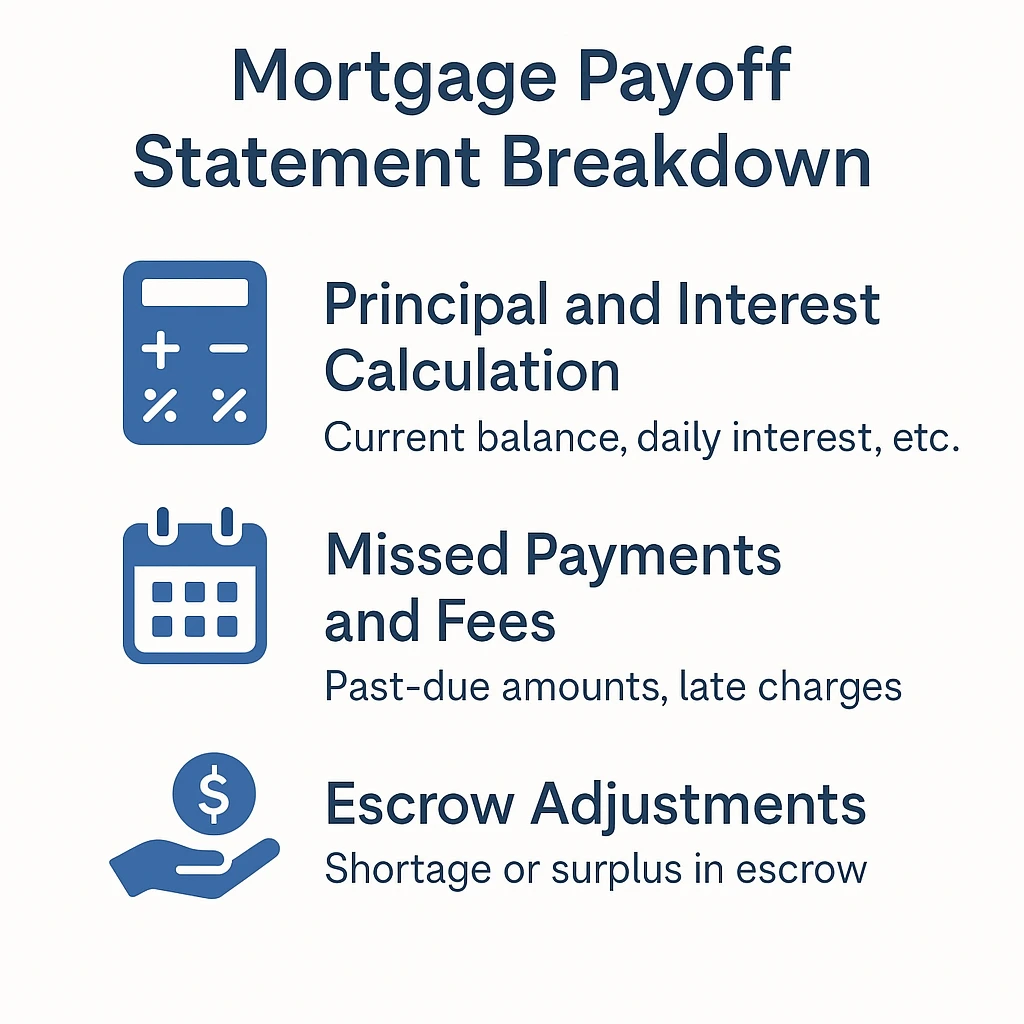
Here’s a breakdown of what’s usually included in a mortgage payoff statement for someone who is in forbearance:
Principal and Interest Calculation
- Current Principal: The remaining balance on your loan after your last payment.
- Daily Interest: Calculated by taking the current principal, multiplying by the annual interest rate, and dividing by 365 to get a daily rate.
- Interest Through Payoff Date: This daily rate is multiplied by the number of days from your last payment (or statement date) to the specific payoff date you provide.
Missed Payments and Fees
- Missed Payments: Any past-due principal and interest amounts are added to the total.
- Late Fees: Any late charges you’ve incurred but not paid are included.
- Other Fees: Servicer fees (like payoff statement fees) or unpaid charges for services are added.
Escrow Adjustments
- Shortage: If an escrow analysis showed you underpaid for taxes/insurance, that shortage amount is will be added to your payoff.
- Surplus: Any excess funds in your escrow account might be returned to you or credited towards the payoff.
This detailed calculation ensures that the lender receives the exact funds needed to cover the loan’s full obligation, including interest that accrues daily until the final payment is received.
Pro tip: Mortgage servicers often take 7–14 business days to process a payoff request, so submitting this early is key. If you’re working under a tight timeline, a cash buyer can offer more flexibility since they aren’t dependent on lender schedules or financing deadlines.
Pros of Selling While Still in Forbearance
Selling during forbearance can offer some real advantages, especially if you’re trying to stay ahead of increasing payments or avoid long-term financial strain. Here are a few ways it can work in your favor.
- Prevent future missed payments and credit damage
- Avoid higher payments after the forbearance ends
- Reset your financial picture by eliminating mortgage debt
- Flexibility to move for work, family changes, or financial relief
- Avoid repairs or buyer financing contingencies (if selling to a cash buyer)
Cons of Selling During Forbearance
Of course, selling in forbearance is not without risk. There are some potential drawbacks and complications to keep in mind as you weigh your options. Here’s what to consider before moving forward.
- Lower proceeds due to accumulated interest and escrow shortages
- Delayed payoff statements can complicate closing timelines
- If equity is insufficient, servicer approval may be needed
- Selling during forbearance could affect your future mortgage eligibility, particularly for FHA or VA loan programs
- How your lender reports the forbearance can negatively impact your credit
Agent vs Cash Calculator


Agent vs Cash: Home Sale Calculator
Compare your estimated net proceeds in 60 seconds.
Unlock the Full Calculator
Should You Keep the Home or Sell? How to Make the Right Call

Deciding whether to stay in your home or sell while you’re in forbearance isn’t always straightforward.
For some homeowners, keeping the property makes more sense, especially if your income has stabilized, you’re confident you can resume payments, and you have a clear plan for handling any deferred amounts once the forbearance period ends. In those cases, holding onto the home may put you in a better long-term position.
But for others, selling may be the more practical financial choice. For instance, if your income is still unpredictable, your loan servicer’s repayment terms feel unmanageable, or your equity has grown enough to give you breathing room, a sale could help you reset before the mortgage becomes a bigger burden.
The condition of your home may also play a role; properties needing major repairs can be harder to reinstate, and selling could help you avoid those upfront costs altogether.
A simple way to decide is to look at four key factors:
- Your equity
- Your income stability
- Your servicer’s requirements
- The condition of your home
If the numbers don’t line up, or you’re unwilling or unable to tackle necessary repairs, selling may be the smoother path. In some situations, a cash sale can offer an easier way out, since it doesn’t require you to complete repairs or upgrades before moving forward.
The right choice ultimately comes down to what aligns best with your financial reality and your peace of mind.
When Selling to a Cash Buyer May Be Practical

Selling the traditional way while in forbearance can significantly complicate the process. In some cases, the easier and more practical route is to work with a buyer who is willing to purchase the property As-Is for a lump-sum cash payment.
This option can be particularly useful when:
- You need a fast closing
- Servicer delays risk pushing you further into delinquency
- The home needs repairs you can’t afford or don’t have the time to tackle
- The property was inherited and already in forbearance
Cash buyers don’t require lender underwriting, inspections, or repairs, making the entire process much quicker and less complex.

Step-by-Step Guide to Selling a House in Forbearance
If you’ve decided to move forward with the sale while your mortgage is still in forbearance, you’ll need to follow a few extra steps to keep the process running smoothly and avoid last-minute surprises.
Here’s a simple, clear roadmap to help you navigate the sale from start to finish.
- Review your forbearance agreement. Be sure that you fully understand what it entails and what is expected of you.
- Confirm repayment terms with your loan servicer. This will ensure that everyone is on the same page and prevent any unpleasant surprises or unexpected delays.
- Request a payoff statement early. Remember – this process can take some time, so the earlier you get the ball rolling, the better.
- Determine your equity position. If you are under water, you’ll need to prepare to pay back the difference or consider a short sale.
- Decide whether to list traditionally or consider a cash buyer. While a cash payment may be slightly lower than a traditional sale, the time, money and aggravation you could save might be well worth the trade-off.
- Prepare for inspection outcomes. Be ready for potential repair requests or price negotiations, especially if the home needs work. If repairs aren’t feasible, consider whether selling As-Is is the better route.
- Be realistic about closing timelines. Understand that selling while in forbearance is more complicated and therefore can take longer than a regular sale.
Choosing the Path That Supports Your Financial Future

If you’re one of the hundreds of thousands of homeowners currently in mortgage forbearance, the good news is, you’re not trapped. You can, in fact, sell your home even if you still owe back payments or have underpaid some of your mortgage during the pause.
Whether you choose a traditional sale, decide to reinstate the loan, or explore selling to a cash buyer, you have multiple paths forward. The key is choosing the one that aligns with your equity, your timeline, and your long-term financial goals.
Most importantly, remember that this is about protecting your financial future. With the right plan and a clear understanding of your choices, you can move forward confidently and make the decision that feels right for you.

Recent Posts


Frequently Asked Questions (FAQs) About Selling Your Home Fast
During a transfer, a new deed is drafted and signed by the seller, transferring ownership of the house to the new buyer. This document is then recorded in the land records with the above-mentioned deed of trust.
We work with your bankruptcy attorney to present a FAIR offer and give you additional money at closing. We present the offer directly to your attorney and work to have the offer accepted by the bankruptcy court. Once the offer is accepted, we ensure that the bankruptcy is released and we buy the property as soon as possible.
Yes, we can work with any seller who needs to move a property quickly for any reason and in any price range. We have purchased million-dollar houses before.
Yes, we buy apartments, multi-family houses/buildings and land.
No! You have no obligation at all if you submit an information form, show your property to House Buyers or receive an offer to buy your house. You are under no obligation at all. All we ask for is the opportunity to make an offer for your house, you’re in the driver’s seat as to whether you accept the offer or not. You are in complete control. You are only obligated to our service if you have entered into a purchase agreement with us, as with any other real estate transaction.
We need very basic information from you about your house. The number of bedrooms, bathrooms and overall condition of the property is needed. We will also ask you how long you have owned your home and if there are any mortgages or liens against the property.
We offer the maximum amount possible, our offers are very competitive. If our offers weren’t competitive, we wouldn’t have purchased thousands of houses! There is no magic percentage we use, every house is unique. Our Real Estate Consultants take into consideration the age, condition, size, features and location of the home much like an appraiser would. We factor in the costs to repair the house, what other homes in the area are selling for and how long it is taking to sell those homes. These and several other factors are researched to determine a fair offer.
As soon as we receive your Online Form, we will review your information and get back to you ASAP (usually within 30-60 minutes depending on when you submit the information).
We work FAST to help ensure that your house doesn’t go to foreclosure. We present you with a FAIR offer to pay off your mortgage before the foreclosure. We help save your credit, avoid foreclosure and allow you to sell your house FAST and FAIR. Due to recent legislation, if you reside in the state of Maryland and are within a certain period of time before your foreclosure sale date, we will introduce you to a Foreclosure Consultant. The legislation mandates that if you are within this certain window that a foreclosure consultant must explain to you all of your options involved in selling your home.
No problem! We can still buy your house as is, even if it has demolition orders scheduled.
House Buyers of America
We buy your home on your terms.
- No repairs or showings
- Close on your time frame
- No commissions or fees
- No obligation cash offer
Over 25 Years in Business · Trusted Since 2001
Get Your Fair Cash
Offer
Today!
or call us at 855-659-3289
Searching and Processing Address