January 6, 2026

Selling a home can sometimes come with some unexpected surprises. One of the most common is discovering an open permit you didn’t even know existed.
An open permit simply means that permitted work was never officially approved and signed off on, often because a final inspection wasn’t scheduled or a previous owner started a project that was never finished.
Because open permits aren’t part of a standard title search, sellers usually don’t learn about them until a buyer’s inspector or lender uncovers the issue during the closing process. Today’s stricter municipal systems, expanding digital records, and the post-pandemic renovation boom make these oversights more common than ever.
The good news is, you can sell a home with an open permit. But doing it smoothly requires the right strategy, proper documentation, and an understanding of your options before you hit the market.
What Is an Open Permit?

A permit is a license granted by a local municipality that allows homeowners or their contractors to perform certain construction, repair, or renovation work. Typically, permits are required when tackling projects related to plumbing, electrical work, or structural changes. The purpose of a permit is to ensure that the work performed meets safety, health, and/or zoning codes.
A building permit involves multiple stages, beginning with an application, which is reviewed and approved by the local municipality. Once approved, construction can begin, during which there may be various inspections throughout the process. When the work is completed, there is a final inspection, and once that is approved, the municipality signs off and the permit is officially closed.
Why Permits Might Remain Open
Permits can remain open for a number of reasons, including the following:
- The work was started but never completed
- The project failed inspection and issues were never resolved
- The contractor or homeowner neglected to schedule the final inspection
- The contractor moved on to another job, failing to inform the homeowner that final sign-off was needed
- Property owner was unaware of their responsibility to ensure permits are closed
In any of these cases, the property’s records will indicate that there is an outstanding permit, which can cause issues with future transactions, particularly when it comes time to sell.
How Open Permits Affect a Home Sale

Open permits can cause a number of headaches for home sellers, both in terms of legal liability as well as buyer confidence. Compounding these issues is the fact that many unresolved permits aren’t discovered until well into the process, such as during the title search or inspection.
Specifically, an open permit can result in:
- Delayed closing
- Required re-inspections
- Hefty fines or penalties
- Buyer financing delays
- Demands for remediation or closing credits
In almost all cases, the homeowner is responsible for resolving open permits, even if a contractor was previously handling them. That means if you are trying to sell your property and discover an issue, it’s up to you to get it taken care of as quickly as possible. Otherwise, you could risk the sale falling through.
A Real-World Scenario: The DIY Deck That Comes Back to Haunt the Seller
Jason, a homeowner in Charlotte, had built a backyard deck years ago with help from a contractor friend. The work was permitted, but after the final boards went down, Jason never scheduled the required inspection. He forgot about it entirely.
Fast-forward to selling his home: the buyer’s appraisal report came back “subject to” the deck passing a final inspection. When the city inspector arrived, they noted that newer rail-height safety codes had gone into effect since the original permit date. To close it out, Jason had to hire a licensed contractor to make updates, which cost him $1,800 and delayed the closing by three weeks.
The buyer stayed in the deal, but only after receiving a credit for the inconvenience. Jason learned the hard way that even simple DIY jobs can trigger big issues later.
How to Find Out If Your Home Has an Open Permit

Given the potential risks, determining whether there are any open permits associated with your home should be one of the first things you do when you decide to sell.
Here are the general steps for an open permit check:
- Identify the local authority. Permits are typically managed by a city or county’s building, planning, or inspection department, so start there.
- Check the website. Many municipalities offer the ability to check permit status right online. Head to your town or city’s website and look for sections like “permit search,” or “building permits.”
- Reach out. If you are unable to find what you’re looking for online, reach out by phone or in person to request a records search.
- Ask for details. If there are closed permits, ask for documentation. If you discover open permits, request the details—specifically what is needed to get them taken care of.
- Hire a professional. If the records are incomplete or you’re still unsure of the status, it may be worth hiring an inspector, permit expeditor, or real estate attorney, just to be safe.
Keep in mind that the older the home, the more likely it is there may be some unfinished business in terms of permits, so it’s always a good idea to do your due diligence well in advance of putting the property on the market.
Selling In As-Is Condition
The Complete As-Is Home Selling Checklist
Track your progress and export when ready.


Your Options When Selling a House with an Open Permit

Let’s say you’ve done your research and discovered that there is, in fact, an open permit associated with your home. Fortunately, there are options available to you. The key is to weigh them and determine which one best aligns with your timeline and risk tolerance.
Option 1: Close the Permit Before Listing
Your first option is to clear the permit before you list the property. This will typically involve contacting the city, town, or county building department and asking them what’s required.
At the very least, you can expect an inspector to come out and take a look at the work. If everything is up to code, then it’s a simple sign-off. If not, then you’ll likely need to hire a new contractor to complete the work and/or bring it up to code.
Here are a few pros and cons of resolving a permit before listing:
Pros:
- Smoother, Quicker Sale: Prevents unexpected delays, making the process simpler and faster.
- Increased Confidence: Reassures prospective buyers, lenders, and insurers that the property is up to code.
- Higher Profits: Reduces risk and prevents potential discounts, which means more money in your pocket.
- Prevents Future Liability: You can walk away with confidence, knowing you won’t face unexpected legal issues down the road.
Cons:
- Upfront Expense: You’ll be paying for updated work, additional inspections, and retroactive permits.
- Costly Delays: Scheduling inspections, hiring contractors, and getting work updated could take weeks or even months.
- Potential for Additional Issues: Not all issues are easily fixed. Additionally, more problems could be discovered due to changes in code.
- Fines/Penalties: Some municipalities impose fines or penalties for previous unpermitted work.
Option 2: Transfer Responsibility to the Buyer
While sellers are usually responsible for resolving open permits, there are situations where a buyer may agree to assume the burden. This can be approached in a few ways: placing funds in escrow to cover the estimated cost of closing the permits, adjusting the purchase price, or offering a seller credit. Either way, open permits must be disclosed.
Arrangements like this must also be clearly outlined in the purchase agreement, and there’s an important caveat: if the buyer is using financing, the lender must be informed. Mortgage lenders are often hesitant to approve loans on properties with unresolved permits because they view open permits as unfinished work, and therefore a potential risk to both the property’s value and the loan’s security.
Option 3: Sell the Property As-Is to a Cash Buyer

The third option is to sell the property As-Is to a cash buyer. Because cash investors don’t rely on lender approval, they have more flexibility when it comes to open permits or unfinished work. Without the constraints of underwriting, reinspection requirements, or loan conditions, a cash sale can move forward even when traditional buyers would need the permit fully resolved before closing.
This option tends to make the most sense when the open permit involves major renovations, abandoned projects, or situations where the seller simply can’t manage the steps required to close the permit, such as out-of-state owners or those handling inherited properties with limited documentation.
Additionally, for homeowners facing tight timelines or administrative hurdles, selling to a cash buyer can reduce delays and simplify the process.
Should You Fix the Permit or Sell As-Is? A Decision Framework for Homeowners
If you’re dealing with open permits and are unsure which path makes the most sense, consider the following:
- Your timeline
- Cost to resolve the permit
- Type of buyer you’re targeting
- Whether or not the repairs would improve the home’s overall value
- Whether you’re in a buyer’s market or seller’s
- Local regulations (some municipalities are more lenient, others extremely strict)
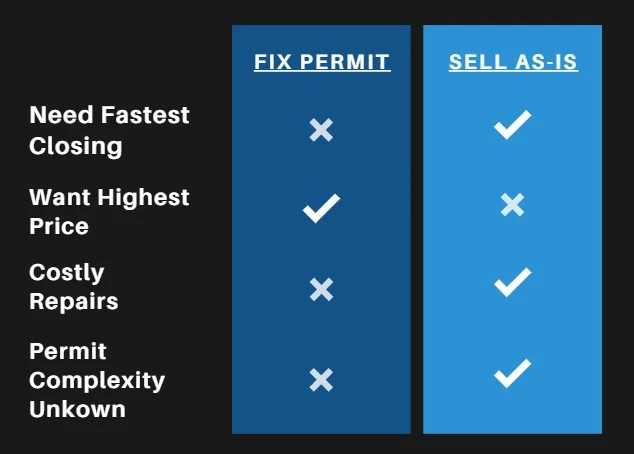
You Can Sell a House with an Open Permit, But Strategy Matters
Selling a home with an open permit is possible, you just need to understand your options. For some sellers, closing the permit before listing can boost buyer confidence and even enhance the home’s value. In other cases, selling the property As-Is to a cash buyer may offer the simplest, least stressful path forward.
No matter which path you choose, take the time to research your local regulations and weigh how each option aligns with your timeline, budget, and comfort level. With the right approach, you can move forward confidently and keep your sale on track.

Recent Posts


Frequently Asked Questions (FAQs) About Selling Your Home Fast
During a transfer, a new deed is drafted and signed by the seller, transferring ownership of the house to the new buyer. This document is then recorded in the land records with the above-mentioned deed of trust.
We work with your bankruptcy attorney to present a FAIR offer and give you additional money at closing. We present the offer directly to your attorney and work to have the offer accepted by the bankruptcy court. Once the offer is accepted, we ensure that the bankruptcy is released and we buy the property as soon as possible.
Yes, we can work with any seller who needs to move a property quickly for any reason and in any price range. We have purchased million-dollar houses before.
Yes, we buy apartments, multi-family houses/buildings and land.
No! You have no obligation at all if you submit an information form, show your property to House Buyers or receive an offer to buy your house. You are under no obligation at all. All we ask for is the opportunity to make an offer for your house, you’re in the driver’s seat as to whether you accept the offer or not. You are in complete control. You are only obligated to our service if you have entered into a purchase agreement with us, as with any other real estate transaction.
We need very basic information from you about your house. The number of bedrooms, bathrooms and overall condition of the property is needed. We will also ask you how long you have owned your home and if there are any mortgages or liens against the property.
We offer the maximum amount possible, our offers are very competitive. If our offers weren’t competitive, we wouldn’t have purchased thousands of houses! There is no magic percentage we use, every house is unique. Our Real Estate Consultants take into consideration the age, condition, size, features and location of the home much like an appraiser would. We factor in the costs to repair the house, what other homes in the area are selling for and how long it is taking to sell those homes. These and several other factors are researched to determine a fair offer.
As soon as we receive your Online Form, we will review your information and get back to you ASAP (usually within 30-60 minutes depending on when you submit the information).
We work FAST to help ensure that your house doesn’t go to foreclosure. We present you with a FAIR offer to pay off your mortgage before the foreclosure. We help save your credit, avoid foreclosure and allow you to sell your house FAST and FAIR. Due to recent legislation, if you reside in the state of Maryland and are within a certain period of time before your foreclosure sale date, we will introduce you to a Foreclosure Consultant. The legislation mandates that if you are within this certain window that a foreclosure consultant must explain to you all of your options involved in selling your home.
No problem! We can still buy your house as is, even if it has demolition orders scheduled.
House Buyers of America
We buy your home on your terms.
- No repairs or showings
- Close on your time frame
- No commissions or fees
- No obligation cash offer
Over 25 Years in Business · Trusted Since 2001
Get Your Fair Cash
Offer
Today!
or call us at 855-659-3289
Searching and Processing Address