September 17, 2024

Selling a home involves several steps, and one often overlooked aspect is lender-required repairs. These repairs can delay the sale or even jeopardize the deal, making it crucial for sellers to understand what they are and how to handle them effectively.
In this guide, we’ll break down everything you need to know about lender-required repairs, including why they’re necessary, what types of repairs might be requested, and how to navigate the process. Additionally, we’ll explore an alternative option for sellers who want to bypass lender-required repairs altogether.
What are Lender-Required Repairs?
Lender-required repairs are mandatory fixes that a mortgage lender insists on before approving a loan for the buyer. Lenders do this to protect their investment, as the home itself often serves as collateral for the loan. If the buyer defaults, the lender needs to ensure that the property retains its value so they can recover their losses.
Why Lenders Require Repairs
Lenders require repairs to ensure the home is in good condition and meets safety, structural, and functionality standards. Major issues that could affect the home’s value, such as a weak foundation or faulty electrical wiring, are the primary concerns. These repairs are often necessary for loans like Federal Housing Administration (FHA) loans, where the lender needs to minimize risks.
How Lender-Required Repairs Are Identified
Lender-required repairs are identified through a home inspection. After the inspection, the lender reviews the report to identify any potential risks or issues with the home. Structural, safety, and code compliance problems are prioritized. Aesthetic or cosmetic issues are typically not included in lender-required repairs unless they pose a potential hazard.
Common Lender-Required Repairs
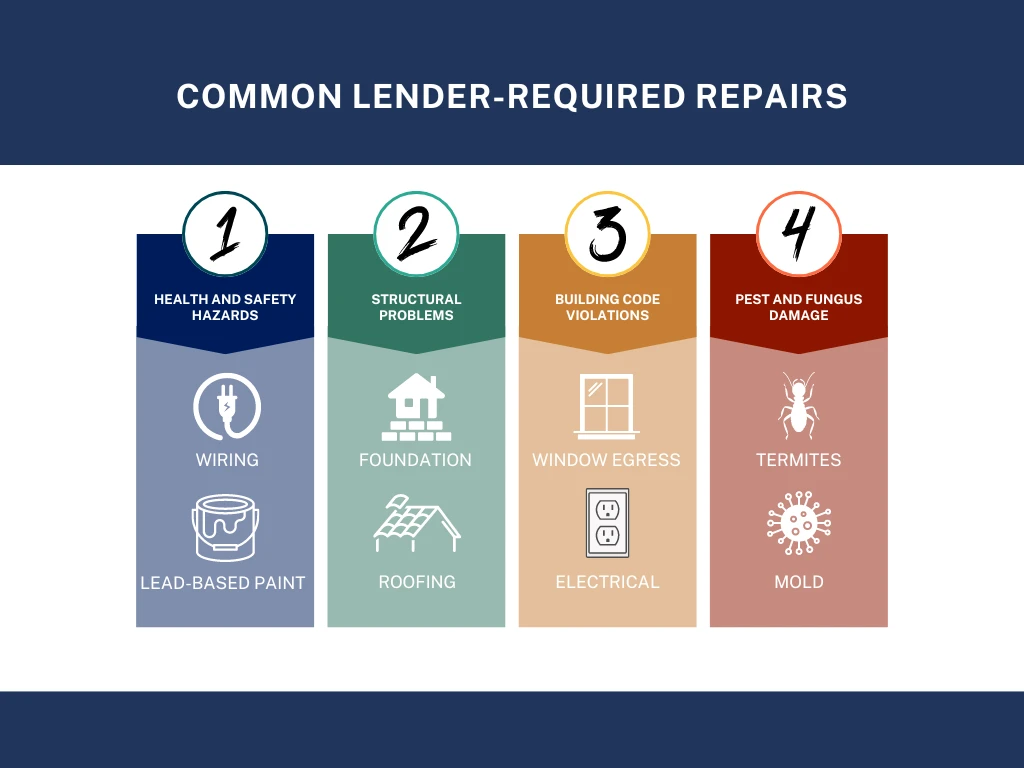
Lender-required repairs typically focus on health, safety, and structural issues. Here are some common examples that lenders may demand to be fixed before approving a loan:
Health and Safety Hazards
Health and safety issues are at the top of the list for lender-required repairs. These may include:
- Defective fire alarms or carbon monoxide detectors: These are safety essentials, and any defects will require immediate attention.
- Exposed electrical wiring: Electrical hazards pose a severe safety risk and are likely to be flagged during an inspection.
- Lead-based paint: In older homes, lead-based paint can be a concern. If peeling paint is found, especially in homes built before 1978, it could result in required repairs.
Structural Issues
Structural problems can significantly impact a home’s value and must be addressed before a loan is approved. Examples include:
- Foundation problems: A weak or damaged foundation is a significant red flag for lenders. Signs of foundation issues, such as cracks or uneven floors, will need to be repaired.
- Leaky roofs: A roof in poor condition can cause extensive damage to the home and may be flagged for repair.
Building Code Violations
Homes with unpermitted renovations or building code violations will require repairs. These violations can include:
- Non-compliant plumbing or electrical work: Any work that doesn’t meet local building codes will need to be brought up to standard.
- Inadequate egress windows: In some cases, windows in basements or bedrooms may need to be replaced if they don’t meet safety regulations for egress.
Pest Damage
Pest infestations, such as termites, can cause structural damage to a home. If pests are detected during the inspection, repairs and pest treatment will likely be required.
Repair Calculator
Should You Fix or Sell As-Is?
Estimate repair costs and compare your options: fix and list, sell As-Is, or get a cash offer.


Unlock the Full Calculator
What Fixes Are Mandatory After a Home Inspection?

Not all repairs are created equal. Lenders are primarily concerned with issues that affect the safety, structure, or functionality of the home. The following fixes are commonly required after a home inspection:
- Broken windows: Broken or cracked windows pose safety risks and will need to be repaired.
- Leaky plumbing: Issues like leaky faucets or pipes can lead to water damage and must be addressed.
- Faulty electrical systems: Any issues with the electrical system, such as outdated wiring or non-functional outlets, will need to be fixed.
- Damaged HVAC systems: Heating, ventilation, and air conditioning systems are crucial to the home’s livability. Lenders will often require that these systems be in good working order.
- Foundation or structural issues: As mentioned earlier, significant structural problems must be resolved for the lender to approve the loan.
Optional vs. Mandatory Repairs
Some repairs may be optional and not required by the lender, but they can impact the appeal of the home. Cosmetic updates, such as repainting walls or replacing outdated fixtures, may enhance the home’s value but are not typically lender-required. Focus on safety and structural fixes first.
Who Pays for Lender-Required Repairs?
It varies as to who is responsible for repairs:
Seller Responsibility
In most cases, sellers are responsible for covering the cost of lender-required repairs. This is especially true in a buyer’s market, where buyers have more options and negotiating power. Sellers may need to foot the bill to ensure the sale goes through.
Buyer Responsibility
In a seller’s market, where there’s higher demand for homes, the buyer may agree to cover some or all of the repair costs. However, this depends on the severity of the repairs and how eager the buyer is to close the deal.
Shared Costs
It’s also possible for both parties to negotiate and split the cost of repairs. This option is more common when the repairs are extensive or costly, and neither party wants to shoulder the entire burden.
What Happens If Lender-Required Repairs Aren’t Completed?

If the required repairs aren’t completed, the lender may refuse to approve the mortgage. This could cause the sale to fall through entirely, leaving the seller to find a new buyer or complete the repairs themselves.
Impact on the Sale
Failure to complete lender-required repairs can result in:
- Loan denial: If the buyer’s loan is denied due to uncompleted repairs, the entire transaction can collapse.
- Delays in closing: Even if repairs are eventually completed, the delay in addressing them can push back the closing date, which can be inconvenient for both the buyer and seller.
Alternatives to Completing Repairs
If you’re unable or unwilling to complete the repairs, you have a couple of options:
- Sell the home as-is: You can sell the home at a reduced price and let the buyer handle the repairs. This option is more viable in a seller’s market. However, if the repairs are extensive enough, you may have to sell to a cash buyer as lenders may not finance the purchase.
- Offer buyer incentives: Instead of completing the repairs, you can offer the buyer incentives, such as paying for closing costs or providing a home warranty.
How to Avoid Lender-Required Repairs

For sellers who want to avoid the hassle and expense of lender-required repairs, there are a few options:
Selling to a Cash Buyer
One way to avoid lender-required repairs entirely is to sell your home to a cash buyer. Cash buyers purchase homes without requiring a mortgage, which means they don’t need an appraisal or inspection to secure a loan.
Benefits of Selling to a Cash Buyer
- No repairs required: Cash buyers purchase homes “as-is,” meaning you don’t need to make any repairs.
- Faster closing: Without the need for mortgage approval, the sale can close much faster, sometimes in a matter of days.
- Less stress: You can avoid the back-and-forth negotiations and repair demands that often come with traditional buyers.
Drawbacks
- Lower sale price: Cash buyers typically offer less than market value to compensate for the repairs they’ll need to undertake.
- Limited buyer pool: You may have fewer interested buyers compared to traditional listings, as not everyone can pay cash for a home.
Pre-Listing Inspection
Another way to get ahead of lender-required repairs is to conduct a pre-listing inspection. This allows you to identify and fix any issues before listing the home, potentially avoiding repair demands from the buyer’s lender.
Benefits of a Pre-Listing Inspection:
- Proactive repairs: By addressing major issues early, you reduce the chances of lender-required repairs after the buyer’s inspection.
- Increased buyer confidence: Buyers may feel more confident making an offer on a home that has already passed a thorough inspection.
Drawbacks
- Upfront cost: A pre-listing inspection will cost money, and any repairs identified will need to be fixed before you list the home.
The Importance of Lender-Required Repairs
Lender-required repairs are an essential part of selling a home, particularly when the buyer is financing the purchase through a mortgage. While these repairs can be inconvenient, understanding the process can make it less stressful. Being proactive by addressing common issues beforehand or exploring alternatives like cash buyers can help ensure a smooth transaction.
As a seller, it’s crucial to be informed about the types of repairs that may be required and your options for dealing with them. Whether you decide to make the repairs, negotiate with the buyer, or sell the home as-is, knowing your choices will help you navigate the process confidently.

Recent Posts


Frequently Asked Questions (FAQs) About Selling Your Home Fast
During a transfer, a new deed is drafted and signed by the seller, transferring ownership of the house to the new buyer. This document is then recorded in the land records with the above-mentioned deed of trust.
We work with your bankruptcy attorney to present a FAIR offer and give you additional money at closing. We present the offer directly to your attorney and work to have the offer accepted by the bankruptcy court. Once the offer is accepted, we ensure that the bankruptcy is released and we buy the property as soon as possible.
Yes, we can work with any seller who needs to move a property quickly for any reason and in any price range. We have purchased million-dollar houses before.
Yes, we buy apartments, multi-family houses/buildings and land.
No! You have no obligation at all if you submit an information form, show your property to House Buyers or receive an offer to buy your house. You are under no obligation at all. All we ask for is the opportunity to make an offer for your house, you’re in the driver’s seat as to whether you accept the offer or not. You are in complete control. You are only obligated to our service if you have entered into a purchase agreement with us, as with any other real estate transaction.
We need very basic information from you about your house. The number of bedrooms, bathrooms and overall condition of the property is needed. We will also ask you how long you have owned your home and if there are any mortgages or liens against the property.
We offer the maximum amount possible, our offers are very competitive. If our offers weren’t competitive, we wouldn’t have purchased thousands of houses! There is no magic percentage we use, every house is unique. Our Real Estate Consultants take into consideration the age, condition, size, features and location of the home much like an appraiser would. We factor in the costs to repair the house, what other homes in the area are selling for and how long it is taking to sell those homes. These and several other factors are researched to determine a fair offer.
As soon as we receive your Online Form, we will review your information and get back to you ASAP (usually within 30-60 minutes depending on when you submit the information).
We work FAST to help ensure that your house doesn’t go to foreclosure. We present you with a FAIR offer to pay off your mortgage before the foreclosure. We help save your credit, avoid foreclosure and allow you to sell your house FAST and FAIR. Due to recent legislation, if you reside in the state of Maryland and are within a certain period of time before your foreclosure sale date, we will introduce you to a Foreclosure Consultant. The legislation mandates that if you are within this certain window that a foreclosure consultant must explain to you all of your options involved in selling your home.
No problem! We can still buy your house as is, even if it has demolition orders scheduled.
House Buyers of America
We buy your home on your terms.
- No repairs or showings
- Close on your time frame
- No commissions or fees
- No obligation cash offer
Over 25 Years in Business · Trusted Since 2001
Get Your Fair Cash
Offer
Today!
or call us at 855-659-3289
Searching and Processing Address