December 3, 2024

Closing on your home is a major milestone, marking the final step from offer to ownership. It’s an exciting time, but with multiple steps involved, things can easily slow down if not managed carefully. Here, we’ll walk you through each step you need to take, highlight common roadblocks, and share specific, actionable tips to keep your closing on track.
How Long Does Closing on a House Take?
The average closing process takes 30–60 days, but the timeline can vary based on a variety of factors, such as market conditions and buyer readiness. According to recent data from ICE Mortgage Technology, the average time to close on a home purchase was 43 days. However, buyers aiming to close in 30 days or fewer should be prepared to tackle each stage of the process with efficiency and organization.
Actionable Tips for Speeding Up the Closing Timeline
- Begin organizing financial documents early. Lenders require specific documents to approve a loan, such as pay stubs, bank statements, and tax returns. Start gathering these as soon as you begin your home search.
- Stay in close communication with your lender. Promptly responding to emails and requests can prevent delays. Designate one person in your household to be the primary point of contact to simplify communications.
- Opt for digital documentation when possible. Some lenders offer digital platforms for uploading documents, which can streamline the process compared to mailing or faxing paperwork.
How Long Does Each Stage of a House Closing Take?
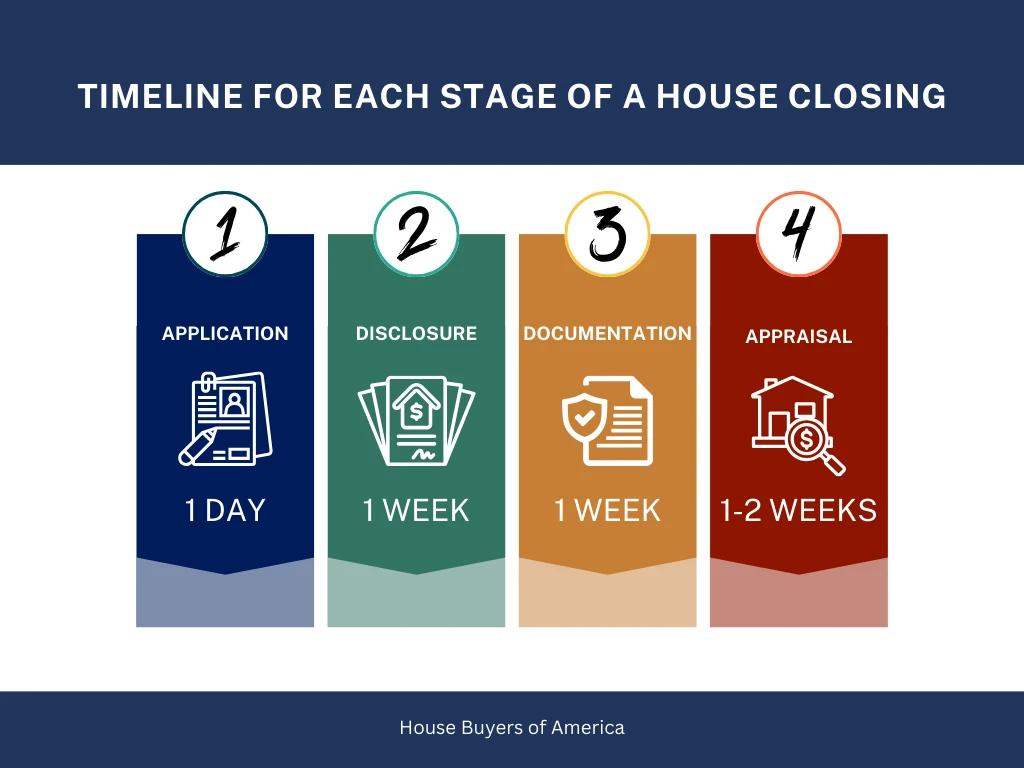
Each stage in the closing process can vary in length. Understanding each phase will help you anticipate what’s coming next and how to prepare.
1. Application (1 Day)
The loan application is often completed as part of the pre-approval process, but it may require additional information when you’re under contract. This application typically takes only one day, though the amount of time needed to submit documents can vary based on your financial situation.
Actionable Steps:
- Complete the pre-approval process ahead of time. This can help prevent surprises when it’s time to finalize your loan.
- Double-check your application for accuracy. Errors on your application can cause delays, so review everything before submitting.
- Include all sources of income. If you have multiple income sources, such as freelance work or investments, include this information upfront to avoid delays.
2. Disclosure (Under 1 Week)
After you’ve submitted your application, your lender will send you a loan disclosure document. This document contains key details about your loan, including the estimated interest rate, monthly payments, and closing costs. The disclosure stage typically takes a few days, during which the lender prepares the official terms and conditions of your loan.
Actionable Steps:
- Review the disclosure carefully. Ensure that the terms match what was discussed in your pre-approval and that you understand all costs.
- Confirm the loan estimate. Compare the initial loan estimate with the final disclosure to check for any discrepancies.
- Ask about rate locks. If you’re concerned about interest rate changes, ask your lender about locking in a rate to avoid fluctuations.
3. Documentation (Under 1 Week)
The documentation stage involves submitting additional paperwork to verify your income, assets, and employment status. This can take anywhere from a few days to a week, depending on how quickly you can gather the necessary documents.
Actionable Steps:
- Prepare a checklist of required documents. Include recent pay stubs, bank statements, W-2s, and tax returns. Cross-check with your lender to ensure nothing is missed.
- If self-employed, get organized early. Self-employed buyers may need to provide additional documentation, such as profit and loss statements, which can take time to gather.
- Stay responsive to lender requests. Each request your lender makes has the potential to delay the process, so respond promptly.
4. Appraisal (1–2 Weeks)
An appraisal is conducted to assess the fair market value of the home and verify that the property is worth the loan amount. This stage is essential because it determines how much the lender is willing to finance.
Actionable Steps:
- Request the appraisal early. Some markets have high demand for appraisals, which can cause scheduling delays. Request an appraisal as soon as you’ve finalized the purchase agreement.
- Understand the appraisal’s impact on your loan. If the appraisal value is lower than the agreed purchase price, you may need to renegotiate with the seller or cover the difference out of pocket.
- Be prepared for follow-up appraisals. If any issues arise, such as necessary repairs, you may need a second appraisal to verify that the issues have been addressed.
Sell Your House Fast
Sell Fast Checklist
Complete this interactive checklist to prepare for a quick property sale. Track your progress and export when ready.


Unlock the Full Checklist
Reasons It Could Take Longer to Close on a House

There are several factors that can cause the closing process to extend beyond the typical 30–60 day timeline. Knowing what can delay closing will help you prepare in advance.
1. Low Appraisal Value
When the appraised value of the home is lower than the agreed-upon purchase price, it can cause significant delays. The lender may require additional negotiations, or you may need to seek a new appraisal to adjust the loan terms.
How to Handle a Low Appraisal:
- Negotiate with the seller. Ask if they’re willing to lower the purchase price to match the appraised value.
- Consider paying the difference. If the appraisal is only slightly lower, you might choose to cover the gap yourself to avoid delays.
- Request a second appraisal. In some cases, you can request another appraisal if you believe the initial valuation was inaccurate.
2. Buyer’s Financial Issues
Any changes to the buyer’s finances can cause delays. For instance, switching jobs, opening new credit lines, or missing payments can trigger additional underwriting requirements and delay the process.
How to Avoid Financial Issues During Closing:
- Avoid major financial changes. Refrain from opening new credit accounts or making large purchases until after closing.
- Monitor your credit. Ensure your credit score remains stable, as any sudden dips may prompt further review by the lender.
- Keep employment steady. If possible, avoid changing jobs during the closing period, as this can require additional employment verification.
3. Seller-Related Issues
Sometimes, the seller’s circumstances can cause delays. For example, if repairs are not completed on time or if title issues arise, the closing process can be postponed.
Tips for Addressing Seller-Related Issues:
- Include a contingency for repairs. Specify that all agreed-upon repairs must be completed by a certain date to avoid delays.
- Check the title status early. Work with your title company to identify and resolve any liens or judgments on the property.
- Consider title insurance. Title insurance can protect you against unforeseen issues with property ownership history.
4. Lender Delays
Inexperienced or overbooked lenders can cause delays. If you suspect this may be an issue, communicate proactively and ask about processing times.
Tips for Avoiding Lender Delays:
- Choose a reputable lender. Research lenders and select one with a strong track record and positive reviews from previous customers.
- Opt for a dry closing, if possible. A dry closing schedules paperwork finalization before the official closing, helping prevent last-minute delays.
- Ask for digital options. If your lender offers electronic document submission, take advantage of it to expedite the process.
How Long Does Closing Day Take?
Closing day itself is typically the shortest part of the process, usually taking about 1–2 hours. However, preparing for closing day is essential to avoid unnecessary delays and complications.
What to Bring on Closing Day:
- Valid ID: You’ll need a government-issued ID, such as a driver’s license or passport.
- Closing Disclosure: Bring a copy of the final disclosure to confirm that the terms match the loan estimate.
- Certified Cashier’s Check: This check covers any closing costs, and your lender will provide the exact amount needed.
Tasks Completed on Closing Day:
- Signing Documents: Prepare to sign legal agreements, including the promissory note, mortgage note, escrow disclosure, and deed of trust.
- Paying Closing Costs: This includes various fees like the loan origination fee, title insurance, and inspection fees.
- Transferring the Home Title: This finalizes ownership transfer and officially makes you the homeowner.
Actionable Steps:
- Review documents beforehand. Request copies of the documents a few days in advance to review terms and avoid surprises.
- Schedule enough time. Closing can take up to two hours, so allow plenty of time in your schedule.
- Consult with your real estate agent. Have your agent or attorney present to answer any questions and clarify terms.
When Do I Get My Money After Closing?

If you’re the seller, one of your biggest questions after closing may be, “When will I actually receive the proceeds from the sale?” The good news is that the process of getting paid is usually straightforward, and sellers typically receive their funds promptly after closing is finalized.
Here’s what to expect:
- Same-Day Funding: In many cases, you’ll receive your money on the same day as the closing. Once all documents are signed and approved, the title or escrow company disburses funds. If your closing is completed in the morning, there’s a good chance the funds will be transferred by the afternoon.
- Wire Transfer or Check: You’ll often have the option to choose a wire transfer or certified check. Wire transfers are typically faster, depositing the funds directly into your bank account. This process can sometimes happen within a few hours but may take until the next business day, depending on your bank’s processing times.
- Possible Delays: Occasionally, delays can occur if there are last-minute adjustments in the paperwork or if your closing happens late in the day. If any final verification steps take extra time, this could delay the disbursement slightly, usually until the following business day.
Actionable Tips for Fast Payment:
- Confirm your payment method with the title or escrow company ahead of time to avoid surprises on closing day.
- Double-check bank details if you opt for a wire transfer to prevent delays or errors in your payment.
- Plan for a buffer of 1–2 days just in case there’s a delay, especially if you’re counting on the funds immediately.
Generally, you should expect to have your money within one business day after closing. With a bit of planning, you’ll be ready to enjoy the proceeds from your sale without unnecessary stress.
Frequently Asked Questions About Closing on a Home
How Long Does It Take to Sign Closing Papers?
It generally takes buyers around an hour or two to sign closing papers. Sellers, however, often finish in under 20 minutes. Pre-signing some documents with your title company can expedite this step.
How Long Does It Take to Close on a House After an Offer is Accepted?
The timeline varies based on the buyer’s financing and market conditions. Buyers who need a mortgage may take 30–60 days, while cash buyers can sometimes close in as little as one week.
Can You Close on a House in 2 Weeks?
Yes, if you have a cash buyer. Mortgaged transactions typically require more time due to documentation and underwriting.
How Long Does It Take to Close on a House After Inspection?
If no issues are found during the inspection, closing may proceed smoothly. If repairs are required, the closing process can be extended by several weeks.
Preparation Makes for a Smooth Closing Process
The home closing process can be complex, but with careful planning and clear communication, you can help ensure it goes as smoothly as possible. Preparing documents, responding promptly to requests, and staying in touch with your lender and real estate agent are essential steps to close on time. By taking a proactive approach and understanding the factors that could delay closing, you can minimize surprises and enjoy a seamless transition into homeownership.

Recent Posts


Frequently Asked Questions (FAQs) About Selling Your Home Fast
During a transfer, a new deed is drafted and signed by the seller, transferring ownership of the house to the new buyer. This document is then recorded in the land records with the above-mentioned deed of trust.
We work with your bankruptcy attorney to present a FAIR offer and give you additional money at closing. We present the offer directly to your attorney and work to have the offer accepted by the bankruptcy court. Once the offer is accepted, we ensure that the bankruptcy is released and we buy the property as soon as possible.
Yes, we can work with any seller who needs to move a property quickly for any reason and in any price range. We have purchased million-dollar houses before.
Yes, we buy apartments, multi-family houses/buildings and land.
No! You have no obligation at all if you submit an information form, show your property to House Buyers or receive an offer to buy your house. You are under no obligation at all. All we ask for is the opportunity to make an offer for your house, you’re in the driver’s seat as to whether you accept the offer or not. You are in complete control. You are only obligated to our service if you have entered into a purchase agreement with us, as with any other real estate transaction.
We need very basic information from you about your house. The number of bedrooms, bathrooms and overall condition of the property is needed. We will also ask you how long you have owned your home and if there are any mortgages or liens against the property.
We offer the maximum amount possible, our offers are very competitive. If our offers weren’t competitive, we wouldn’t have purchased thousands of houses! There is no magic percentage we use, every house is unique. Our Real Estate Consultants take into consideration the age, condition, size, features and location of the home much like an appraiser would. We factor in the costs to repair the house, what other homes in the area are selling for and how long it is taking to sell those homes. These and several other factors are researched to determine a fair offer.
As soon as we receive your Online Form, we will review your information and get back to you ASAP (usually within 30-60 minutes depending on when you submit the information).
We work FAST to help ensure that your house doesn’t go to foreclosure. We present you with a FAIR offer to pay off your mortgage before the foreclosure. We help save your credit, avoid foreclosure and allow you to sell your house FAST and FAIR. Due to recent legislation, if you reside in the state of Maryland and are within a certain period of time before your foreclosure sale date, we will introduce you to a Foreclosure Consultant. The legislation mandates that if you are within this certain window that a foreclosure consultant must explain to you all of your options involved in selling your home.
No problem! We can still buy your house as is, even if it has demolition orders scheduled.
House Buyers of America
We buy your home on your terms.
- No repairs or showings
- Close on your time frame
- No commissions or fees
- No obligation cash offer
Over 25 Years in Business · Trusted Since 2001
Get Your Fair Cash
Offer
Today!
or call us at 855-659-3289
Searching and Processing Address