September 15, 2023

Selling your beloved home isn’t just a financial transaction—it’s saying goodbye to the space where you’ve created countless memories. While the emotional journey of letting go can be bittersweet, the legal process shouldn’t add unnecessary stress to this significant life transition.
Beyond simply placing a “For Sale” sign in your yard and hoping for the best, selling a home involves navigating a complex maze of paperwork, disclosures, and financial considerations that can quickly become overwhelming. The anxiety of potentially missing a crucial legal step—one that could delay your sale or cost you thousands in unexpected fines or disputes—is something no seller should have to experience.
Whether you’re bravely taking on the For Sale By Owner (FSBO) challenge or partnering with a trusted real estate agent for peace of mind, understanding these legal steps will protect both your investment and your emotional well-being. With proper preparation, you can focus less on paperwork worries and more on confidently moving forward into your next chapter.
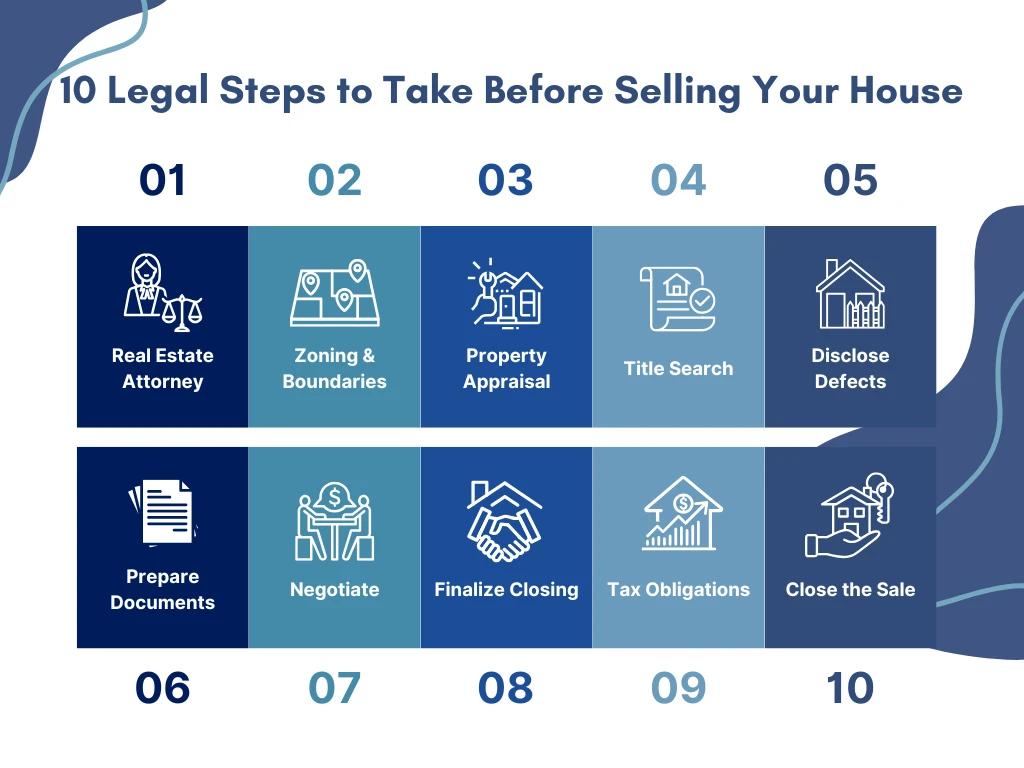
10 Legal Steps to Follow Before Selling Your House
1. Hire a Real Estate Attorney
Selling a home involves legal complexities that can be difficult to navigate on your own. A real estate attorney ensures that you comply with local, state, and federal laws, helping you avoid costly mistakes that could delay or derail your sale. They provide legal guidance on contracts, title issues, disclosures, and more, making the process as smooth as possible.
A real estate attorney can help you:
-
Review contracts and agreements to ensure fairness and legality
-
Ensure your property’s title is clear of liens or ownership disputes
-
Handle negotiations and closing paperwork efficiently
-
Resolve potential disputes before they become deal-breakers
-
Advise on complex issues like easements, tax obligations, or inherited property sales
Example:
If you’re selling a home that was inherited, you may face specific tax implications or title concerns. A real estate attorney can help ensure all legal matters are handled correctly before the sale.
To find a reputable attorney, ask for referrals from friends or family, check online reviews, and schedule consultations to compare fees and experience. Investing in legal expertise upfront can save you from major headaches later.
2. Verify Your Property’s Zoning and Boundaries
Before selling your home, it’s crucial to confirm that your property’s zoning designation aligns with how it has been used. Additionally, verifying property boundaries ensures that you are not encroaching on a neighbor’s land, which could create legal complications or disputes during the sale process.
To check zoning and boundaries, you should:
-
Confirm Your Property’s Zoning Classification
-
Visit your local zoning office or municipal website to verify whether your property is zoned for residential, commercial, or mixed-use purposes.
-
This ensures your home can legally be used as intended and helps buyers understand any restrictions on future modifications.
-
-
Verify That Property Records Match Local Government Records
-
Obtain a copy of your property deed and compare it with local tax assessor records to confirm lot size and legal descriptions.
-
Discrepancies can cause delays in closing, so resolving any inconsistencies early is crucial.
-
-
Ensure All Home Improvements Comply with Zoning Laws
-
Review permits for any past renovations, such as decks, fences, or extensions, to ensure they meet local zoning requirements.
-
Unpermitted structures may need to be removed or retroactively permitted before selling.
-
-
Check for Any Restrictions on Modifications or Development
-
Some areas have regulations regarding historic preservation, environmental protection, or homeowner association rules that could limit changes to the property.
-
Understanding these restrictions in advance helps set accurate buyer expectations and prevents legal headaches later.
-
Taking these steps proactively ensures a smoother sale and avoids potential legal or financial setbacks.
Example:
If your property is zoned as mixed-use, you might be able to market it to business owners looking for residential and commercial opportunities, which could increase your selling price.
If you’re unsure where your property line ends, hiring a land surveyor can prevent costly boundary disputes with neighbors. A survey will provide a detailed map of your land and can be crucial in legal proceedings if ownership is ever questioned.
3. Get a Property Appraisal
Setting the right asking price is key to attracting buyers and securing a profitable sale. A professional property appraisal provides an objective estimate of your home’s value based on multiple factors, preventing you from overpricing or underpricing your property.
Finding a Qualified Appraiser: To find a reputable appraiser, start by asking your real estate agent for recommendations. You can also search through professional organizations like the Appraisal Institute or the American Society of Appraisers. Always verify that your chosen appraiser is state-licensed or certified and has experience in your specific neighborhood.
Cost Expectations: Generally, a professional home appraisal costs between $300 and $600, though prices can vary based on your location, property size, and complexity. In high-cost areas or for larger homes, you might pay up to $800 or more. While this represents an upfront cost, it’s an investment that can prevent the much-costlier mistake of pricing your home incorrectly.
An appraiser will assess:
-
Comparable home sales in your area over the past six months
-
Your home’s current condition, including any needed repairs
-
Unique features, such as a newly renovated kitchen or a backyard pool
-
Market demand and economic trends impacting property values
Example:
If you recently renovated your kitchen with high-end appliances, an appraiser may factor that into the valuation, helping you set a competitive price.
If your appraisal comes in lower than expected, consider minor home improvements to increase value, such as fresh paint, landscaping, or minor repairs. Overpricing your home can cause it to sit on the market for months, while underpricing could mean leaving money on the table.
4. Conduct a Title Search

A title search ensures there are no ownership disputes or unpaid liens on your property. This step verifies that you have the legal right to sell your home. If any issues arise—like a forgotten second mortgage or unpaid property taxes—you’ll need to resolve them before closing.
To conduct a title search, you have two options:
-
Do it yourself – Visit your county recorder’s office or check their online database to search property records by address or parcel number, focusing on deeds, mortgages, liens, and judgments that might affect ownership. Be prepared to spend several hours navigating documents and possibly paying copying fees.
-
Hire a title company – This is the preferred option since professionals can identify hidden title issues and provide title insurance, which protects both the buyer and seller from legal complications.
Example:
If a previous owner placed a lien on the property for unpaid contractor work, a title search will reveal this, allowing you to address it before listing your home.
Without a clear title, your sale could be delayed or even canceled.
5. Disclose Property Defects
Most states require sellers to disclose any known issues with their home. Transparency is key to avoiding legal disputes and ensuring a smooth sale.
-
Common disclosures include foundation issues, roof damage, mold, plumbing problems, and electrical faults.
-
A pre-sale home inspection can help identify hidden defects.
-
Failure to disclose could result in legal consequences if the buyer discovers issues post-sale.
Example:
If your home has a history of flooding, you must disclose it. Even if the damage was repaired, the risk remains and must be communicated to the buyer.
6. Prepare Legal Sale Documents
Drafting the right documents is crucial to protect both buyer and seller. These legally binding papers define the terms of your transaction and help prevent future disputes. Essential legal documents include:
-
Purchase Agreement – This comprehensive contract forms the foundation of your home sale, detailing the agreed purchase price, earnest money amount, closing date, contingencies (such as financing, inspection, and appraisal conditions), and specific terms for what happens if either party fails to meet their obligations. This document transforms a verbal agreement into a legally binding contract that both parties must honor.
-
Bill of Sale – This itemized document clearly identifies which personal property items are included in the sale (or excluded). It specifies exactly which appliances, fixtures, window treatments, smart home devices, or other items will stay with the home versus what you’ll take with you. Being precise here prevents emotional disputes on moving day when buyers might expect items you intended to keep.
-
Title Deed – This legal instrument formally transfers ownership from you to the buyer. The type of deed matters—warranty deeds provide the most buyer protection by guaranteeing your clear ownership, while quitclaim deeds offer less protection but might be used in certain situations like transfers between family members. The deed must be properly executed, notarized, and recorded with your county’s land records office to make the transfer official.
-
Disclosure Forms – These documents require you to reveal known property defects and issues that could affect the home’s value or desirability. Requirements vary by state, but typically include information about roof leaks, foundation problems, environmental hazards (like lead paint or radon), past flooding, and other material facts. Honest disclosure protects you from future liability and builds trust with your buyer.
7. Handle Negotiations and Contingencies

The negotiation phase can be both financially and emotionally challenging as a seller. Buyers typically include various contingencies to protect their interests, while you’ll want to maintain favorable terms that support your timeline and financial goals. Understanding these contingencies thoroughly will help you navigate this delicate balance.
Common Contingencies to Prepare For:
-
Financing Contingency – This gives buyers a specified timeframe (typically 30-45 days) to secure their mortgage. Understand exactly how long the buyer has to obtain loan approval and what documentation they must provide to demonstrate good-faith efforts. Consider requesting a pre-approval letter upfront and establish a clear timeline for the buyer to remove this contingency. If their financing falls through, this contingency determines whether they can walk away with their earnest money or if you can retain it as compensation for taking your home off the market.
-
Home Inspection Contingency – Most buyers will request 7-14 days to complete inspections. This period often triggers the most intensive negotiations, as buyers may request repairs, credits, or price reductions based on inspection findings. Decide in advance your strategy for addressing potential issues—whether you’ll make repairs yourself, offer credit at closing, reduce the price, or sell “as-is.” Consider getting your own pre-listing inspection to identify and address potential deal-breakers before they become negotiating points.
-
Appraisal Contingency – If the home doesn’t appraise for the offered price, this contingency allows buyers to renegotiate or walk away. To protect yourself, be prepared with your own market analysis and comparable sales data to contest a low appraisal if necessary. Understand your options if the appraisal comes in low: you can reduce the price, the buyer can make up the difference in cash, you can split the difference, or you can cancel the contract and find another buyer.
-
Home Sale Contingency – Some buyers need to sell their current home before purchasing yours. This contingency can significantly impact your timeline. If you accept such an offer, include a “kick-out clause” that allows you to continue marketing your property and give the buyer a short window (usually 24-72 hours) to remove their contingency if you receive another offer.
Negotiation Strategies:
-
Repair Requests – Establish clear parameters about what you’re willing to fix versus what you’ll offer credits for. Major structural issues, code violations, and safety concerns are typically expected to be addressed, while cosmetic issues are usually considered part of the property’s “as-is” condition. Consider setting a dollar threshold for repairs you’re willing to make.
-
Timeline Negotiations – Buyers may request particular closing dates or possession timelines that don’t align with your needs. Be clear about your own timeline requirements and consider whether a rent-back agreement might give you needed flexibility after closing.
-
Mediation Provisions – Ensure your contract includes provisions for resolving disputes through mediation before litigation, which can save both parties significant time and money if disagreements arise.
-
Contingency Removal – Track all contingency deadlines carefully and require written removal of contingencies as each deadline passes. This prevents buyers from using expired contingencies as leverage later in the transaction.
Being prepared for these negotiation points before they arise will help you respond confidently rather than reactively, maintaining both your financial interests and emotional equilibrium throughout this critical phase of your home sale.
8. Finalize Closing Procedures
Before closing day, work with your attorney to ensure all documents are correct and all necessary steps are completed in the proper sequence. The final steps include:
-
Scheduling a final walkthrough with the buyer (typically 24 hours before closing)
-
Addressing any last-minute issues discovered during the walkthrough
-
Gathering all home-related documents (manuals, warranties, etc.)
-
Confirming all contingencies have been officially removed in writing
-
Reviewing the Closing Disclosure at least three days before closing
-
Verifying closing costs and seller proceeds are accurately calculated
-
Preparing a certified or cashier’s check if you owe money at closing
-
Confirming the buyer’s financing is fully approved and ready for disbursement
-
Arranging for payoff of your existing mortgage
-
Ensuring all required repairs have been completed with documentation
-
Completing any required municipal inspections or certificates
-
Confirming the title company has cleared all title issues
-
Transferring utilities out of your name effective on closing day
-
Attending the closing to sign all required documents
-
Transferring the title and deed to the new owner
-
Receiving your proceeds from the sale (wire transfer or check)
-
Handing over all keys, garage door openers, security codes, and smart home access
-
Providing location information for property essentials (circuit breakers, water shutoffs, etc.)
-
Canceling homeowner’s insurance after confirmation of deed recording
-
Filing change of address forms with USPS and other relevant entities
This comprehensive approach ensures a smooth transfer of ownership and helps prevent post-closing disputes or complications.
9. Handle Required Tax Obligations

Selling a home has tax implications that you should prepare for in advance. Failing to account for tax obligations can lead to unexpected bills after the sale.
Key tax considerations include:
- Capital Gains Tax: If your home has appreciated significantly, you may owe taxes on the profit. However, the IRS allows single homeowners to exclude up to $250,000 of gain and married couples filing jointly to exclude up to $500,000, provided you’ve lived in the home as your primary residence for at least two of the five years before selling.
- Property Taxes: Ensure all outstanding property taxes are paid before closing. These taxes are typically prorated at closing, with you responsible for the portion of the tax year during which you owned the property, so prepare for this adjustment in your closing costs.
- Mortgage Interest Deductions: If applicable, discuss deductions with a tax professional. You can generally deduct mortgage interest paid up to the date of sale, which might affect your decision on timing your home sale to maximize tax benefits.
- State and Local Taxes: Depending on your location, you may have additional tax obligations. Some states and municipalities charge transfer taxes or documentary stamp taxes based on the sale price, which can range from 0.1% to over 2% of your property’s value and significantly impact your net proceeds.
Example:
If you’ve lived in your home for more than two years, you may qualify for a capital gains tax exemption on profits up to $250,000 (or $500,000 for married couples). A tax professional can help determine your eligibility.
10. Close the Sale and Transfer Ownership
Closing is the final step in the home-selling process, where ownership officially transfers from seller to buyer. Being prepared for this step ensures a smooth transition.
To successfully close the sale:
- Review and sign all necessary legal documents, including the deed and bill of sale.
- Work with your real estate attorney to ensure compliance with state laws.
- Ensure the buyer’s payment is processed and the title is transferred.
- Hand over keys, garage openers, and any home warranties or manuals.
Example:
If the buyer’s mortgage approval is delayed, it could postpone closing. Having contingency plans in place can help mitigate last-minute issues.
Navigating Legal Waters: Your Roadmap to a Protected Home Sale
Selling your home is a major financial transaction that requires careful legal preparation. By following these ten steps, you can avoid costly mistakes, protect your interests, and ensure a smooth and successful sale.
If handling these legalities feels overwhelming, consider working with a professional home-buying service that can streamline the process and eliminate many of these steps.

Recent Posts


Frequently Asked Questions (FAQs) About Selling Your Home Fast
During a transfer, a new deed is drafted and signed by the seller, transferring ownership of the house to the new buyer. This document is then recorded in the land records with the above-mentioned deed of trust.
We work with your bankruptcy attorney to present a FAIR offer and give you additional money at closing. We present the offer directly to your attorney and work to have the offer accepted by the bankruptcy court. Once the offer is accepted, we ensure that the bankruptcy is released and we buy the property as soon as possible.
Yes, we can work with any seller who needs to move a property quickly for any reason and in any price range. We have purchased million-dollar houses before.
Yes, we buy apartments, multi-family houses/buildings and land.
No! You have no obligation at all if you submit an information form, show your property to House Buyers or receive an offer to buy your house. You are under no obligation at all. All we ask for is the opportunity to make an offer for your house, you’re in the driver’s seat as to whether you accept the offer or not. You are in complete control. You are only obligated to our service if you have entered into a purchase agreement with us, as with any other real estate transaction.
We need very basic information from you about your house. The number of bedrooms, bathrooms and overall condition of the property is needed. We will also ask you how long you have owned your home and if there are any mortgages or liens against the property.
We offer the maximum amount possible, our offers are very competitive. If our offers weren’t competitive, we wouldn’t have purchased thousands of houses! There is no magic percentage we use, every house is unique. Our Real Estate Consultants take into consideration the age, condition, size, features and location of the home much like an appraiser would. We factor in the costs to repair the house, what other homes in the area are selling for and how long it is taking to sell those homes. These and several other factors are researched to determine a fair offer.
As soon as we receive your Online Form, we will review your information and get back to you ASAP (usually within 30-60 minutes depending on when you submit the information).
We work FAST to help ensure that your house doesn’t go to foreclosure. We present you with a FAIR offer to pay off your mortgage before the foreclosure. We help save your credit, avoid foreclosure and allow you to sell your house FAST and FAIR. Due to recent legislation, if you reside in the state of Maryland and are within a certain period of time before your foreclosure sale date, we will introduce you to a Foreclosure Consultant. The legislation mandates that if you are within this certain window that a foreclosure consultant must explain to you all of your options involved in selling your home.
No problem! We can still buy your house as is, even if it has demolition orders scheduled.
House Buyers of America
We buy your home on your terms.
- No repairs or showings
- Close on your time frame
- No commissions or fees
- No obligation cash offer
Over 25 Years in Business · Trusted Since 2001
Get Your Fair Cash
Offer
Today!
or call us at 855-659-3289
Searching and Processing Address