February 12, 2025

Evictions are one of the hardest aspects of being a landlord. They’re time-consuming, expensive, and emotionally draining. However, when faced with a tenant who refuses to pay rent, damages property, or violates lease terms, some landlords may be tempted to bypass the legal eviction process. This approach, known as a self-help eviction, is illegal in most states and can lead to severe consequences for landlords.
In this article, we’ll explore what a self-help eviction is, why it’s prohibited, and the proper steps to evict a tenant legally.
What Is a Self-Help Eviction?
A self-help eviction happens when a landlord tries to remove a tenant from their rental property without going through the proper legal channels. Instead of obtaining a court order, the landlord attempts to take matters into their own hands to force the tenant to vacate.
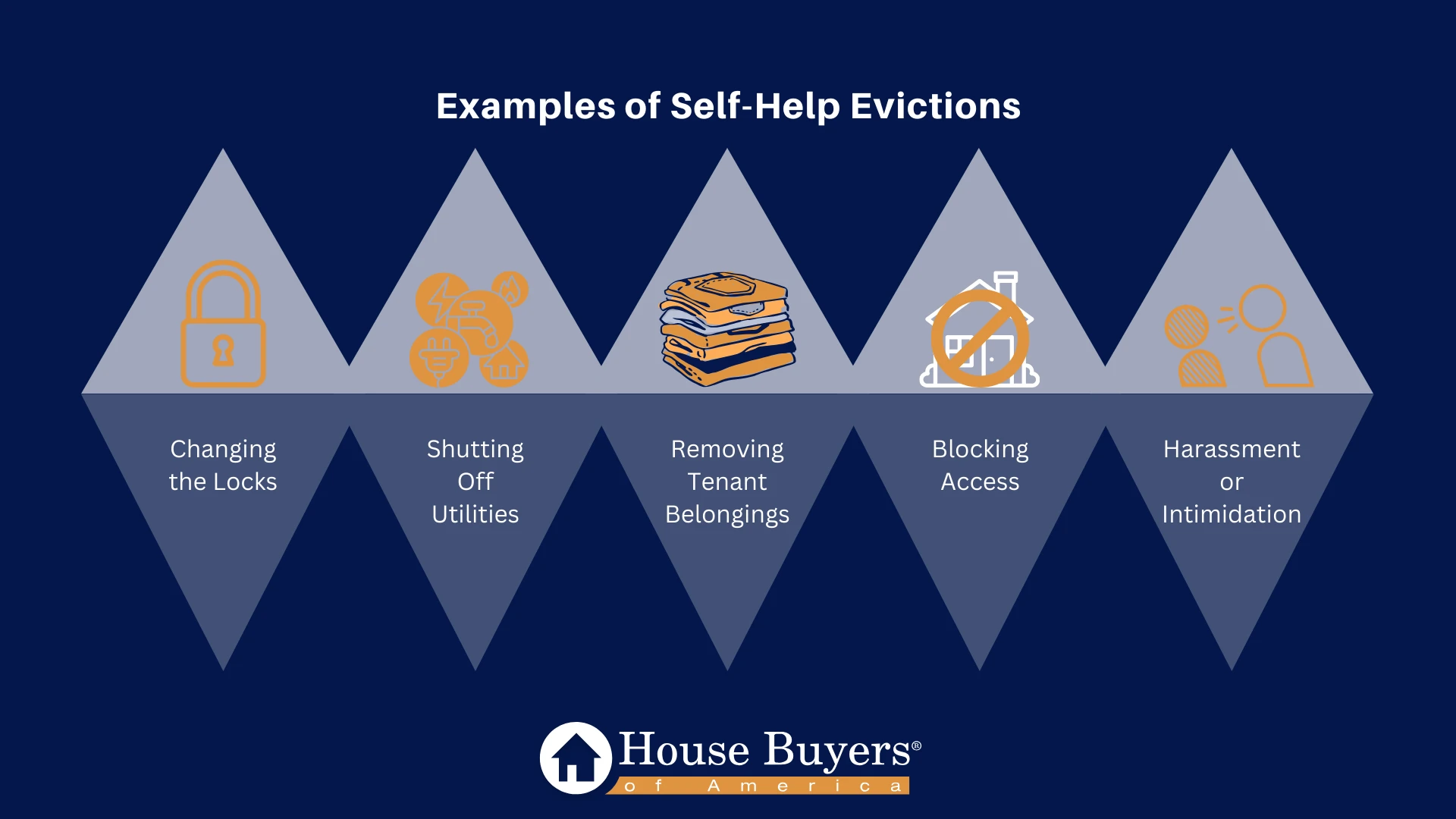
Examples of Self-Help Evictions
Some common actions that qualify as self-help evictions include:
- Changing the Locks: Locking the tenant out of the property without a court order.
- Shutting Off Utilities: Turning off water, electricity, or gas to make the property uninhabitable.
- Removing Tenant Belongings: Entering the unit and disposing of or placing the tenant’s belongings outside.
- Blocking Access: Boarding up windows or doors to prevent the tenant from entering.
- Harassment or Intimidation: Threatening the tenant to coerce them into leaving.
These actions are unlawful in nearly every state. If a landlord does this, it can result in fines, legal penalties, and even criminal charges against the landlord.
Why Are Self-Help Evictions Illegal?
Landlord-tenant laws are there to protect both parties’ rights. Tenants have the right to due process. This means they can’t be forcibly removed from their home without a court’s approval. Self-help evictions violate this principle and undermine the legal eviction process.
Legal Consequences for Landlords
There are many legal consequences if a landlord tries to engage in a self-help eviction:
- Civil Penalties: Courts can order landlords to pay damages to the tenant. This includes compensation for emotional distress, relocation costs, and attorney fees.
- Criminal Charges: Self-help evictions can sometimes be classified as misdemeanors or even felonies. This can result in jail time or significant fines.
- Restitution Orders: Don’t be surprised if a landlord ends up having to restore the tenant’s access to the property or pay for any damages caused during the illegal eviction.

How to Legally Evict a Tenant
Each state has its own requirement for eviction. However, you can expect the steps to be somewhat similar.
1. Provide Proper Notice
Landlords have to give the tenant written notice outlining the reason for eviction. The type and duration of the notice depend on the situation and state laws.
Common types of eviction notices include:
- Pay or Quit: Requires the tenant to pay overdue rent or vacate the property.
- Cure or Quit: Gives the tenant time to fix a lease violation, such as unauthorized pets.
- Unconditional Quit: Requires the tenant to leave without an opportunity to remedy the issue. This is often used for severe violations like illegal activity.
2. File an Eviction Lawsuit
If the tenant doesn’t comply with the notice, then it’s time to file an eviction lawsuit. Start by submitting the necessary forms to the court. You’ll be expected to pay the filing fee and serve the tenant with those court documents.
3. Attend the Court Hearing
You’re not done after filing the lawsuit; you’ll have to attend the court hearing. There, both the landlord and tenant are given the opportunity to present their cases.
To have the best chance to win, the landlord has to provide evidence, such as:
- Copies of the lease agreement.
- Proof of lease violations.
- Documentation of unpaid rent or property damage.
If the court rules in the landlord’s favor, they’ll issue a judgment and an eviction order.
4. Enforce the Eviction
After winning, landlords will have to work with local law enforcement to carry out the eviction. This is to protect both the landlord and the tenant so everything is conducted legally and safely.
Bad Tenants
Bad Tenants Checklist
Track your documentation and next steps when dealing with difficult tenant situations.


Unlock the Full Checklist
How to Avoid Evictions Altogether
Evictions can strain your time, finances, and mental health. To minimize the likelihood of eviction, consider these preventative measures.
Screen Tenants Thoroughly
Start by selecting responsible tenants. Don’t skip performing background checks, verifying income, or contacting previous landlords to confirm their rental history.
Communicate Clearly
Maintain open lines of communication with tenants. Address issues promptly and establish trust, which can prevent misunderstandings or disputes.
Offer Payment Plans
If a tenant is struggling to pay rent, consider offering a payment plan. Sometimes, people come down on hard times. Try to remain flexible to retain a good tenant and avoid the hassle of eviction.
Consider “Cash for Keys”
In some cases, offering the tenant money to move out voluntarily is more cost-effective than pursuing a formal eviction. This approach can save time and reduce conflict.

Consider Selling to a Cash Buyer
For landlords tired of dealing with difficult tenants or repeated evictions, selling to a cash buyer can be a stress-free alternative. Companies like House Buyers of America specialize in purchasing properties As-Is, meaning you don’t have to worry about evictions, repairs, or tenant disputes.
FAQs About Self-Help Evictions
What Are Some Examples of Self-Help Eviction Tactics?
Examples of self-help evictions include:
- Locking tenants out of the property.
- Turning off essential utilities like water, electricity, or heat.
- Removing tenant belongings or placing them outside.
- Boarding up windows or doors to block access.
- Harassing or intimidating tenants into leaving.
What Are the Consequences of a Self-Help Eviction?
Landlords who attempt a self-help eviction may face:
- Civil penalties, including paying damages to the tenant.
- Criminal charges, which could result in fines or jail time.
- Court orders to restore the tenant’s access to the property.
- Reputational damage and legal costs.
Can I Turn Off Utilities To Force a Tenant To Leave?
No, turning off utilities like water, electricity, or gas to force a tenant to vacate is illegal in most states. This action is considered a form of self-help eviction and can lead to severe penalties for the landlord.
Can I Sell My Property Instead of Evicting a Tenant?
Yes, selling your property to a cash buyer is a viable option. Companies like House Buyers of America purchase properties As-Is, allowing you to avoid the eviction process, tenant disputes, and repair costs. This option can provide financial relief and a quick resolution.
What Happens if My Tenant Damages My Property During an Eviction?
If your tenant destroys property during an eviction, document it thoroughly with photos and videos. Deduct the repair costs from the security deposit (if applicable) and consult your landlord’s insurance policy to determine coverage.
Do I Need an Attorney for an Eviction?
While it’s possible to handle an eviction on your own, hiring an attorney can help ensure you follow state laws and avoid mistakes. An attorney can also represent you in court and provide guidance on complex cases.

Recent Posts


Frequently Asked Questions (FAQs) About Selling Your Home Fast
During a transfer, a new deed is drafted and signed by the seller, transferring ownership of the house to the new buyer. This document is then recorded in the land records with the above-mentioned deed of trust.
We work with your bankruptcy attorney to present a FAIR offer and give you additional money at closing. We present the offer directly to your attorney and work to have the offer accepted by the bankruptcy court. Once the offer is accepted, we ensure that the bankruptcy is released and we buy the property as soon as possible.
Yes, we can work with any seller who needs to move a property quickly for any reason and in any price range. We have purchased million-dollar houses before.
Yes, we buy apartments, multi-family houses/buildings and land.
No! You have no obligation at all if you submit an information form, show your property to House Buyers or receive an offer to buy your house. You are under no obligation at all. All we ask for is the opportunity to make an offer for your house, you’re in the driver’s seat as to whether you accept the offer or not. You are in complete control. You are only obligated to our service if you have entered into a purchase agreement with us, as with any other real estate transaction.
We need very basic information from you about your house. The number of bedrooms, bathrooms and overall condition of the property is needed. We will also ask you how long you have owned your home and if there are any mortgages or liens against the property.
We offer the maximum amount possible, our offers are very competitive. If our offers weren’t competitive, we wouldn’t have purchased thousands of houses! There is no magic percentage we use, every house is unique. Our Real Estate Consultants take into consideration the age, condition, size, features and location of the home much like an appraiser would. We factor in the costs to repair the house, what other homes in the area are selling for and how long it is taking to sell those homes. These and several other factors are researched to determine a fair offer.
As soon as we receive your Online Form, we will review your information and get back to you ASAP (usually within 30-60 minutes depending on when you submit the information).
We work FAST to help ensure that your house doesn’t go to foreclosure. We present you with a FAIR offer to pay off your mortgage before the foreclosure. We help save your credit, avoid foreclosure and allow you to sell your house FAST and FAIR. Due to recent legislation, if you reside in the state of Maryland and are within a certain period of time before your foreclosure sale date, we will introduce you to a Foreclosure Consultant. The legislation mandates that if you are within this certain window that a foreclosure consultant must explain to you all of your options involved in selling your home.
No problem! We can still buy your house as is, even if it has demolition orders scheduled.
House Buyers of America
We buy your home on your terms.
- No repairs or showings
- Close on your time frame
- No commissions or fees
- No obligation cash offer
Over 25 Years in Business · Trusted Since 2001
Get Your Fair Cash
Offer
Today!
or call us at 855-659-3289
Searching and Processing Address