November 23, 2024

Selling a house during a divorce involves legal, financial, and practical decisions that both spouses must agree on. You’ll need to determine timing, property value, listing terms, and how proceeds will be divided.
Some couples sell before the divorce is final, while others wait until after. Understanding the process, required approvals, and potential tax or financial impacts helps ensure a smoother sale and fair outcome.
Should You Sell Your House During Divorce?
The question of whether to sell a house during divorce is complex and depends on individual circumstances, including financial standing, emotional attachment, and future goals. There are benefits and drawbacks to selling your house before, during, or after divorce. Let’s examine these in detail.
Pros of Selling Before Divorce Finalization
- Maximize Capital Gains Tax Exclusion: Married couples enjoy a capital gains tax exclusion of up to $500,000 on home sales, while single individuals only qualify for up to $250,000. By selling before the divorce is finalized, you may avoid a large tax bill and keep more of the proceeds.
- Access to Equity for Financial Stability: Selling the house can provide both parties with a sizable sum to start a new financial journey. The home’s equity can fund new housing, personal investments, or other financial needs, reducing financial strain as you each begin a new chapter.
- Emotional Closure: The home may carry memories—some positive and others painful. Selling it before the divorce is finalized can help each spouse move forward more smoothly, avoiding prolonged emotional ties to a shared space.
Cons of Selling Before Divorce Finalization
- Timing and Market Conditions: Selling a house takes time, and the market might not be favorable at the time of separation. Selling too quickly may mean compromising on price or leaving money on the table, which could be a disadvantage to both parties.
- Cooperation and Teamwork: Successful home sales require cooperation on pricing, marketing, and showing the home. If communication is strained, the process could add further stress to an already challenging situation.
Pros and Cons of Selling a House After Divorce
If selling before the divorce isn’t feasible, you can also consider selling after the proceedings are finalized. Here are some factors to consider.
Pros of Selling After Divorce Finalization
- Improved Communication Over Time: Sometimes, waiting to sell can allow time for emotions to settle, making it easier to communicate. Once the divorce is finalized, decisions regarding the property can be made with greater clarity.
- Opportunity to Strategize a Higher Sale Price: By delaying the sale, you might benefit from property improvements or waiting for a stronger market, ultimately resulting in a better sale price.
Cons of Selling After Divorce Finalization
- Financial Ties with Your Ex-Spouse: Maintaining joint ownership means sharing financial responsibilities for mortgage payments, property taxes, maintenance, and other expenses. This can create tension, particularly if one party can’t keep up with payments or if financial contributions are uneven.
- Loss of Capital Gains Exclusion: Divorced individuals no longer benefit from the married capital gains exclusion. Selling after divorce means each spouse only qualifies for the $250,000 exclusion, which could lead to a higher tax burden.
- Risk of a Forced Sale: If disagreements arise regarding the sale, courts may order a forced sale or division of assets. Forced sales can lead to lower profits and increased stress due to legal intervention.
Divorce Settlement Calculator
Divorce Property Settlement Estimator
Estimate your home's net proceeds and explore fair division scenarios.


How to Sell a House During Divorce: Step-by-Step Guide

Once you’ve decided to sell, there are several steps involved in navigating a house sale during divorce. Here’s a detailed breakdown.
1. Hire Real Estate and Legal Professionals
A real estate agent with experience in divorce sales can be invaluable. They can help both parties stay informed and ensure the process goes as smoothly as possible. Hiring a divorce attorney is also crucial to navigate legal issues. Here’s who you may need on your team:
- Real Estate Agent: An agent with experience in divorce-related sales can mediate between parties, helping to set realistic expectations and keep things moving.
- Real Estate Attorney: For complex property ownership questions, a real estate attorney can offer advice.
- Divorce Attorney: To ensure your financial interests are protected, a divorce attorney will help navigate asset division.
2. Decide Whether to Make Home Improvements or Sell As-Is
Both parties should agree on whether any home improvements will increase the home’s value or if selling As-Is is more advantageous. Here are some things to consider:
- Cost of Renovations: Will repairs or updates increase the sale price enough to justify the expense?
- Time Considerations: Are you both willing to wait longer for potential buyers who prefer move-in-ready homes?
- Agreement on Expenses: Decide upfront on how improvement costs will be split.
3. Get a Home Appraisal
An appraisal provides an unbiased evaluation of the home’s current market value. This step is essential for setting a realistic listing price and determining how to divide proceeds fairly. Working with a licensed appraiser will help avoid disagreements regarding the home’s worth. Here’s what to expect:
- Neutral Valuation: The appraiser will assess the home’s condition, features, and comparable local sales to determine market value.
- Establishing a Baseline for Proceeds: This valuation serves as a starting point for determining the financial equity each spouse will receive once the sale is complete.
4. Agree on an Asking Price
Setting the right asking price is critical, and both spouses need to agree. A well-chosen price can help the home sell faster and reduce potential disputes. Here are some key points to consider:
- Consult with Your Real Estate Agent: Use market data and recent sales in your area to guide the asking price.
- Set Thresholds: Agree in advance on the minimum offer you’ll both accept to avoid future disagreements.
- Agree on Price Reduction Protocols: If the house doesn’t sell promptly, decide when and by how much to lower the asking price.
5. Prepare the Home for Sale
Preparing the home to go on the market can be another point of contention, so it’s important to discuss responsibilities clearly. Here’s a checklist to guide you:
- Home Staging and Repairs: Decide if you’ll stage the home and who will handle minor repairs.
- Divide Responsibilities: If one spouse still resides in the home, agree on upkeep and cleanliness expectations.
- Agree on Showing Schedules: Work out times when the home will be available for showings and open houses, and ensure these don’t interfere with either spouse’s schedule.
6. Review Offers Together
Once the home is listed, offers will start coming in. Here’s how to approach this phase cooperatively:
- Set Communication Protocols: Decide how you’ll handle communication regarding offers, such as meeting in person, over the phone, or via your real estate agent.
- Offer Review: If an offer is below the agreed threshold, decide whether to counteroffer or wait for a better offer.
- Be Ready to Compromise: If market conditions or timing pressures change, be prepared to negotiate, keeping the shared goal in mind.
7. Divide Proceeds Fairly
Once the house is sold, the proceeds will need to be divided. Here’s what to consider in advance to avoid potential conflict:
- Calculate Closing Costs and Outstanding Debts: These include mortgage payoffs, agent fees, and any shared obligations on the property.
- Consult with Escrow or Legal Professionals: Escrow services can handle the distribution of proceeds, ensuring each party receives their share in line with legal agreements.
- Agree on a Split Based on Contributions: If one spouse contributed more financially (e.g., through mortgage payments or renovations), discuss whether they should receive a larger share.
Options If You Don’t Want to Sell the House
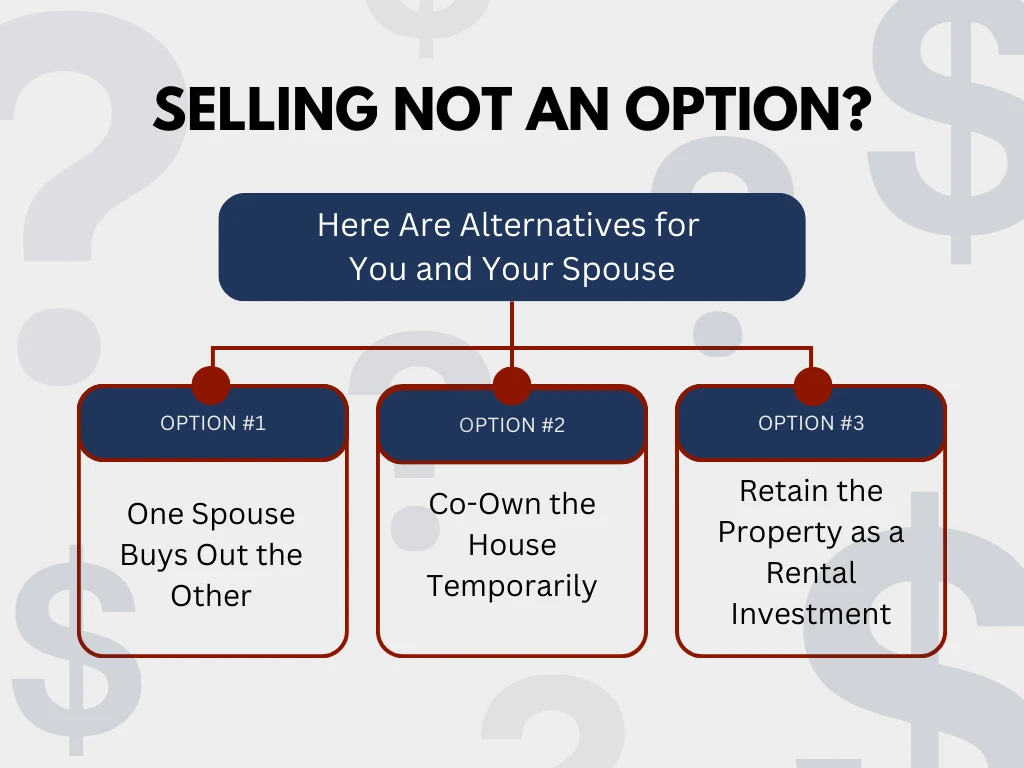
Selling a home isn’t always the only option. Some couples find alternatives that allow them to retain the property in a way that satisfies both parties. Here are three common scenarios:
1. One Spouse Buys Out the Other
In cases where one spouse wants to keep the home, they may buy out the other’s share. Here’s how it works:
- Determine Buyout Value: The buyout amount is typically half the home’s market value, adjusted based on factors like mortgage contributions and property value.
- Consider Refinancing: If you’re taking over the home, refinancing the mortgage under your name may be necessary to relieve the other spouse of liability.
- Check Cash Flow and Credit Requirements: Ensure you have the financial resources to cover the mortgage and property expenses independently.
2. Co-Own the House Temporarily
In amicable divorces, some couples opt to continue owning the home jointly, especially if children are involved. Here’s what to keep in mind:
- Agree on Financial Contributions: Decide who will pay the mortgage, taxes, and upkeep costs.
- Outline Living Arrangements: If one spouse resides in the home, agree on the duration of the arrangement and whether they’ll pay “rent” to the other spouse.
- Set Terms for Future Sale: Agree on when you’ll revisit selling the house, such as when children reach a certain age or if one party wants to buy out the other.
3. Retain the Property as a Rental Investment
If neither spouse wants to live in the home but sees potential for rental income, co-owning it as a rental property could be an option:
- Set Up a Partnership Agreement: Define each party’s responsibilities and financial contributions.
- Hire a Property Manager: If neither of you wants to manage the property, consider hiring a professional manager.
- Agree on Profits and Future Sale Plans: Outline how rental income will be split and establish terms for the future property sale.
Legal and Financial Considerations in Selling a House During Divorce

Understanding the legal and financial nuances can help streamline the process and avoid misunderstandings.
Capital Gains Tax Implications
If you’re married and sell a home jointly, you may be eligible for a capital gains exclusion of up to $500,000, provided you’ve lived in the home as your primary residence for two out of the last five years. Here’s what to consider:
- Timing Matters: Selling the home before finalizing the divorce can maximize tax savings.
- File Jointly or Separately: If possible, coordinate your tax filing status to benefit from the exclusion.
- Seek Tax Advice: A tax advisor can help you understand the specifics of capital gains exclusion and optimize your sale for tax efficiency.
Forced Sale by Court Order
In contentious divorces, a court may order the sale of the house if the couples cannot reach an agreement. Here’s what you need to know:
- Equitable Distribution in Community Property States: In states with community property laws, assets are divided equally, which may impact sale proceeds.
- Court Involvement Adds Costs: Legal fees increase when courts intervene, and outcomes may not be as financially beneficial as a mutually agreed sale.
- Emotional Impact on Children: Forced sales can cause additional stress for children, which courts may consider if they play a role in the decision.
FAQs: Common Questions about Selling a House During Divorce
Here are answers to some frequently asked questions about selling a house during a divorce, which may help clarify common concerns.
Can I Sell My House During a Divorce?
Yes, you can legally sell your house during a divorce. Both spouses need to agree on the sale terms, especially if both names are on the title.
Do I Have to Sell My House During a Divorce?
No, you don’t have to sell the house if both parties can agree on an alternative arrangement, such as a buyout, co-ownership, or turning it into a rental property.
Should I Sell My House Before or After Divorce?
Selling before divorce often allows couples to benefit from higher capital gains exclusions and tax benefits, while selling after divorce provides more time for clear communication and strategic planning.
Additional Tips for Selling a House During Divorce
Here are some final tips to make the process of selling a house during divorce smoother and more effective:
- Use a Trusted Escrow Service: Escrow services manage the financial side of the sale, distributing proceeds according to your agreement, which minimizes disputes.
- Establish Open Communication Early: Even if the divorce is contentious, try to keep communication as open and professional as possible.
- Have a Contingency Plan: The real estate market can be unpredictable. Agree on a backup plan in case the house doesn’t sell quickly, such as lowering the price or turning it into a rental.
Selling a house during a divorce can be tricky, with plenty of financial, legal, and emotional factors to think about. But by breaking down the process into simple steps, getting expert advice, and keeping communication open, you can make it a bit smoother and less stressful for everyone involved.

Recent Posts


Frequently Asked Questions (FAQs) About Selling Your Home Fast
During a transfer, a new deed is drafted and signed by the seller, transferring ownership of the house to the new buyer. This document is then recorded in the land records with the above-mentioned deed of trust.
We work with your bankruptcy attorney to present a FAIR offer and give you additional money at closing. We present the offer directly to your attorney and work to have the offer accepted by the bankruptcy court. Once the offer is accepted, we ensure that the bankruptcy is released and we buy the property as soon as possible.
Yes, we can work with any seller who needs to move a property quickly for any reason and in any price range. We have purchased million-dollar houses before.
Yes, we buy apartments, multi-family houses/buildings and land.
No! You have no obligation at all if you submit an information form, show your property to House Buyers or receive an offer to buy your house. You are under no obligation at all. All we ask for is the opportunity to make an offer for your house, you’re in the driver’s seat as to whether you accept the offer or not. You are in complete control. You are only obligated to our service if you have entered into a purchase agreement with us, as with any other real estate transaction.
We need very basic information from you about your house. The number of bedrooms, bathrooms and overall condition of the property is needed. We will also ask you how long you have owned your home and if there are any mortgages or liens against the property.
We offer the maximum amount possible, our offers are very competitive. If our offers weren’t competitive, we wouldn’t have purchased thousands of houses! There is no magic percentage we use, every house is unique. Our Real Estate Consultants take into consideration the age, condition, size, features and location of the home much like an appraiser would. We factor in the costs to repair the house, what other homes in the area are selling for and how long it is taking to sell those homes. These and several other factors are researched to determine a fair offer.
As soon as we receive your Online Form, we will review your information and get back to you ASAP (usually within 30-60 minutes depending on when you submit the information).
We work FAST to help ensure that your house doesn’t go to foreclosure. We present you with a FAIR offer to pay off your mortgage before the foreclosure. We help save your credit, avoid foreclosure and allow you to sell your house FAST and FAIR. Due to recent legislation, if you reside in the state of Maryland and are within a certain period of time before your foreclosure sale date, we will introduce you to a Foreclosure Consultant. The legislation mandates that if you are within this certain window that a foreclosure consultant must explain to you all of your options involved in selling your home.
No problem! We can still buy your house as is, even if it has demolition orders scheduled.
House Buyers of America
We buy your home on your terms.
- No repairs or showings
- Close on your time frame
- No commissions or fees
- No obligation cash offer
Over 25 Years in Business · Trusted Since 2001
Get Your Fair Cash
Offer
Today!
or call us at 855-659-3289
Searching and Processing Address