
Last Updated : November 5, 2025 by Chris Bibey
If you’ve never evicted a tenant in Texas, it’s easy to look at the process and feel overwhelmed by the many steps.
While there are multiple steps and potential challenges, don’t let that stop you from following through on the necessary action.
Here are the steps that you must take to evict a tenant in Texas.
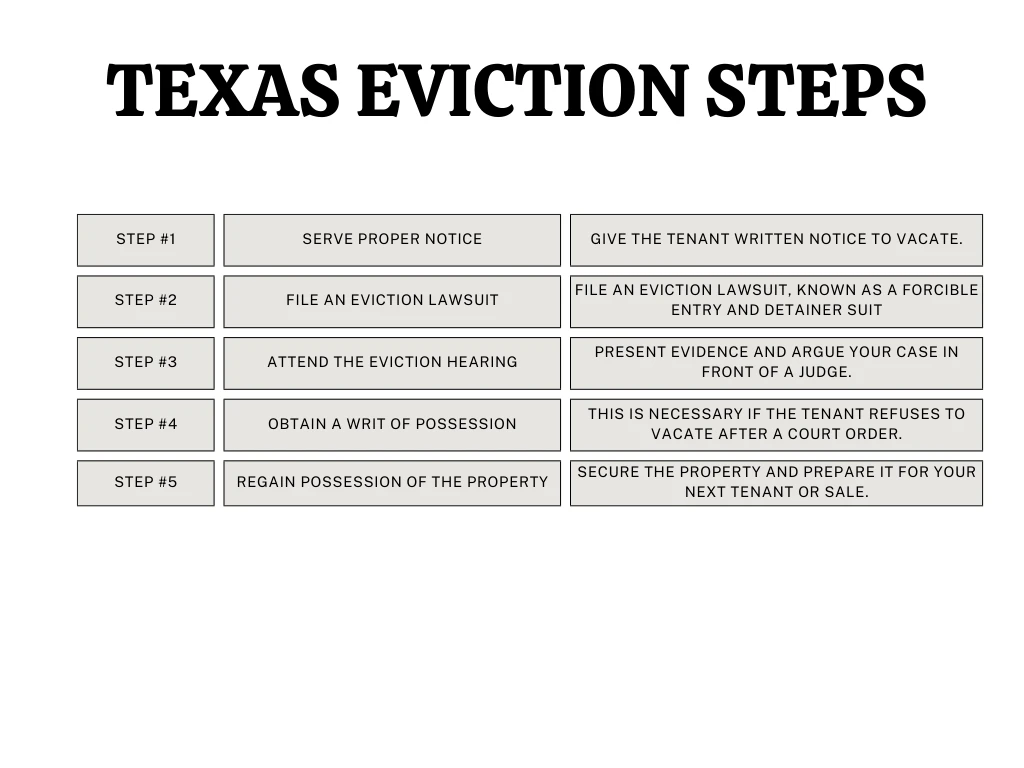
Before starting the eviction process, you must give the tenant written notice to vacate. The type of notice depends on the reason for the eviction. This step is crucial because failing to provide proper notice can lead to delays or dismissal of your case.
If the tenant does not comply with the notice, you can proceed to file an eviction lawsuit.
If the tenant refuses to move out after receiving the notice, the next step is to file an eviction lawsuit. This legal action is called a Forcible Entry and Detainer Suit, and it must be filed in the Justice of the Peace (JP) Court in the county where the rental property is located.
If the tenant does not respond or appear in court, you may receive a default judgment in your favor.

Once the lawsuit has been filed, the court will schedule an eviction hearing. This is where you will present evidence and argue your case in front of a judge.
If the tenant does not leave within the given time, you must request a writ of possession to remove them legally.
If the tenant refuses to vacate after the court ruling, you must take additional legal steps to regain possession of your property. The writ of possession is a court order that allows law enforcement to physically remove the tenant and their belongings.
Once law enforcement has executed the writ, you can legally regain possession of your property.
After the tenant has been removed, the final step is to secure the property, assess any damages, and prepare it for the next tenant.
Completing these steps properly ensures you comply with Texas eviction laws and avoid potential legal issues. Would you like help drafting a Texas-specific eviction notice?
Eviction is a last resort for landlords dealing with problematic tenants, but it’s not always the only solution. The eviction process in Texas can be time-consuming, costly, and stressful, often taking several weeks or months before a resolution is reached. Instead of immediately pursuing eviction, consider alternative approaches that may resolve the issue more efficiently.
Many tenant-related problems stem from miscommunication or temporary financial hardships. Before taking legal action, try discussing the situation with your tenant to see if a solution can be reached.
Having a respectful but firm discussion can often lead to voluntary cooperation, saving both parties time and money.
If a tenant is unlikely to meet lease terms or is unwilling to leave, a cash for keys arrangement may be a practical alternative to eviction. This involves offering the tenant a monetary incentive to vacate the property voluntarily.
While some landlords hesitate to pay a tenant to leave, the overall cost is often lower than court fees, lost rent, and property damage from prolonged disputes.
If discussions are unproductive but eviction still seems avoidable, professional mediation may help both parties reach a fair resolution. Mediation involves a neutral third party who facilitates negotiations to find a mutually acceptable solution.
Mediation is often faster and less expensive than an eviction, and in many cases, it preserves a professional landlord-tenant relationship.
If eviction seems too aggressive or complicated, you can simply wait until the lease expires and provide a non-renewal notice.
While this approach takes time, it eliminates legal complications associated with eviction.
If you haven’t found what you’re looking for just yet, here are some frequently asked questions and answers.
Can I evict a tenant if there is no written lease?
Yes, landlords can evict tenants even if there is no written lease, as long as there is a verbal or implied rental agreement. The eviction process follows the same legal steps, including proper notice and a court hearing.
Can I remove a tenant’s belongings after they leave?
Texas law requires landlords to handle abandoned property carefully, especially if the tenant was evicted through a court order. Depending on local regulations, you may need to store the items for a period before disposal or sale.
What happens if a tenant refuses to leave after an eviction order?
If a tenant does not leave after the court orders eviction, the landlord must request a writ of possession from the court. A constable or sheriff will then physically remove the tenant and their belongings.
Can I shut off utilities to force a tenant to leave?
No, shutting off utilities, changing locks, or removing a tenant’s belongings without a court order is illegal in Texas. Doing so could result in legal penalties and fines for the landlord.
How long does the Texas eviction process take?
The process usually takes between three to six weeks, depending on court scheduling and whether the tenant contests the eviction. If the tenant appeals, the timeline can be extended further.
Can a tenant be evicted for having unauthorized pets?
Yes, if the lease prohibits pets and the tenant violates this rule, the landlord can issue a 3-day notice to vacate. If the tenant does not remove the pet or leave, the landlord can proceed with an eviction lawsuit.
What if a tenant pays rent after I file for eviction?
If a tenant pays the overdue rent before the court hearing, the landlord can choose to dismiss the case or proceed with eviction if other lease violations exist. Some leases have clauses stating that partial payments do not stop an eviction.
By now, you should have a clear understanding of how to evict a tenant in Texas. You should also realize that you have other options and this is very likely your last resort.
If you’ve concluded that the “real estate game” is no longer for you, consider selling your Texas investment property for cash. It’s the best way to remove this stress from your life.
Searching and Processing Address