November 13, 2024

When water damage strikes, it can be both an emotional and financial blow to homeowners. Water damage, including from leaky or burst pipes, has recently ranked as the third most common property damage claim, making up nearly 24% of all homeowners insurance claims. Water damage significantly impacts your property’s value and complicates the selling process.
The good news?
If you want to sell a house with water damage, it’s possible, but it requires strategic planning and the right approach. In this article, we’ll cover everything you need to know about selling a house with water damage, from understanding the different types of water damage to navigating insurance claims and disclosures.
Types of Water Damage and Their Impact on Selling Your Home
Water damage isn’t one-size-fits-all; it varies based on the source and severity. Understanding the type of water damage your home has sustained is crucial for determining the best-selling approach and potential repair needs.
Here are the main types:
- Groundwater Flooding: This occurs when water enters your property from the ground level, such as from poor drainage or heavy rainfall.
- Above-Ground Flooding: Water entering from above ground level, like rain seeping through a damaged roof, falls under this category.
- Burst Pipes and Leaks: Often hidden, these cause localized water damage and may result in mold or structural issues if undetected.
- Natural Disasters: Floods and hurricanes can devastate homes, and damages from these events typically require specific insurance coverage.
Tip: Insurance companies often differentiate between these types of water damage, which impacts coverage. Knowing the type of damage helps you plan the next steps effectively.
Step-by-Step Guide to Managing Water Damage
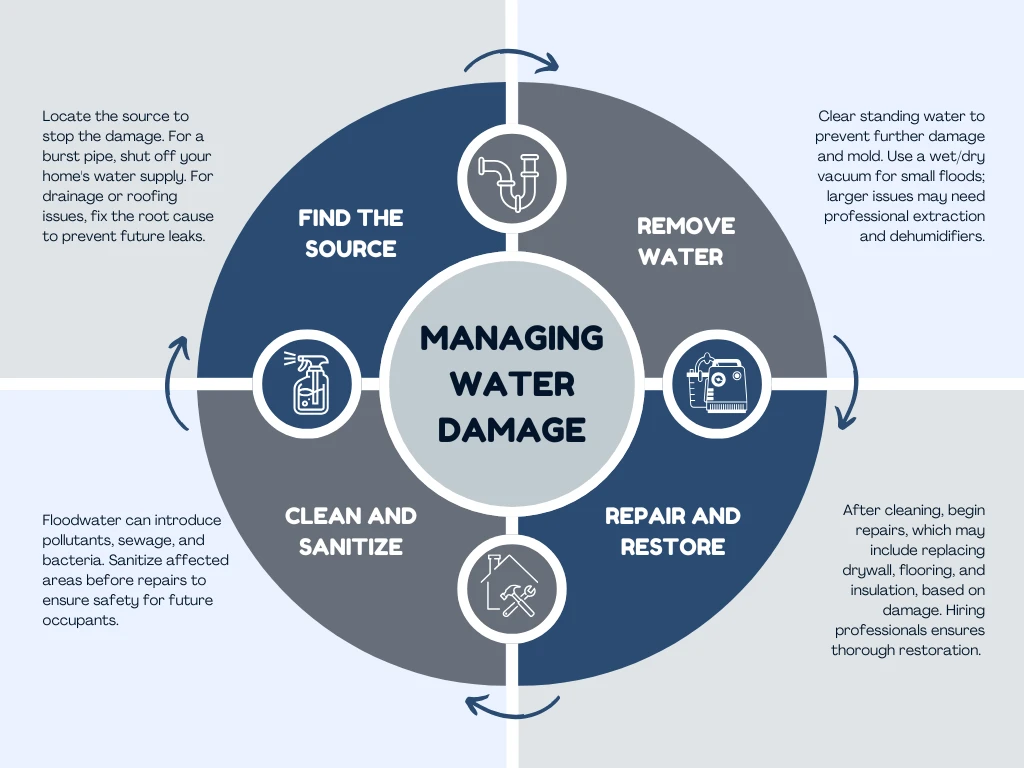
Water damage can worsen over time, so acting fast is essential. Here’s how to approach the situation once water damage occurs.
1. Find the Source
Locating the source is crucial for halting the damage. If a pipe has burst, turn off the water supply to your home. For drainage or roofing issues, addressing the root cause is essential to avoid future leaks.
2. Remove Standing Water and Dehumidify
Standing water must be cleared to prevent further damage and the potential for mold growth. Use a wet/dry vacuum for minor flooding, but larger issues may require professional water extraction and industrial dehumidifiers.
Prevention Tip: Invest in a dehumidifier and consider mold prevention solutions to avoid long-term issues.
3. Clean and Sanitize
Flood water can bring in pollutants, sewage, and bacteria, making thorough cleaning vital. Sanitize affected areas before starting repairs to ensure the home is safe for future occupants.
4. Repair and Restore
Once the area is clean, repairs can begin. This may include replacing drywall, flooring, and insulation, depending on the extent of the damage. Hiring professionals can ensure a high-quality, thorough restoration, which is especially important if you’re planning to sell.
Essential Repair Elements
- Replace damaged materials: Carpeting, drywall, and other materials affected by moisture should be removed and replaced.
- Repair structural damage: If water has damaged foundational or structural components, a licensed contractor should handle the repairs.
Understanding Home Insurance and Water Damage Coverage

Navigating insurance policies and understanding what’s covered is key to mitigating water damage costs. Approximately 14,000 U.S. homeowners file a water damage claim daily, impacting about 1 in 60 insured homes each year nationwide.
Here’s what you need to know about water damage and homeowner’s insurance.
Repair Calculator
Should You Fix or Sell As-Is?
Estimate repair costs and compare your options: fix and list, sell As-Is, or get a cash offer.


Unlock the Full Calculator
Types of Coverage
Standard homeowner’s insurance typically covers accidental and sudden water damage, such as a burst pipe or an overflowing appliance. However, flood insurance for natural disasters—like hurricanes or floods—is usually sold separately.
Limitations and Exclusions
Some policies exclude gradual damage, such as a leak that has developed over time, as it is often considered neglect. This can leave homeowners responsible for costly repairs if not addressed promptly.
Tip: If you’re unsure about your coverage, contact your provider for clarification on what’s covered and if additional flood insurance is necessary.
Disclosure Requirements for Water-Damaged Homes
In most states, sellers are required to disclose any known water damage. Transparency about a home’s water damage history helps build trust with buyers and avoids potential legal issues.
Disclosure Laws and Why They Matter
Disclosure laws vary by state, but in general, homeowners must disclose any water damage or repairs made. Failure to do so can lead to litigation, especially if buyers later discover undisclosed damage.
Key Disclosure Elements:
- Documented Repairs: Keep records of all repairs and any remediation steps taken.
- Flood Zone Information: If your home is in a high-risk flood zone, you’ll need to inform buyers and may need to carry specific flood insurance.
Pro Tip: Being upfront about water damage can actually help sell your house, as buyers appreciate transparency and can trust that they’re getting a well-maintained property.
Remediation and Repair Options for Water-Damaged Homes

Once water damage has been identified, proper remediation and repair are essential to restore the home’s value and make it safe for buyers.
Mold Remediation
Water damage often leads to mold growth, which can pose health risks and turn away potential buyers. Hiring a mold remediation specialist to clean and prevent further mold development is a necessary investment in most cases.
DIY Repairs vs. Professional Help
For minor repairs, homeowners may be able to handle issues like patching drywall or replacing carpets. However, significant water damage should always be addressed by professionals who can properly restore structural integrity.
Essential Remediation Steps:
Replace damaged materials: Flooring, insulation, and drywall that have been exposed to water need to be replaced.
Structural repairs: Any foundational or wall damage should be professionally repaired to maintain home value.
Tip: Providing documentation of repairs and certifications from remediation companies can give buyers peace of mind.
Strategies for Selling a Home with Water Damage
Selling a house with water damage requires a strategic approach. Here are the main options to consider.
1. Selling As-Is
For homes with extensive damage, selling As-Is can save on repair costs. Many cash buyers or investors specialize in purchasing damaged properties and may offer a fair price despite the condition.
2. Making Minor Repairs
If the damage is minimal, making small repairs to improve curb appeal can make a difference. Simple fixes like patching drywall or painting can make the home more appealing to buyers without significant expense.
3. Pricing Competitively
Pricing a water-damaged home appropriately is essential. Research comparable homes and consider getting an appraisal to determine a realistic asking price.
4. Offering Buyer Incentives
If repairs are too costly, consider offering buyer concessions, such as covering closing costs or providing repair credits. This can help offset repair costs for the buyer and make your home more attractive.
Tip: Highlight any proactive steps taken to manage the damage, such as professional mold remediation or recent repairs, in your listing description.
Key Challenges and Considerations

Water damage presents unique challenges for sellers. Here are a few considerations to keep in mind.
Health and Safety Concerns
Water damage often leads to mold and mildew, which can pose health risks. Proper remediation and documentation are essential to assure buyers that the home is safe.
Impact on Home Value
Water damage can reduce the value of a property, especially if located in a high-risk flood area. Setting realistic expectations about the home’s market value is essential.
Tip: Work with a knowledgeable real estate agent who has experience selling water-damaged homes. They can help you navigate disclosure requirements and pricing strategies.
Tips for Closing the Sale
Selling a home with water damage requires clear communication and a proactive approach. Here are some final tips to ensure a successful sale.
Document Everything
Keep detailed records of repairs, insurance claims, and any inspections. Buyers may request this information during the sale process, and having it ready can speed up negotiations.
Highlight Preventive Measures
If you’ve taken steps to prevent future damage, such as installing a dehumidifier or re-pitching a flat roof, mention these in the listing. This shows buyers that the property has been cared for.
Work with a Real Estate Agent
Experienced real estate agents can be invaluable in marketing and selling homes with water damage. They can connect you with professionals who specialize in restoration, provide pricing advice, and guide you through the legal requirements.
Pro Tip: Be transparent and proactive. Buyers are more likely to move forward with a purchase if they feel the seller has been honest and addressed water damage responsibly.
Wrapping Up: How to Sell a House with Water Damage Successfully
Selling a house with water damage is challenging but manageable with the right approach. By understanding the types of water damage, working closely with insurance providers, and choosing a suitable selling strategy, you can make the best of a tough situation. Whether you choose to repair the damage or sell As-is, being transparent and thorough in your disclosures is key. Follow these steps to help ensure a successful sale, even in the face of water damage challenges.
FAQs for Selling a House with Water Damage
1. Can you sell a house with water damage?
Yes, you can sell a house with water damage. However, the approach you take will depend on the extent of the damage, your budget, and the time frame you have for selling. You can either make repairs to increase the home’s value or sell it As-Is, often at a reduced price, to cash buyers or investors willing to handle the repairs themselves.
2. What are my options for selling a water-damaged home?
Your main options include:
- Selling As-is: This saves you from repair costs and appeals to cash buyers or investors.
- Making Minor Repairs: If the damage is minor, you can fix a few issues to increase appeal.
- Full Restoration: In cases where water damage is extensive but manageable, full remediation and repair can increase the home’s value.
- Offering Buyer Incentives: If repairs are too costly, you can provide concessions, like covering some of the buyer’s closing costs or offering credits for repairs.
3. Do I need to disclose water damage to buyers?
Yes, in most states, it is legally required to disclose any known water damage and repairs made to address it. This includes damage from events like leaks, flooding, or burst pipes, and any remediation steps taken. Failure to disclose known issues could result in litigation if buyers discover the damage after purchase.
4. Does homeowners insurance cover water damage?
Homeowners insurance typically covers sudden and accidental water damage, like burst pipes or overflowing appliances. However, most standard policies do not cover flood damage caused by natural disasters like hurricanes or heavy rain; for this, you would need a separate flood insurance policy. Also, some policies exclude damage from gradual leaks, which are often deemed neglectful.
5. How much does it cost to repair water damage?
The cost of water damage repair varies widely based on the extent of the damage and the affected areas. Minor repairs, like fixing a small leak or replacing drywall, may cost a few hundred dollars. In contrast, extensive repairs involving mold remediation, structural repairs, and new flooring can range from $4,000 to $10,000 or more.
6. How can I prevent water damage from happening again?
Prevention tips include:
- Regular Inspections: Check your roof, plumbing, and gutters regularly.
- Gutter Maintenance: Clean gutters twice a year to prevent blockages.
- Sealing Vulnerable Areas: Seal windows, door frames, and foundation cracks.
- Install Water Alarms: Water sensors in areas prone to leaks (like basements and under sinks) can alert you to potential issues before they become significant problems.
7. What if my house is in a flood zone?
If your home is in a high-risk flood zone, you are usually required to carry flood insurance, especially if you have a mortgage. Selling a home in a flood zone may require additional disclosures, and it’s beneficial to mention preventive measures taken (such as installing flood-resistant materials or landscaping to divert water).
8. Is mold always present after water damage?
Not necessarily, but it is common. Mold can start growing within 24 to 48 hours in damp areas. If water damage is addressed quickly, and the area is dried thoroughly, mold growth can be prevented. However, if mold has developed, it’s essential to have it professionally remediated before selling.
9. Can I sell my water-damaged home to a cash buyer?
Yes, selling to a cash buyer or investor can be a great option for water-damaged properties. Cash buyers are often willing to purchase homes As-Is, saving you the time and cost of making repairs. This is especially appealing if you want a quick sale without the expense of full remediation.
10. Will water damage lower my home’s value?
Yes, water damage often decreases a home’s market value, especially if it has not been repaired. The extent of the decrease depends on the severity of the damage, location, and whether it’s in a high-risk flood zone. However, completing necessary repairs and remediation can help restore or even increase the value, depending on the market.
11. What documentation should I provide to buyers about water damage?
Be prepared to share any repair records, insurance claims, receipts, and warranties for work completed. Buyers will want reassurance that the damage was addressed properly and that preventive measures were taken. Having thorough documentation can also speed up the closing process.
12. How do I price a water-damaged home for sale?
Pricing should reflect the home’s condition, repair needs, and local market. Research comparable properties and consider consulting a real estate agent familiar with water-damaged homes to help determine a fair price. If you’re selling As-Is, expect to list the home below the market value to attract buyers interested in a fixer-upper.
13. Can I DIY the repairs for minor water damage?
Yes, homeowners can do minor repairs like patching drywall or fixing small leaks if they have the right skills. However, extensive water damage, particularly involving mold or structural issues, is best handled by professionals to ensure the work meets safety standards.

Recent Posts


Frequently Asked Questions (FAQs) About Selling Your Home Fast
During a transfer, a new deed is drafted and signed by the seller, transferring ownership of the house to the new buyer. This document is then recorded in the land records with the above-mentioned deed of trust.
We work with your bankruptcy attorney to present a FAIR offer and give you additional money at closing. We present the offer directly to your attorney and work to have the offer accepted by the bankruptcy court. Once the offer is accepted, we ensure that the bankruptcy is released and we buy the property as soon as possible.
Yes, we can work with any seller who needs to move a property quickly for any reason and in any price range. We have purchased million-dollar houses before.
Yes, we buy apartments, multi-family houses/buildings and land.
No! You have no obligation at all if you submit an information form, show your property to House Buyers or receive an offer to buy your house. You are under no obligation at all. All we ask for is the opportunity to make an offer for your house, you’re in the driver’s seat as to whether you accept the offer or not. You are in complete control. You are only obligated to our service if you have entered into a purchase agreement with us, as with any other real estate transaction.
We need very basic information from you about your house. The number of bedrooms, bathrooms and overall condition of the property is needed. We will also ask you how long you have owned your home and if there are any mortgages or liens against the property.
We offer the maximum amount possible, our offers are very competitive. If our offers weren’t competitive, we wouldn’t have purchased thousands of houses! There is no magic percentage we use, every house is unique. Our Real Estate Consultants take into consideration the age, condition, size, features and location of the home much like an appraiser would. We factor in the costs to repair the house, what other homes in the area are selling for and how long it is taking to sell those homes. These and several other factors are researched to determine a fair offer.
As soon as we receive your Online Form, we will review your information and get back to you ASAP (usually within 30-60 minutes depending on when you submit the information).
We work FAST to help ensure that your house doesn’t go to foreclosure. We present you with a FAIR offer to pay off your mortgage before the foreclosure. We help save your credit, avoid foreclosure and allow you to sell your house FAST and FAIR. Due to recent legislation, if you reside in the state of Maryland and are within a certain period of time before your foreclosure sale date, we will introduce you to a Foreclosure Consultant. The legislation mandates that if you are within this certain window that a foreclosure consultant must explain to you all of your options involved in selling your home.
No problem! We can still buy your house as is, even if it has demolition orders scheduled.
House Buyers of America
We buy your home on your terms.
- No repairs or showings
- Close on your time frame
- No commissions or fees
- No obligation cash offer
Over 25 Years in Business · Trusted Since 2001
Get Your Fair Cash
Offer
Today!
or call us at 855-659-3289
Searching and Processing Address