March 5, 2025

Breaking a lease is a very serious decision that often has legal and financial implications for landlords. Landlords must follow strict legal guidelines when deciding to terminate a lease early.
So, can a landlord break a lease early? The short answer is yes—but only under specific circumstances and with proper legal procedures in place. This guide will cover the valid reasons for early lease termination, legal requirements, tenant rights, and best practices to avoid legal disputes.
Understanding Lease Agreements and Legal Boundaries
A lease agreement is a legally binding contract that establishes the terms and conditions under which a tenant rents a property. This document outlines both the tenant’s and landlord’s rights and responsibilities, including rent payments, maintenance obligations, and the duration of the lease. While landlords retain ownership of the property, they cannot terminate a lease or evict a tenant at will.
Breaking a lease early without valid legal grounds can lead to serious legal consequences, including wrongful eviction claims and financial penalties. State and local landlord-tenant laws dictate when and how a lease can be terminated so tenants have adequate protection from unjust displacement. Landlords must carefully follow these regulations to avoid disputes and potential lawsuits.
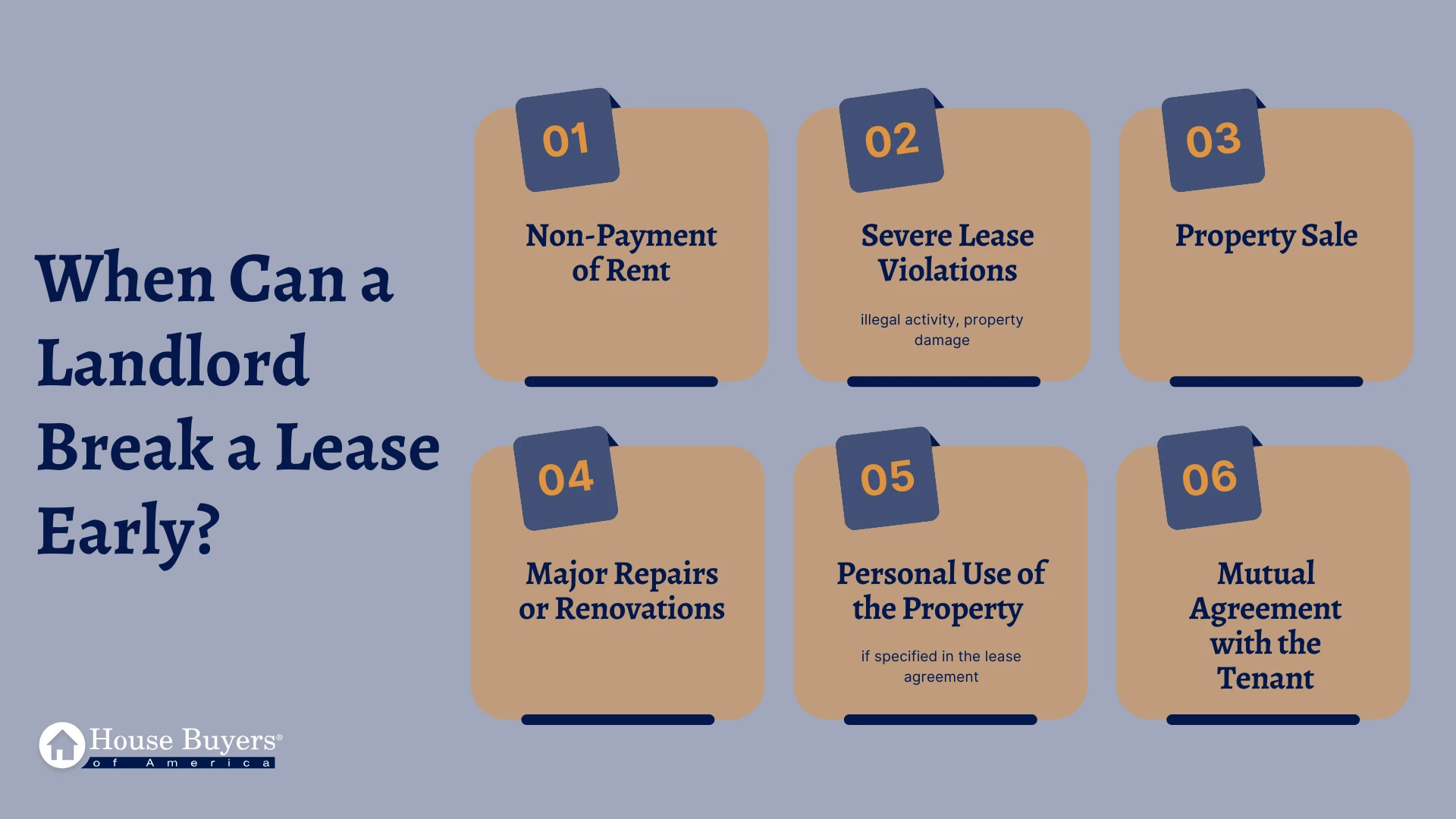
When Can a Landlord Break a Lease Early?
Landlords can legally terminate a lease early in the following situations:
- Non-Payment of Rent
- Severe Lease Violations (e.g., illegal activity, property damage)
- Property Sale
- Major Repairs or Renovations
- Personal Use of the Property (if specified in the lease agreement)
- Mutual Agreement with the Tenant
Each of these scenarios has specific legal requirements.
Non-Payment of Rent
One of the most common reasons a landlord may break a lease early is when a tenant fails to pay rent. However, landlords must follow state-specific eviction laws before proceeding with lease termination.
Here’s the legal process for non-payment of rent:
- Issue a Pay or Quit Notice: This notice gives the tenant a grace period (usually 3 to 7 days) to pay rent or vacate the premises.
- File for Eviction: If the tenant does not pay within the deadline, the landlord can file for an eviction lawsuit.
- Court Hearing: If the eviction is approved, the landlord must wait for an official court-ordered eviction notice before proceeding.
Bypassing these steps can lead to legal consequences, including tenant lawsuits for wrongful eviction.
Severe Lease Violations
If a tenant violates major lease terms, a landlord has legal grounds to terminate the lease early. Some common violations include:
- Illegal activities (drug distribution, criminal behavior)
- Significant property damage
- Unauthorized occupants or subletting
- Excessive noise or disruption to neighbors
Here’s the legal process for sever lease violations:
- Issue a Cure or Quit Notice: The tenant must correct the violation or vacate the property within a set time.
- Unconditional Quit Notice: If the violation is severe (e.g., illegal activities), the landlord can demand immediate eviction without offering a chance to fix the issue.
- Eviction Filing: If the tenant refuses to comply, landlords must file an eviction case in court.
Each state has different regulations on how much notice must be given and under what circumstances a landlord can issue an immediate termination notice.
Selling the Property
If a landlord wants to sell the rental property, can they break the lease early? Well, it depends on the lease agreement.
Fixed-Term vs. Month-to-Month Leases
- Fixed-Term Lease: The new owner has to honor the lease until it expires unless there’s an early termination clause allowing the landlord to terminate the lease with notice.
- Month-to-Month Lease: The landlord can typically terminate the lease with 30 to 60 days’ notice, depending on local laws.
Best Practices for Selling a Tenant-Occupied Property
- Offer incentives for tenants to leave early (e.g., financial compensation, help with relocation).
- Communicate clearly with tenants about potential sale timelines.
- Ensure proper legal notice is given before listing the property.
Major Repairs or Renovations
A landlord is able to terminate a lease early if major repairs are needed that make the home uninhabitable. However, minor upgrades do not justify breaking a lease.
Here are some valid reasons a landlord can terminate a lease for:
- Structural issues (foundation damage, severe plumbing problems)
- Health hazards (mold infestations, asbestos, unsafe living conditions)
- Renovations required by law to bring the property up to code
Be sure to follow this legal process if you’re going to terminate due to renovations:
- Provide Ample Notice: Landlords must give tenants a reasonable notice period (often 30–90 days).
- Offer Temporary Housing (If Required by Law): In some states, landlords must relocate tenants if renovations force them to move.
- Include Renovation Clauses in the Lease: This avoids future legal complications by outlining what happens if major repairs are needed.
Bad Tenants
Bad Tenants Checklist
Track your documentation and next steps when dealing with difficult tenant situations.


Unlock the Full Checklist
Reclaiming the Property for Personal Use
Some landlords may wish to move back into the rental property or use it for family members. Whether or not a landlord can break the lease early for this reason depends on:
- State laws (some states require a landlord to wait until the lease ends)
- Lease terms (if the lease has a termination clause allowing for personal use)
Follow these steps to legally reclaim a property for personal use:
- Include an Owner Move-In Clause in the Lease: This protects the landlord’s right to reclaim the property.
- Give Proper Notice: Many states require at least 60 days’ notice.
- Ensure Compliance with Local Housing Laws: Some rent-controlled areas have stricter rules about owner move-ins.
Mutual Agreement with the Tenant
The easiest way to break a lease early is through mutual agreement with the tenant. Some tenants may want to leave early due to job relocation, financial changes, or personal reasons.
Follow these best practices for a smooth mutual termination:
- Offer incentives (e.g., a partial rent refund or security deposit return).
- Put the agreement in writing to prevent future disputes.
- Set a clear move-out date to avoid confusion.

Legal Risks of Breaking a Lease Early
If a landlord illegally terminates a lease, tenants may take legal action for:
- Wrongful eviction
- Retaliatory actions
- Failure to provide proper notice
- Harassment or illegal entry
To avoid these issues, landlords should always consult local landlord-tenant laws and issue proper written notices before proceeding.
How to Minimize Lease Disputes
To avoid legal battles and tenant conflicts, landlords should:
- Include Clear Early Termination Clauses: State under what conditions a lease can be ended early.
- Use Month-to-Month Leases When Possible: Provides flexibility for both parties.
- Maintain Open Communication with Tenants: Discuss potential issues before resorting to lease termination.
- Follow the Legal Process at All Times: Cutting corners can result in costly legal battles.
How to Avoid Future Lease Termination Issues
Even with legally sound lease agreements, landlords can reduce the need for early lease terminations by screening tenants carefully and setting clear expectations upfront.
Screen Tenants Thoroughly
A solid tenant screening process reduces the risk of non-payment, lease violations, and eviction disputes.
Key steps include:
- Checking credit reports to assess financial responsibility
- Verifying employment and income to ensure rent affordability
- Reviewing rental history to check for prior evictions or disputes
- Contacting previous landlords to confirm the tenant’s reliability
A well-vetted tenant is less likely to cause problems, reducing the need for early lease termination.
Use Month-to-Month Lease Agreements When Possible
For landlords who prefer flexibility, month-to-month leases can prevent the hassle of breaking fixed-term agreements. Advantages include:
- Easier termination with a simple 30- or 60-day notice
- Less commitment for both parties in case of issues
- More adaptability if the property needs to be sold or renovated
Month-to-month leases work best in high-demand rental markets where finding new tenants quickly is feasible.
Set Clear Lease Terms and Expectations
A well-structured lease agreement helps prevent misunderstandings. Key terms should include:
- Consequences for late rent payments
- Rules on subletting and unauthorized occupants
- Maintenance responsibilities for both parties
- Quiet hours and other property policies
Tenants who understand the lease terms upfront are less likely to breach agreements, reducing the risk of disputes.
Maintain Open Communication with Tenants
Encouraging proactive communication can resolve issues before they escalate. Best practices include:
- Checking in periodically to address tenant concerns
- Providing advance notice about planned repairs or inspections
- Offering flexible solutions for tenants struggling with payments (e.g., payment plans)
Good landlord-tenant communication helps prevent lease conflicts and fosters a more cooperative rental experience.
Include Early Termination Clauses in Leases
As discussed earlier, a legally sound early termination clause provides landlords with an exit strategy if needed. Ensuring compliance with state laws and outlining financial obligations prevents disputes when invoking this clause.

Tired Of Your Property? Consider Selling To A Cash Buyer
For landlords who need to break a lease early without legal hassles, selling to a cash buyer like House Buyers of America offers a fast and stress-free solution. Instead of dealing with tenant disputes, eviction proceedings, or costly repairs, landlords can sell the property As-Is, even if it’s still occupied. Cash buyers handle existing lease agreements, removing the landlord’s burden and allowing for a quick exit from rental obligations.
What Happens If a Tenant Refuses to Leave?
When a landlord breaks a lease early, most tenants comply, but some may refuse to vacate. In these cases, following legal procedures is essential to avoid costly disputes.
Communicate First
Before escalating, try to negotiate with the tenant. Offering extra time, relocation assistance, or financial incentives (cash for keys) can encourage a voluntary move-out.
Issue a Formal Notice to Vacate
If the tenant remains, serve a written notice per state laws:
- 30 to 60 days’ notice for standard lease terminations.
- 3 to 14 days’ notice for lease violations (e.g., non-payment, damage).
- Ensure delivery follows legal requirements (certified mail, hand delivery, or posting).
Start the Eviction Process
If the tenant still refuses to leave, you may need to file an eviction lawsuit.
This involves:
- Filing with the local court.
- Serving court documents to the tenant.
- Attending an eviction hearing.
- Sheriff-enforced removal if the tenant still won’t vacate.
Avoid Illegal Eviction Tactics
Never resort to self-help eviction tactics such as changing locks, shutting off utilities, or removing belongings, as these actions can lead to legal penalties.
If a tenant won’t leave, following legal eviction procedures is the only way to regain possession.
Frequently Asked Questions About Breaking Leases Early
How Much Notice Does a Landlord Need To Give Before Breaking a Lease?
Notice periods vary by state and situation:
- 30 to 60 days for property sale or owner move-in
- 3 to 14 days for lease violations (depending on severity)
- Up to 90 days for certain rent-controlled areas
Always check local landlord-tenant laws for specific requirements.
Can a Landlord Terminate a Lease if They Sell the Property?
Yes, but whether the tenant must leave depends on the lease type:
- Fixed-term lease: The new owner must honor the lease unless there’s an early termination clause.
- Month-to-month lease: The landlord can end the lease with proper notice.
Some buyers may allow tenants to stay under a new lease agreement.
What Is an Illegal Eviction?
An illegal eviction is when a landlord removes a tenant without following legal procedures. Examples include:
- Changing locks without notice
- Forcing a tenant out without a court order
- Shutting off utilities to make the tenant leave
Tenants can sue landlords for wrongful eviction, which may result in legal fines or financial damages.
Can a Landlord Negotiate a Lease Buyout With a Tenant?
Yes, landlords can offer a lease buyout agreement, where the tenant agrees to leave early in exchange for financial compensation. Best practices include:
- Offering a moving stipend or rent refund
- Setting a clear move-out deadline
- Documenting the agreement in writing to avoid disputes
This method avoids legal battles and provides a smoother transition for both parties.
Can a Tenant Sue a Landlord for Breaking a Lease Early?
Yes, if a landlord terminates a lease without legal grounds or fails to provide proper notice, tenants can sue for:
- Wrongful eviction
- Financial damages (e.g., moving costs, legal fees)
- Lease contract violations
Following proper legal procedures prevents lawsuits and disputes.
How Can Landlords Avoid Lease Termination Disputes?
The best ways to prevent disputes include:
- Using clear and legally compliant lease agreements
- Screening tenants carefully to reduce conflicts
- Maintaining open communication and addressing concerns early
- Following proper legal channels when terminating leases
- Taking proactive steps can minimize issues and ensure a smooth leasing experience.

Recent Posts


Frequently Asked Questions (FAQs) About Selling Your Home Fast
During a transfer, a new deed is drafted and signed by the seller, transferring ownership of the house to the new buyer. This document is then recorded in the land records with the above-mentioned deed of trust.
We work with your bankruptcy attorney to present a FAIR offer and give you additional money at closing. We present the offer directly to your attorney and work to have the offer accepted by the bankruptcy court. Once the offer is accepted, we ensure that the bankruptcy is released and we buy the property as soon as possible.
Yes, we can work with any seller who needs to move a property quickly for any reason and in any price range. We have purchased million-dollar houses before.
Yes, we buy apartments, multi-family houses/buildings and land.
No! You have no obligation at all if you submit an information form, show your property to House Buyers or receive an offer to buy your house. You are under no obligation at all. All we ask for is the opportunity to make an offer for your house, you’re in the driver’s seat as to whether you accept the offer or not. You are in complete control. You are only obligated to our service if you have entered into a purchase agreement with us, as with any other real estate transaction.
We need very basic information from you about your house. The number of bedrooms, bathrooms and overall condition of the property is needed. We will also ask you how long you have owned your home and if there are any mortgages or liens against the property.
We offer the maximum amount possible, our offers are very competitive. If our offers weren’t competitive, we wouldn’t have purchased thousands of houses! There is no magic percentage we use, every house is unique. Our Real Estate Consultants take into consideration the age, condition, size, features and location of the home much like an appraiser would. We factor in the costs to repair the house, what other homes in the area are selling for and how long it is taking to sell those homes. These and several other factors are researched to determine a fair offer.
As soon as we receive your Online Form, we will review your information and get back to you ASAP (usually within 30-60 minutes depending on when you submit the information).
We work FAST to help ensure that your house doesn’t go to foreclosure. We present you with a FAIR offer to pay off your mortgage before the foreclosure. We help save your credit, avoid foreclosure and allow you to sell your house FAST and FAIR. Due to recent legislation, if you reside in the state of Maryland and are within a certain period of time before your foreclosure sale date, we will introduce you to a Foreclosure Consultant. The legislation mandates that if you are within this certain window that a foreclosure consultant must explain to you all of your options involved in selling your home.
No problem! We can still buy your house as is, even if it has demolition orders scheduled.
House Buyers of America
We buy your home on your terms.
- No repairs or showings
- Close on your time frame
- No commissions or fees
- No obligation cash offer
Over 25 Years in Business · Trusted Since 2001
Get Your Fair Cash
Offer
Today!
or call us at 855-659-3289
Searching and Processing Address