March 1, 2025

Selling your home is a big, emotional step—one that comes with excitement, uncertainty, and the pressure to make the right choices. The strategy you choose can shape your final sale price, how quickly your home sells, and how smooth the process feels. Open houses have long been a go-to tactic in real estate, but do open houses sell homes?
If you’re navigating the sale on your own (FSBO), understanding the pros, cons, and smarter alternatives can help you make the best decision with confidence and clarity. Do open houses sell homes? It’s a question worth exploring as you weigh your options and decide on the best approach for your unique situation.
What Is an Open House?
An open house is a marketing event where a home for sale is made available for public viewing during a set time, typically on weekends. The goal is to maximize home exposure, generate interest, and ideally, attract offers. Potential buyers can walk through, ask questions, and experience the home in person.
How Open Houses Work
- Typically hosted by a real estate agent or homeowner
- Visitors can explore without scheduling a private showing
- The host collects visitor information for follow-ups
- The home is staged to look its best
- The event is promoted through signs, online listings, and social media
Do Open Houses Sell Homes in Today’s Market?
The effectiveness of open houses depends on market conditions. For FSBO sellers, an open house can be a useful tool if marketed properly, but it also comes with risks and challenges. While it can generate visibility and interest, it is not always the most direct path to securing a sale.
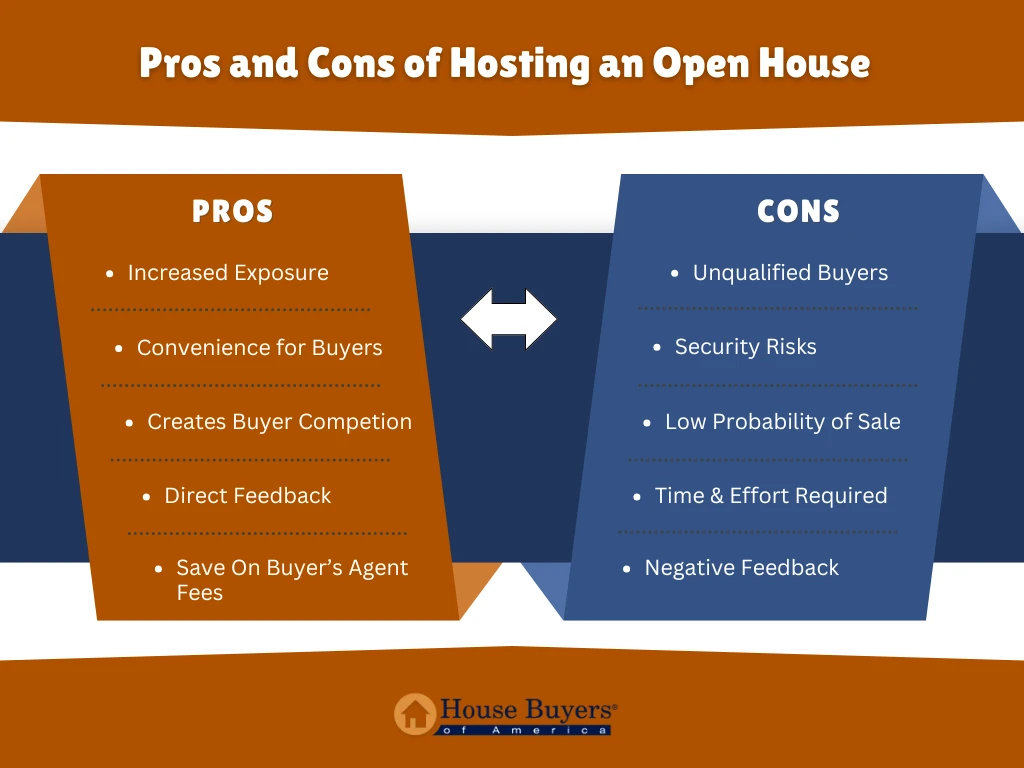
Pros of Hosting an Open House
1. Increased Exposure
An open house allows more potential buyers to see your home, especially those who might not schedule a private showing.
Example: A couple driving by notices your open house sign and decides to stop out of curiosity. After walking through, they realize your home’s layout and features are a perfect fit, even though they hadn’t originally considered this type of property. This unexpected discovery could lead to an offer they wouldn’t have otherwise made.
2. Convenience for Buyers
Busy buyers appreciate the ability to view a home without needing an appointment. This also takes the pressure off of them to hurry the viewing, they can take their time and better take in the house.
Example: A relocating professional with limited time visits an open house instead of coordinating multiple private showings.
3. Creating Buyer Competition
Seeing other interested buyers can create urgency, prompting competitive offers.
Example: A buyer who was hesitant to make an offer acts quickly after noticing several other visitors seriously considering the home.
4. Direct Feedback
You receive real-time reactions and concerns from attendees, allowing you to address potential objections.
Example: If multiple visitors comment on outdated kitchen appliances, you might consider offering a credit for upgrades to make your listing more appealing.
5. Potential to Attract Unrepresented Buyers
Some buyers without agents may be drawn in, saving you from paying a buyer’s agent commission.
Example: A first-time homebuyer who is browsing casually but doesn’t have an agent yet might fall in love with your home and make an offer directly.
Cons of Hosting an Open House
1. Attracting Unqualified Visitors
Many attendees may be nosy neighbors, casual lookers, or people who can’t afford the home.
Example: A local resident visits just to compare your layout to their own home, with no real intention to buy.
2. Security Risks
Open houses make your home vulnerable to theft or vandalism.
Example: Personal items, jewelry, or financial documents left in plain sight could be stolen by someone posing as a buyer.
3. Low Probability of Sale
According to NAR, only 5% of home sales occur as a direct result of an open house.
Example: Despite a high turnout, no immediate offers come in, proving private showings are often more effective for securing buyers.
4. Time and Effort Required
Preparing for an open house requires deep cleaning, staging, and marketing.
Example: A full weekend spent decluttering, repainting, and landscaping might not result in a sale, making the effort feel wasted.
5. Potential for Negative Feedback
Buyers may point out flaws that could be discouraging.
Example: A visitor loudly criticizes the outdated bathrooms, making you second-guess your listing price and marketability.
Alternatives to Open Houses

If an open house doesn’t appeal to you, consider these options:
1. Private Showings
Individual showings give serious buyers more time to evaluate your home without distractions.
Example: A pre-approved buyer schedules a private showing and submits an offer the next day after carefully considering the home.
2. Virtual Tours
Professional virtual tours allow remote buyers to view your home online, increasing reach.
Example: A buyer moving from another state submits an offer based on a high-quality video tour, eliminating the need for an open house.
3. Broker’s Open House
A private open house for real estate agents who might have clients interested in your home.
Example: Agents tour your home and discuss it with buyers who couldn’t attend, leading to private showings.
4. Targeted Online Marketing
Platforms like Zillow, Facebook, and Nextdoor allow you to reach specific buyer demographics.
Example: Running a Facebook ad targeting local first-time homebuyers results in multiple inquiries and scheduled showings.
5. Sell to a Cash Buyer
To avoid the hassle of fixing up a home and dealing with a lengthy sale, you can sell to a cash buyer. They’ll buy your home as-is and often can close in a week or two.
Example: House Buyers of America can send you an offer within ten minutes and close on your house within seven day.
How to Have an Open House
Hosting an open house requires thorough preparation, strategic marketing, and careful execution. Whether you’re wondering how to host a successful open house for FSBO or looking for the best ways to market an open house online, here’s everything you need to know to ensure a successful event.
Preparing for the Open House
- Declutter and Deep Clean
- Remove excess furniture to make rooms look spacious.
- Clean every surface, including windows, carpets, and baseboards.
- Ensure the kitchen and bathrooms are spotless.
- Stage Your Home
- Use neutral decor to appeal to a wide audience.
- Add fresh flowers or tasteful decorations to create warmth.
- Ensure proper lighting by opening curtains and turning on lights.
- Address Repairs and Maintenance
- Fix any minor issues, such as leaky faucets or squeaky doors.
- Touch up paint and consider repainting bold-colored walls in neutral tones.
- Ensure all appliances and HVAC systems are in good working order.
- Secure Personal Belongings and Valuables
- Lock up jewelry, important documents, and any small valuables.
- Store prescription medications in a secure, locked location.
- Remove or safely secure any weapons or firearms.
- Set the Ambiance
- Bake cookies or use subtle air fresheners to create a welcoming scent.
- Play soft background music to enhance the atmosphere.
- Adjust the thermostat to a comfortable temperature.
- Arrange for Pets to Be Elsewhere
- If possible, take pets to a friend’s or pet daycare.
- Remove pet food, litter boxes, and toys to minimize distractions.
- Vacuum and deodorize areas where pets usually stay.
Marketing the Open House
- Online Listings and Social Media
- Post the open house on Zillow, Realtor.com, and local Facebook groups.
- Use high-quality photos and a virtual tour to attract online interest.
- Create an event on Facebook and invite local connections.
- Best ways to market an open house online – Leverage digital platforms for maximum exposure.
- Signage and Neighborhood Promotion
- Place directional signs at key intersections leading to the house.
- Use eye-catching, professional signage to draw attention.
- Inform neighbors and encourage them to spread the word.
- Email and Direct Outreach
- Send out emails to local real estate agents and potential buyers.
- Offer private tours before the open house for serious buyers.
- Contact your network to invite interested parties.
- Traditional Advertising
- List the open house in local newspapers or real estate bulletins.
- Use printed flyers or postcards in high-traffic areas.
- Partner with local businesses to help spread the word.

Hosting the Open House
- Create a Welcoming First Impression
- Place a welcome sign at the entrance.
- Have a sign-in sheet or digital check-in for tracking visitors.
- Offer refreshments like bottled water, coffee, or cookies.
- Engage Visitors Without Pressuring Them
- Greet guests warmly and provide a property brochure.
- Allow visitors to explore freely but be available for questions.
- Highlight key features of the home without overselling.
- Common mistakes to avoid when hosting an open house – Avoid being too pushy or failing to follow up with attendees.
- Ensure a Safe and Secure Environment
- Keep valuables, weapons, and medications locked away.
- Limit the number of people in each room to prevent overcrowding.
- Have a friend or co-host present to assist and keep an eye on visitors.
- Manage Pets and Distractions
- If pets must remain home, keep them in a secured area.
- Turn off TVs and limit distractions to maintain a professional setting.
- Avoid strong cooking smells or overpowering air fresheners.
Fielding Inquiries and Handling Offers
- Answering Questions
- Be prepared to discuss recent upgrades, utility costs, and neighborhood details.
- Provide printed information sheets with key property details.
- Offer a way for buyers to follow up with additional questions.
- How to attract serious buyers to an open house – Providing detailed, helpful answers builds buyer confidence.
- Collecting Feedback
- Ask visitors for their thoughts on the home and pricing.
- Take notes on any recurring concerns or positive highlights.
- Use feedback to adjust pricing or marketing strategies if necessary.
- Handling Offers and Follow-Ups
- If a buyer expresses interest, be ready to discuss next steps.
- Have your contact information available for inquiries after the event.
- Follow up with serious buyers within 24 hours to keep them engaged.
- How to follow up with buyers after an open house – Timely communication can turn interest into an offer.
By executing a well-planned open house, you can maximize your home’s exposure, attract serious buyers, and increase the chances of a successful sale. Do open houses help sell homes faster? While they can generate interest, private showings and strong marketing often play a bigger role in securing a sale.
FAQs

1. Do Open Houses Sell Homes?
Do open houses sell homes? Open houses increase visibility but don’t directly lead to most sales. Private showings and online marketing are often more effective.
2. Are Open Houses Worth It in a Slow Market?
Are open houses worth it in a slow market? Yes, they can generate additional interest when buyer demand is low and there’s less competition.
3. How Effective Are Open Houses in Selling Homes?
How effective are open houses in selling homes? According to NAR, less than 8% of buyers found their home through an open house, making it a less effective strategy than digital marketing or private showings.
4. What Are the Risks of Hosting an Open House?
What are the risks of hosting an open house? Theft, damage, unqualified buyers, and wasted effort if no serious offers arise.
5. How Can I Market My Home Without an Open House?
How can I market my home without an open house? Using online listings, professional photography, virtual tours, and social media ads are highly effective alternatives.
Should You Host an Open House?
For FSBO sellers, an open house can be beneficial, but it’s not the only way to market your home. Weigh the pros and cons, and consider alternatives that may better suit your needs. If you choose to host an open house, focus on strategic marketing, security measures, and proper preparation to maximize its effectiveness.
For those looking to avoid the hassle, targeted online marketing and private showings often yield better results while attracting serious buyers.

Recent Posts


Frequently Asked Questions (FAQs) About Selling Your Home Fast
During a transfer, a new deed is drafted and signed by the seller, transferring ownership of the house to the new buyer. This document is then recorded in the land records with the above-mentioned deed of trust.
We work with your bankruptcy attorney to present a FAIR offer and give you additional money at closing. We present the offer directly to your attorney and work to have the offer accepted by the bankruptcy court. Once the offer is accepted, we ensure that the bankruptcy is released and we buy the property as soon as possible.
Yes, we can work with any seller who needs to move a property quickly for any reason and in any price range. We have purchased million-dollar houses before.
Yes, we buy apartments, multi-family houses/buildings and land.
No! You have no obligation at all if you submit an information form, show your property to House Buyers or receive an offer to buy your house. You are under no obligation at all. All we ask for is the opportunity to make an offer for your house, you’re in the driver’s seat as to whether you accept the offer or not. You are in complete control. You are only obligated to our service if you have entered into a purchase agreement with us, as with any other real estate transaction.
We need very basic information from you about your house. The number of bedrooms, bathrooms and overall condition of the property is needed. We will also ask you how long you have owned your home and if there are any mortgages or liens against the property.
We offer the maximum amount possible, our offers are very competitive. If our offers weren’t competitive, we wouldn’t have purchased thousands of houses! There is no magic percentage we use, every house is unique. Our Real Estate Consultants take into consideration the age, condition, size, features and location of the home much like an appraiser would. We factor in the costs to repair the house, what other homes in the area are selling for and how long it is taking to sell those homes. These and several other factors are researched to determine a fair offer.
As soon as we receive your Online Form, we will review your information and get back to you ASAP (usually within 30-60 minutes depending on when you submit the information).
We work FAST to help ensure that your house doesn’t go to foreclosure. We present you with a FAIR offer to pay off your mortgage before the foreclosure. We help save your credit, avoid foreclosure and allow you to sell your house FAST and FAIR. Due to recent legislation, if you reside in the state of Maryland and are within a certain period of time before your foreclosure sale date, we will introduce you to a Foreclosure Consultant. The legislation mandates that if you are within this certain window that a foreclosure consultant must explain to you all of your options involved in selling your home.
No problem! We can still buy your house as is, even if it has demolition orders scheduled.
House Buyers of America
We buy your home on your terms.
- No repairs or showings
- Close on your time frame
- No commissions or fees
- No obligation cash offer
Over 25 Years in Business · Trusted Since 2001
Get Your Fair Cash
Offer
Today!
or call us at 855-659-3289
Searching and Processing Address